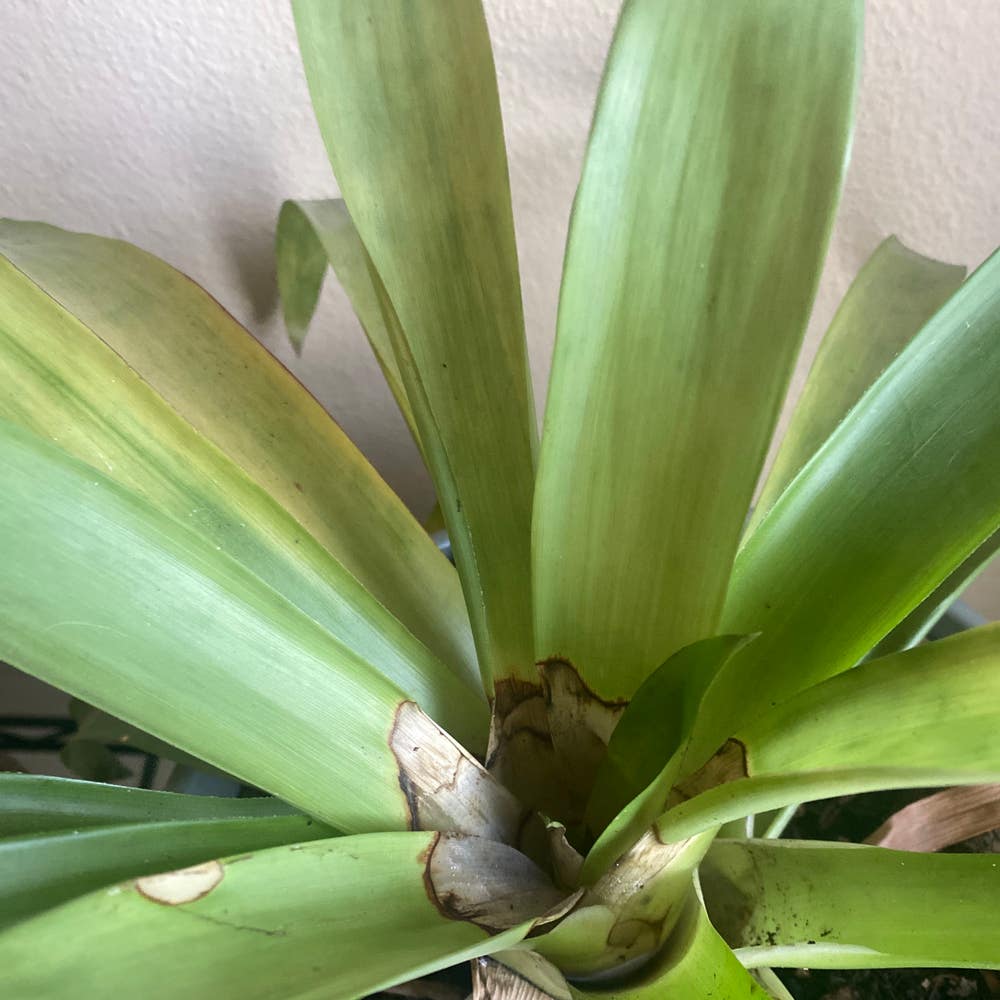
Why Are My Neoregelia chlorosticta Leaves Turning Yellow? 🍂
Neoregelia chlorosticta
By the Greg Editorial Team
Mar 23, 2024•4 min read
This article was created with the help of AI so we can cover more plants for you. May contain errors. See one? Report it here.
Solve the yellow leaf puzzle 🌿 of your Neoregelia chlorosticta and bring back its lush green glory!
- 🌱 Early detection of yellowing indicates plant distress.
- 💧☀️ Balance water and light to prevent and fix yellow leaves.
- 🌿 Nutrients and pest control are key to maintaining green leaves.
Spotting the Yellow Flags: Identifying Yellow Leaves
💛 Visual Symptoms of Distress
Yellowing leaves on your Neoregelia chlorosticta can be the first warning sign of distress. Early detection is crucial, as it can signify a range of potential issues from watering mishaps to pest invasions. Look for leaves that have lost their luster, turning a pale, uniform yellow, or those with more dramatic spots and patterns.
💭 When to Worry
It's natural for older leaves to gracefully exit stage left, turning yellow as they age. However, if the new growth at the top is losing its vibrant green, it's time for a care routine interrogation. Pay attention to how the yellowing unfolds; a plant-wide change could point to a systemic issue, while spotty discoloration often indicates a localized problem.
Rooting Out the Causes: Why Leaves Turn Yellow
💧 Thirst Issues: Overwatering and Underwatering
Watering is a balancing act. Overwatering your Neoregelia chlorosticta can lead to a lack of oxygen in the soil, causing roots to rot and leaves to yellow. Underwatering, on the other hand, leaves your plant parched, with leaves drooping and yellowing as a distress signal.
- Check the soil moisture before watering; it should be moist, not soggy.
- Allow the top inch of soil to dry out between waterings to prevent root rot.
☀️ Light of Life: Sunlight and Shade
Light is life for your Neoregelia chlorosticta. Too little light, and leaves can't produce enough chlorophyll, leading to yellowing. Too much direct sunlight, however, can scorch leaves, causing a similar yellowing effect.
- Find the sweet spot where your plant receives bright, indirect light.
- Rotate your plant regularly to ensure even light distribution.
🍽️ Feeding Frenzy: Nutrient Needs and Deficiencies
Nutrients are the plant's food, and without them, your Neoregelia chlorosticta can't thrive. Nitrogen, potassium, and phosphorus deficiencies manifest as yellow leaves, signaling it's time to feed.
- Use a balanced fertilizer to prevent nutrient-related yellowing.
- Fertilize during the growing season when the plant's metabolism is active.
🐜 Unwanted Guests: Pests and Diseases
Pests and diseases are like uninvited guests at a party—they wreak havoc. They can cause yellowing leaves as they damage the plant's ability to function.
- Inspect your plant regularly for signs of pests or disease.
- Implement integrated pest management strategies to keep your Neoregelia chlorosticta healthy.
Turning Over a New Leaf: Fixing Yellow Leaves
💧 Water Wisdom: Adjusting Your Watering Routine
Watering should be consistent, yet adaptable to your Neoregelia chlorosticta's needs. Ensure the soil is moist but not waterlogged. Use a moisture meter or the finger test to check soil dampness before watering. Adjust frequency with seasonal humidity changes.
☀️ Let There Be Light: Optimizing Light Conditions
Light is crucial for your plant's health. If leaves are yellowing, consider moving your Neoregelia chlorosticta to a brighter spot, but do so gradually to avoid shock. Artificial lighting can supplement natural light, especially during darker months.
🌱 Nutrient Know-How: Replenishing Vital Nutrients
Fertilize with a balanced formula during the growing season, following package instructions to avoid overfeeding. Moist soil is a must before fertilizing. Organic options like compost offer a gentler, slow-release nutrient supply.
🐜 Pest Patrol: Keeping Critters at Bay
For pests, a neem oil spray or insecticidal soap can be effective. Prune away any diseased areas and promote good air circulation to prevent issues. Integrated pest management is a proactive approach to keep your Neoregelia chlorosticta thriving.
Staying Green: Preventing Yellow Leaves in the Future
📆 Consistency is Key: Routine Care Schedule
Routine care is non-negotiable for maintaining the vibrant green of Neoregelia chlorosticta leaves. Like clockwork, establish a watering and feeding schedule that's as reliable as your favorite weekly TV show. This regularity is the cornerstone of preventing yellow leaves. It's all about the rhythm, ensuring your plant's needs are met with the precision of a metronome.
🕵️ Vigilant Monitoring: Catching Issues Early
Regular inspections are your plant's lifeline. Be the Sherlock Holmes of plant care, observing even the most subtle changes in leaf color or texture. These clues can signal the need for a tweak in your care routine—perhaps more light or less water. It's about being proactive, not reactive. Catching issues early means you can address them before they turn into a yellow-leaf crisis.
⚠️ Safety First
This content is for general information and may contain errors, omissions, or outdated details. It is not medical, veterinary advice, or an endorsement of therapeutic claims.
Always consult a qualified healthcare professional before using any plant as food, medicine, or supplement.
Never eat any plant (or feed one to pets) without confirming its identity with at least two trusted sources.
If you suspect poisoning, call Poison Control (800) 222-1222, the Pet Poison Helpline (800) 213-6680, or your local emergency service immediately.
Spotted an error? Please report it here.
Banish those pesky yellow leaves from your Neoregelia chlorosticta and ensure it thrives with customized care plans 🍂 from Greg, tailored to your plant's unique needs.