Choosing Fertilizer For My Neoregelia chlorosticta
Neoregelia chlorosticta
By the Greg Editorial Team
Mar 23, 2024•4 min read
This article was created with the help of AI so we can cover more plants for you. May contain errors. See one? Report it here.
Nourish your Neoregelia to full bloom 🌺 with the ideal fertilizer blend and timing!
- Balanced N-P-K (10-10-10) ideal for Neoregelia chlorosticta's health.
- Micronutrients enhance color, don't forget iron and magnesium.
- Adjust fertilizing with seasons; less in autumn, more in summer.
Picking the Perfect Fertilizer Blend
💡 Understanding N-P-K Ratios
Nitrogen (N), phosphorus (P), and potassium (K) form the cornerstone of plant nutrition, each playing a unique role in the health of your Neoregelia chlorosticta. Nitrogen is the leaf-maker, phosphorus the root-and-bloom enhancer, and potassium the overall health promoter.
For Neoregelia chlorosticta, an N-P-K ratio of 10-10-10 is often recommended. This balanced mix supports foliage without sacrificing blooms. However, always keep an eye on your plant's response and adjust as necessary.
🍽️ Micronutrients Magic
Beyond the N-P-K, micronutrients like iron and magnesium are pivotal for your bromeliad's color and vitality. These are the behind-the-scenes workers that ensure your plant's colors are vivid and its growth robust.
To cover these essentials, opt for a fertilizer that lists micronutrients on the label. This ensures your Neoregelia chlorosticta isn't missing out on any key dietary components. Remember, it's not just about the big three; the little guys matter too.
Timing is Everything: Fertilization Schedule
💪 Growth and Bloom Cycles
Adjusting fertilization to your Neoregelia chlorosticta's life stages is like hitting the gas pedal at just the right moment in a race. When it's in a growth spurt, monthly feeding is your green light. As the blooms start to show, keep up the pace but be ready to ease off the throttle once the show's over.
🍂 Seasonal Adjustments
When the seasons shift, so should your fertilization game plan. Summer's sun calls for regular feedings, but as autumn leaves fall, it's time to dial it back. Think of it as prepping your plant for a cozy winter nap—too much food before bed isn't a good idea.
Fertilizer Application: Doing it Right
💦 Foliar Feeding Finesse
Foliar feeding is like a quick fix for your Neoregelia chlorosticta. It's not the main meal but a snack to tide it over. Here's how to do it without messing with the central cup:
- Prepare a diluted solution of liquid fertilizer, weaker than what you'd use for soil application.
- Use a spray bottle to mist the leaves gently, avoiding the central cup to prevent rot.
- Aim for early morning or late afternoon to reduce evaporation and increase absorption.
💧 Soil Drenching Done Smart
Soil drenching is the main course for your Neoregelia chlorosticta. It's all about getting the right amount of nutrients to the roots without waterlogging the plant. Follow these steps:
- Ensure the soil is moist before you begin; it helps the fertilizer spread evenly.
- Mix the fertilizer with water as per instructions—no winging it.
- Pour the solution at the base of the plant, avoiding the leaves and central cup.
- After application, water lightly to help the nutrients penetrate without creating a swamp.
Remember, it's easy to overdo it. Stick to a light feeding schedule during the growing season, and always err on the side of less. Too much love in the form of fertilizer can lead to a nutrient overdose, and nobody wants to deal with the aftermath of that.
Recognizing and Resolving Over-Fertilization
🚨 Spotting the Telltale Signs
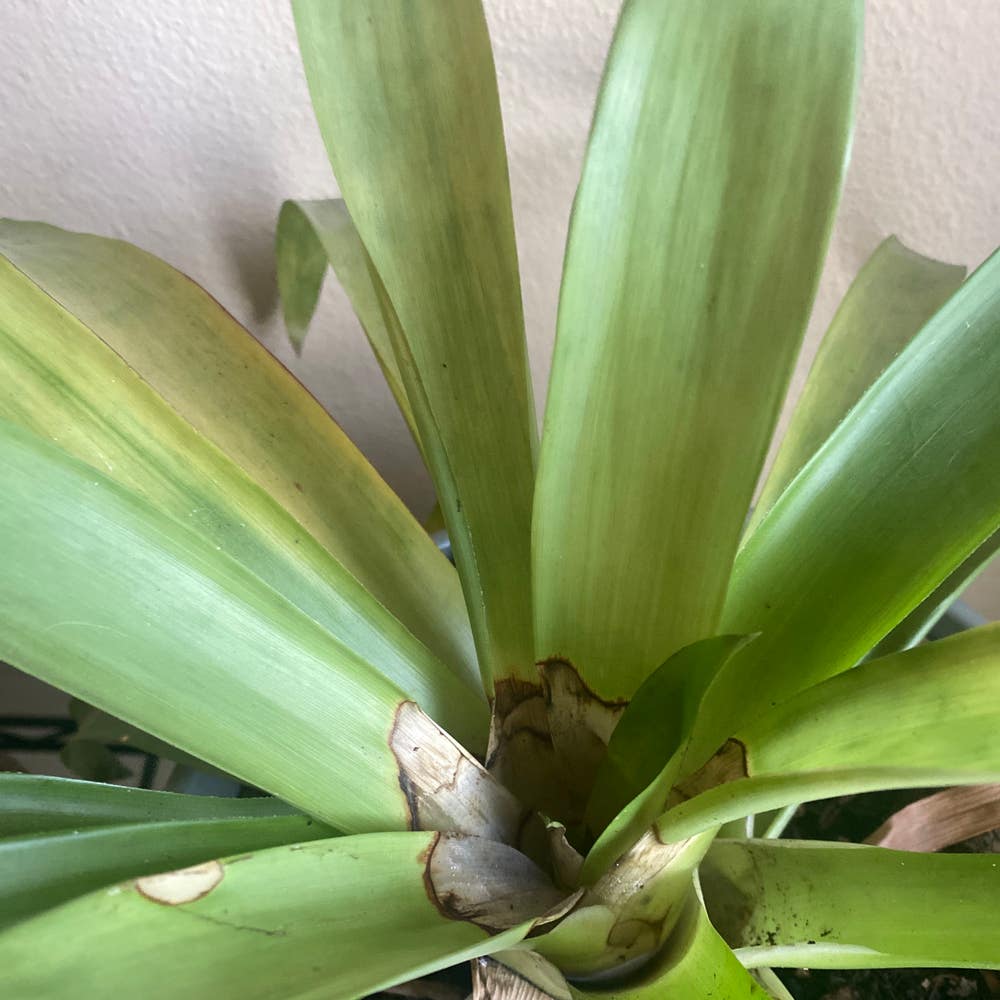
Yellow or brown leaves, especially at the tips and margins, are a distress flare from your Neoregelia chlorosticta. If you spot a white, salty crust on the soil's surface, it's not a winter wonderland; it's a sign of over-fertilization. Other red flags include stunted growth, wilting leaves with damp soil, and burned foliage. These symptoms can appear almost immediately after fertilizer application, so keep your eyes peeled post-feeding.
🗺 The Recovery Roadmap
Caught with too much fertilizer on your hands? First, remove any visible fertilizer from the soil. Next, flush the soil with water to dilute and wash away excess nutrients—think of it as a detox for your plant. Repeat this every few days, monitoring for improvement. Snip off any brown-tipped leaves; they're not making a comeback. For potted plants, a change of scenery might be in order—repot with fresh, nutrient-free soil. And remember, hold off on the fertilizer for a few weeks; give your plant a break to recover from its nutrient hangover.
⚠️ Safety First
This content is for general information and may contain errors, omissions, or outdated details. It is not medical, veterinary advice, or an endorsement of therapeutic claims.
Always consult a qualified healthcare professional before using any plant as food, medicine, or supplement.
Never eat any plant (or feed one to pets) without confirming its identity with at least two trusted sources.
If you suspect poisoning, call Poison Control (800) 222-1222, the Pet Poison Helpline (800) 213-6680, or your local emergency service immediately.
Spotted an error? Please report it here.
Ensure your Neoregelia chlorosticta thrives with a perfect fertilizer mix, and count on Greg 🌿 to tailor your plant's seasonal feeding for optimal health and stunning blooms.