🌞 Does My Neoregelia chlorosticta Need Direct Sunlight?
Neoregelia chlorosticta
By the Greg Editorial Team
Mar 23, 2024•4 min read
This article was created with the help of AI so we can cover more plants for you. May contain errors. See one? Report it here.
Nurture your Neoregelia chlorosticta to perfection 🌿 by learning the right sunlight balance to avoid leaf burn ☀️.
- Indirect light is key to prevent Neoregelia chlorosticta leaf burn.
- Adjust placement seasonally to mimic its natural, gentle lighting.
- Use sheer curtains or blinds for long-term light regulation.
Sunlight and Neoregelia Chlorosticta: A Delicate Dance
🌞 Does Neoregelia Chlorosticta Soak Up the Sun or Shun It?
Neoregelia chlorosticta, a bromeliad with a penchant for indirect light, thrives when basking in filtered sunlight. Direct sun, however, is a no-go—it can lead to leaf burn.
🏝 Native Habitat Clues
In its natural habitat, Neoregelia chlorosticta lounges under the canopy's protection, soaking up dappled light. This preference for moderate shade should guide your indoor placement strategy.
When backlit by the sun, its burgundy leaves with lime green splotches become a visual spectacle. But remember, the goal is to mimic the gentle lighting of its native environment, not the full glare of the tropics.
Finding the Sweet Spot: Home Placement for Happy Leaves
🌞 Window Wisdom: Where to Perch Your Plant
Window direction is a game-changer for the health of your Neoregelia chlorosticta. These plants crave bright, indirect sunlight. South-facing windows are the go-to in the Northern Hemisphere, while folks down south should look to north-facing windows for that golden glow.
Too close to the glass, and you're asking for leaf burn. A few feet back, that's the ticket. Remember, it's not just about the window; it's about the right spot near it.
🌍 Hemisphere Hints
Your location on the globe dictates how you play the sunlight symphony. In the Northern Hemisphere, a Neoregelia chlorosticta will revel in the light from an east or west-facing window, soaking up the mild morning or afternoon rays. Southern Hemisphere? Flip that script.
Seasonal changes in sunlight mean you can't just set and forget. Keep an eye on how the light shifts in your home throughout the year and move your plant accordingly. It's not needy; it's just science.
Remember, every home is unique. Your windows might be shaded or your climate might be different. Watch for your plant's cues of distress or joy—it's the best feedback you'll get.
Shielding from the Scorch: Protecting Neoregelia Chlorosticta
🌞 When the Sun Says 'Too Much'
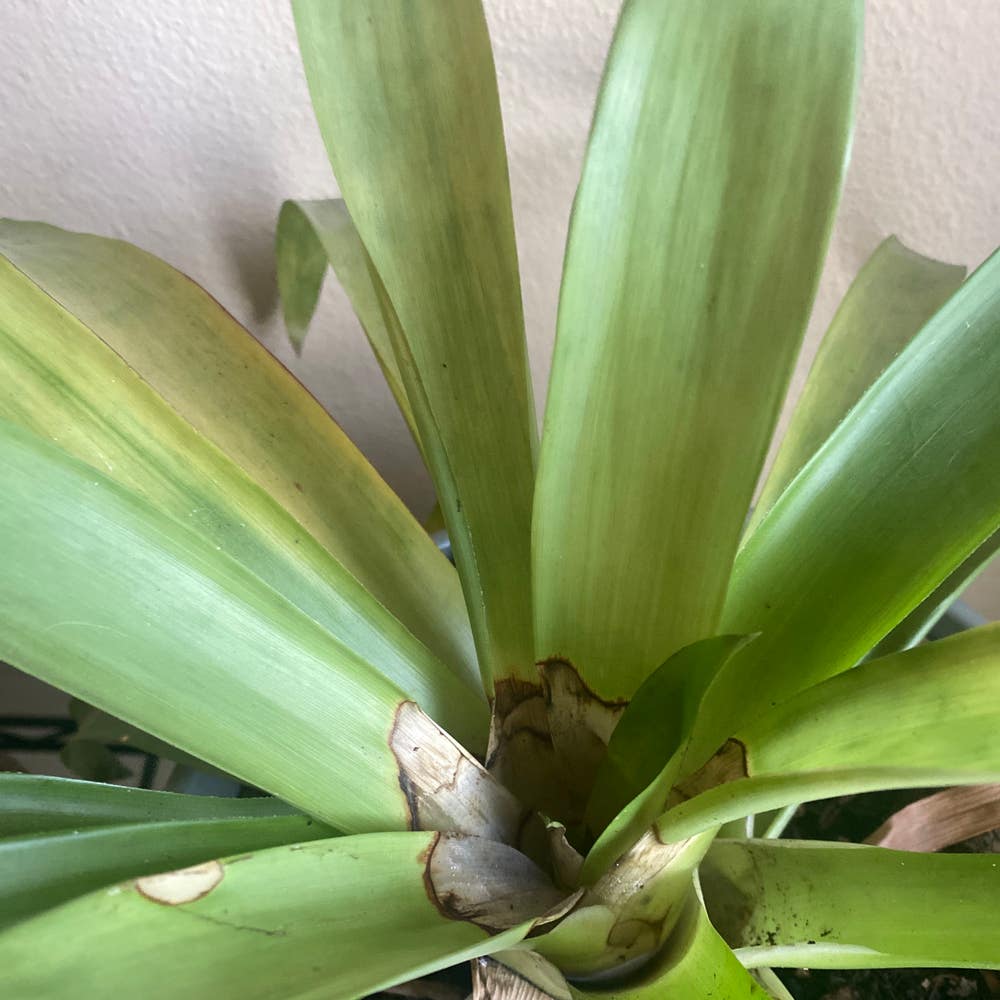
Leaf scorch is a clear SOS from your Neoregelia chlorosticta. If you notice crispy edges, bleached colors, or a general look of leafy despair, it's time to rethink your plant's sunbathing habits. Immediate action is required to prevent further damage.
Quick fixes? Relocate your plant to a shadier spot pronto. Use sheer curtains or blinds to filter the harsh rays, giving your plant a break from the solar spotlight. Think of it as an emergency umbrella on a suddenly rainy day.
💡 Long-Term Strategies for Light Regulation
For a more sustainable approach, consider shades, curtains, or light filters. These can be your plant's permanent sunglasses, ensuring it gets the light it craves without the burn.
If you're dealing with a sun-drenched space, artificial lighting might be the ticket. Grow lights can offer a consistent and controlled light source, minus the risk of overexposure. It's like having a dimmer switch for the sun, and your Neoregelia chlorosticta will thank you for the balanced environment.
Seasonal Sunlight Strategies: Adapting to Change
🌞 Summer vs. Winter Sunlight Care
In the summer, Neoregelia chlorosticta can be as fussy as a cat in a sunbeam—too much direct light and it'll sizzle, too little and it slumps. Rotate your plant to avoid the harsh midday sun, especially during heatwaves. A sheer curtain can be a game-changer, diffusing just enough light to keep your plant from throwing a fit.
Come winter, it's a whole different ball game. Short days and the sun's low angle can turn your vibrant Neoregelia into a wallflower. Seek out those elusive rays by placing your plant in a south-facing window if you're in the northern hemisphere, or a north-facing one down south. If the sun's on a sabbatical, consider a grow light to fake it till you make it through the darker months.
Monitor your plant like it's the stock market—any sign of distress, and it's time to pivot. Leaves looking bleached? Too much sun. Stretching out like it's doing yoga? Not enough. Keep tweaking; your plant will thank you with a show of colors that'll make a rainbow jealous.
⚠️ Safety First
This content is for general information and may contain errors, omissions, or outdated details. It is not medical, veterinary advice, or an endorsement of therapeutic claims.
Always consult a qualified healthcare professional before using any plant as food, medicine, or supplement.
Never eat any plant (or feed one to pets) without confirming its identity with at least two trusted sources.
If you suspect poisoning, call Poison Control (800) 222-1222, the Pet Poison Helpline (800) 213-6680, or your local emergency service immediately.
Spotted an error? Please report it here.
Keep your Neoregelia chlorosticta thriving 🌿 by leveraging Greg's environmental tracking to dodge direct sunlight and embrace the ideal indirect glow.