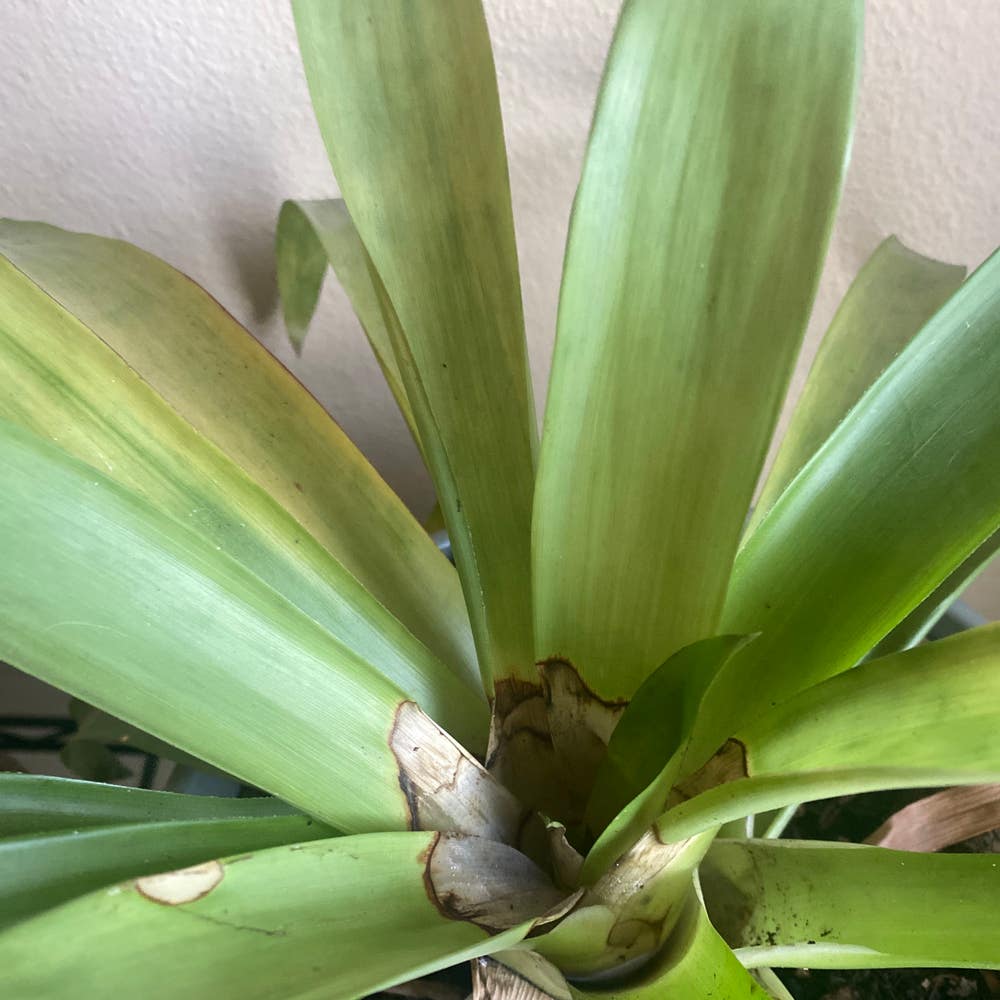
🤒 Why Are There Brown Spots on My Neoregelia chlorosticta?
Neoregelia chlorosticta
By the Greg Editorial Team
Mar 23, 2024•5 min read
This article was created with the help of AI so we can cover more plants for you. May contain errors. See one? Report it here.
Solve the riddle of brown spots on your Neoregelia 🌿 and restore its vibrant beauty with expert tips! 🕵️♂️
- Sunburn, infections, water, and nutrients can cause brown spots on Neoregelia.
- Prevent spots with indirect sunlight, proper watering, and balanced fertilization.
- Regular inspections and hygiene maintain spot-free Neoregelia chlorosticta health.
Spotting the Culprits: Common Causes of Brown Spots
🌞 Too Much Sun, Too Little Fun
Sunburn is a common villain in the brown spot drama. It's straightforward: if your Neoregelia chlorosticta's leaves are sporting crispy brown patches, it's likely been basking in too much glory. These spots usually appear on the areas most exposed to light, like a silent protest against the solar rave.
🦠 Unwanted Guests: Fungal and Bacterial Invasions
Fungal and bacterial infections are like the annoying party crashers no one invited. Look for brown spots with yellow halos or concentric rings—nature's way of saying your plant is under microbial siege. These spots are the botanical equivalent of a red flag, waving for your attention.
💧 Hard Water Marks or Mineral Mayhem
Brown spots could also be the aftermath of a hard water hangover. Mineral deposits from water can leave behind a telltale residue, making your plant's leaves look like they've been part of a dirty rain dance. If the spots are accompanied by a white, crusty buildup on the soil, it's time to rethink your watering source.
🥗 Hungry for Nutrients: Deficiency Dilemmas
Nutrient deficiencies sneak up like a thief in the night, leaving behind a patchwork of discoloration and brown spots. If your Neoregelia chlorosticta's leaves are turning a lackluster shade with spotty brown blemishes, it's probably signaling a cry for a more balanced diet.
First Response: Diagnosing Your Plant's Brown Spots
🕵️♂️ Visual Clues and What They Mean
Brown spots on your Neoregelia chlorosticta can be as telling as a thumbprint at a crime scene. Circular lesions often point to fungal or bacterial infections, while dry, crispy spots might scream 'sunburn!' If the spots are water-soaked or have a yellow halo, it's time to play plant doctor. Nutrient deficiencies? They can show up as rusty patches.
🔍 Beyond the Eye: Simple Tests You Can Do
Grab a magnifying glass and get up close and personal with those spots. Tiny bugs or webbing? You've got pests. No critters? Check the lighting conditions. Too much sun can lead to leaf scorch, while not enough can weaken your plant's defenses. Poke the soil; if it's soggy or bone-dry, your watering habits might need a tweak. And don't forget to give the roots a once-over—they should be firm and white, not mushy or brown. If you're still scratching your head, a soil test may shed some light on the issue. Keep track of your findings, and adjust your care routine accordingly. If the mystery persists, it's time to phone a plant pathologist.
The Brown Spot Battle Plan: Treatment Tactics
🌞 Shading Strategies for Sunburn
Bright light is great, but too much can turn your Neoregelia chlorosticta into a brown spot buffet. To prevent sunburn, strategically position your plant where it gets indirect sunlight. Use sheer curtains or blinds as a light diffuser, especially during peak sun hours. Think of it as creating a VIP lounge for your plant, exclusive from the harsh sun club.
🛡️ Fungus Among Us: Getting Rid of Infections
When fungi decide to crash your plant party, it's time to show them the door. Select a fungicide that's right for the job, and apply it with the precision of a ninja—every leaf, no exceptions. Remember, using too much is overkill; just enough will do the trick. Rotate your fungicides to keep the fungi guessing and resistance at bay.
💧 Water Quality and Your Plant
Hard water can leave your Neoregelia looking like it's been in a mud fight. Use filtered or rainwater to avoid mineral deposits. If your tap water is harder than a calculus exam, consider a water softening solution. Consistency is key—aim for that moist, but not soggy, soil feel.
🍽️ Nutrient Know-How: Feeding Your Plant Right
Your Neoregelia is not just being picky—it genuinely needs a balanced diet. Nutrient deficiencies show up as brown spots of protest. Use a balanced, water-soluble fertilizer to keep your plant fed and happy. Overfeeding is as bad as starving, so stick to the recommended dosage and schedule.
Remember, your plant's health is a reflection of your care. Regular check-ups and adjustments will keep those brown spots in check.
Keeping It Clean: Prevention Practices
🌡️ Regular Check-Ups: Monitoring Plant Health
Regular inspections of your Neoregelia chlorosticta are like health screenings for your plant. Catching issues early can prevent a world of brown spots later. Sanitize your tools before each use to maintain plant hygiene.
🏡 Environment Control: Perfecting Your Plant's Habitat
Crafting the ideal home for your Neoregelia involves balancing light and temperature, maintaining proper humidity, and ensuring good air circulation. This can deter pests and prevent disease, keeping your plant's foliage vibrant.
🚰 The Right Stuff: Water and Nutrient Management
Watering wisdom is key. Allow the top layer of soil to dry out between waterings to reduce pest allure. A balanced diet is crucial; adjust your feeding routine with the seasons, less is more during dormant periods. Keep your tools sterilized to avoid spreading pathogens.
⚠️ Safety First
This content is for general information and may contain errors, omissions, or outdated details. It is not medical, veterinary advice, or an endorsement of therapeutic claims.
Always consult a qualified healthcare professional before using any plant as food, medicine, or supplement.
Never eat any plant (or feed one to pets) without confirming its identity with at least two trusted sources.
If you suspect poisoning, call Poison Control (800) 222-1222, the Pet Poison Helpline (800) 213-6680, or your local emergency service immediately.
Spotted an error? Please report it here.
Banish those pesky brown spots on your Neoregelia chlorosticta by letting Greg diagnose 🕵️♂️ and tailor your watering and care routine for plant perfection!