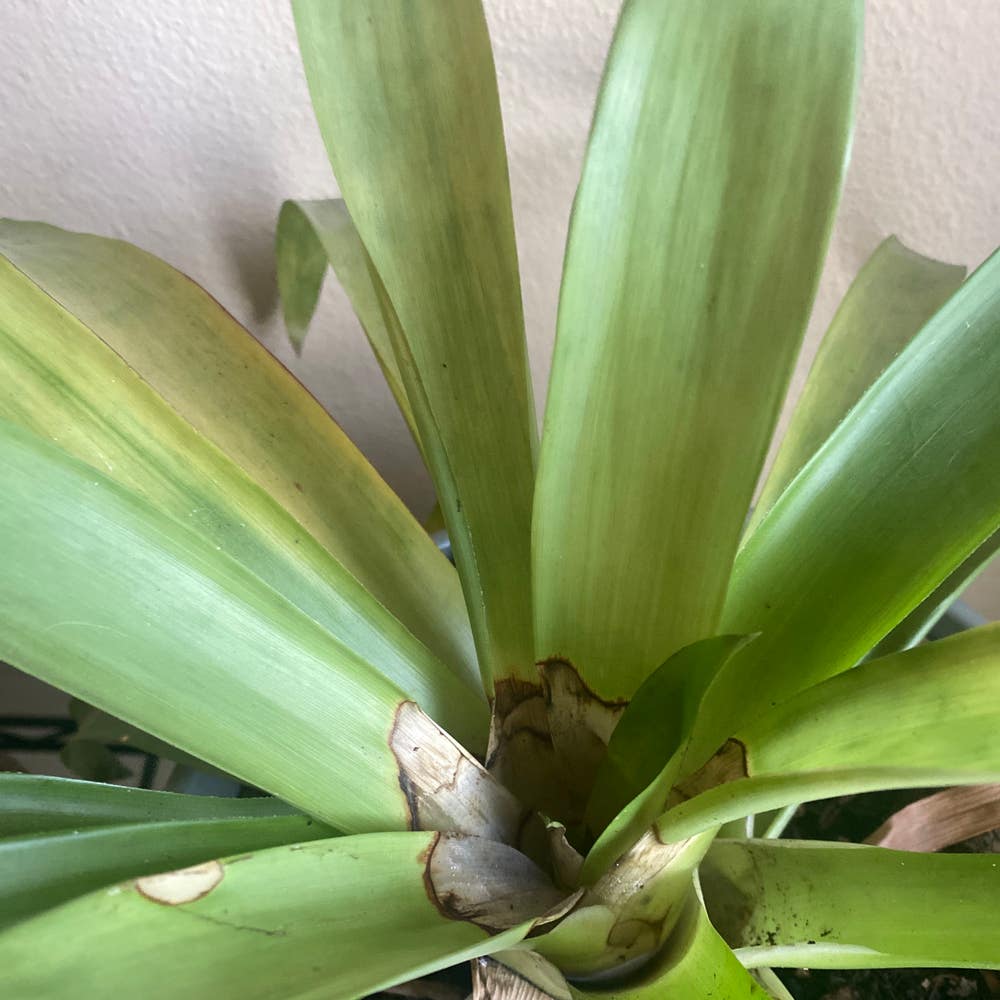
Why Are My Neoregelia chlorosticta Leaves Curling?
Neoregelia chlorosticta
By the Greg Editorial Team
Mar 23, 2024•5 min read
This article was created with the help of AI so we can cover more plants for you. May contain errors. See one? Report it here.
Unravel the mystery behind your Neoregelia's curling leaves and revive its lush look! 🌿🔍
- 💧 Over/Underwatering: Yellowing or brown tips and curling indicate water issues.
- 🌞🌡️ Light and Temperature Stress: Adjust exposure and maintain 60-80°F for health.
- 🌱 Check Roots and Adjust Care: Firm, white roots and consistent watering are key.
Spotting the Curl: Identifying the Problem
🌊 Visual cues of distress
- Overwatering signs include yellowing leaves and a heavy, waterlogged pot.
- Underwatering is indicated by brown leaf tips and upward curling.
- Light stress can cause leaves to bleach or develop dry patches.
- Temperature stress might manifest as a general wilting or curling.
🌱 Getting to the root of it
- Check the roots for firmness and a healthy white color; brown and mushy roots suggest rot.
- A soil moisture meter can provide an accurate assessment of watering needs.
- Inspect for pests and diseases if curling persists despite proper watering and environmental conditions.
The Thirst Quench Balance: Watering Woes
💦 Too much love: Overwatering repercussions
Yellowing leaves and a pot that feels like a mini swamp are classic signs you've been overzealous with the watering can. Roots drowning in moisture turn into a mushy mess. Terracotta pots can be your plant's lifeline, wicking away excess water like a charm. If you've turned the soil into a wet blanket, stop watering and let it dry out. In dire cases, it's time for an emergency transplant into fresh, well-draining soil.
🏜️ High and dry: Underwatering issues
When your Neoregelia looks more wilted than a salad in the sun, it's crying out for hydration. If the soil is as dry as a stand-up comedian's wit and the pot feels lighter than your bank account after a shopping spree, it's time to water. But don't just sprinkle the surface; give your plant a thorough drink, ensuring the water reaches the thirsty roots. Keep the soil consistently moist but not soggy, and your plant will bounce back like a good mood on payday.
Let There Be (The Right Amount of) Light!
🌞 Sunburn and shade: Finding the sweet spot
Neoregelia chlorosticta demands just the right light to flourish without the frizzle.
Bright, indirect sunlight is the mantra here. Too much direct sun can lead to a sunburned plant, sporting crispy, brown-tipped leaves. On the flip side, too little light can cause your Neoregelia to stretch out and lose its vibrant color, becoming a shadow of its former self.
Rotate your plant regularly to ensure even light exposure. If you notice signs of sunburn, pull it back from the window or use sheer curtains to soften the blow. Conversely, if your plant is reaching out like it's trying to escape the dark, consider moving it closer to a light source or investing in a grow light.
Keep an eye on the seasonal changes in light. What's perfect in spring might be overkill in summer. A light meter app can be a handy ally in this quest for the sweet spot, helping you avoid the guesswork.
Remember, your Neoregelia's leaves are like mood rings, subtly signaling their needs. It's your job to interpret these signs and adjust the light accordingly. Too much sun and they scream in crispy agony; too little and they stretch like lazy cats in a sunbeam. Find that Goldilocks zone where your plant perks up without getting sunburnt.
Keeping Cool Under Pressure: Temperature Tactics
🌡️ Hot and bothered: Heat stress and leaf curl
Neoregelia chlorosticta thrives within a temperature sweet spot. When the mercury rises too high, leaves may curl as a defensive response to heat stress. To cool down your plant, shift it to a shaded area or a room with a cooler ambiance. Consider a gentle misting to increase humidity, which can provide a reprieve from the heat. Remember, direct sunlight is a no-go; indirect light is your friend here.
🥶 Chilly reception: Cold stress and its effects
Conversely, cold can make your Neoregelia shiver, resulting in curled leaves or even worse, damage. If you notice a cold snap is affecting your plant, move it to a spot away from drafty windows and doors. Wrap it up if necessary, using plant-appropriate insulation like a cloche to keep it cozy. Just avoid turning your living room into a sauna; a stable temperature is key, not extreme fluctuations. Keep it in the 60-80°F (15-27°C) range for optimal happiness.
Curl Prevention: Long-Term Care Strategies
💧 Consistency is key: Watering schedule
Crafting the perfect watering routine is like setting up a winning domino sequence; one piece out of place and the whole thing can falter. Your Neoregelia chlorosticta isn't asking for a miracle, just a steady hand. Check the soil before watering—aim for damp, not soggy. If it clings to your finger like a shy toddler, hold off on the waterworks.
🌡️ Climate control: Temperature and humidity
Creating the ideal environment for your Neoregelia is less about playing God and more about being a thoughtful host. Keep the temperature consistent, avoiding the drama of a sudden cold draft or a heatwave. Think of humidity as the Goldilocks zone; 40%-60% is just right. Use a hygrometer to avoid the guesswork, and adjust with a humidifier or dehumidifier as needed. Remember, your plant's comfort zone is a stable zone.
⚠️ Safety First
This content is for general information and may contain errors, omissions, or outdated details. It is not medical, veterinary advice, or an endorsement of therapeutic claims.
Always consult a qualified healthcare professional before using any plant as food, medicine, or supplement.
Never eat any plant (or feed one to pets) without confirming its identity with at least two trusted sources.
If you suspect poisoning, call Poison Control (800) 222-1222, the Pet Poison Helpline (800) 213-6680, or your local emergency service immediately.
Spotted an error? Please report it here.
Prevent leaf curl in your Neoregelia chlorosticta by letting Greg monitor moisture 🌡 and guide your watering routine for luscious, healthy leaves.