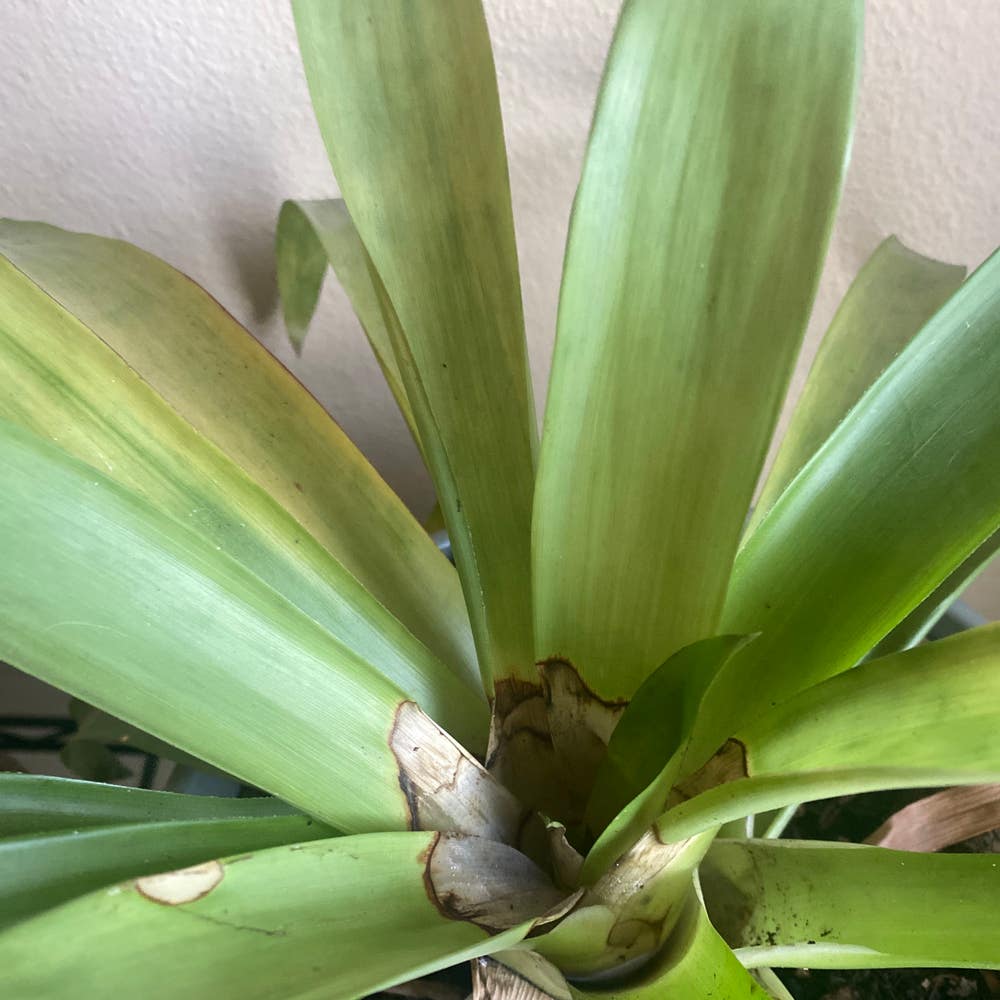
Black Spots on My Neoregelia chlorosticta Leaves
Neoregelia chlorosticta
By the Greg Editorial Team
Mar 23, 2024•4 min read
This article was created with the help of AI so we can cover more plants for you. May contain errors. See one? Report it here.
Banish unsightly black spots and restore your Neoregelia's charm with our proven care secrets. 🌿✨
- Fungi, bacteria, and stress cause black spots on Neoregelia leaves.
- Treat with chemicals or natural remedies, and adjust care routine.
- Prevent spots with proper watering, light, and airflow; inspect regularly.
Spotting the Culprits: What's Behind the Black Spots?
🍄 Fungal Foes
Fungal infections are the usual suspects in the case of black spots on Neoregelia chlorosticta. These spots often boast a circular shape with a yellowish edge, screaming "fungus was here." Warmth and moisture are their best pals, creating the perfect crime scene for fungi to thrive. If you're seeing a powdery or bullseye pattern, it's time to consider antifungal agents.
🦠 Bacterial Baddies
Bacterial infections are sneakier. They leave behind spots that look like they've been soaked in water, and sometimes they're slimy to the touch. These spots can be a sign of bacterial leaf spot, which can be just as destructive as fungal issues. If you notice a foul smell or a hole in the leaf, that's bacteria telling you it's winning. Copper-based treatments can help show these invaders the door.
🌿 Environmental Stress Signals
Your plant's environment can also be a culprit. Too much sun can lead to leaf burns, while overwatering can cause soft, dark spots. Poor air circulation? That's like sending out invites for fungi and bacteria to settle in. Keep an eye out for these stress signals—they're your plant's way of crying out for help. Adjusting your care routine can often be the best defense against these environmental foes.
First Aid for Your Neoregelia: Treating Black Spots
💉 Going the Chemical Route
When black spots mar the vibrant leaves of your Neoregelia chlorosticta, chemical treatments may be your best bet. Fungicides and bactericides should be applied with precision—think of it as a targeted strike against the invaders. Always start by isolating the plant; this is crucial to prevent the spread of the disease.
Before you begin, prune the affected leaves. Use sterilized shears to make clean cuts, and dispose of the foliage responsibly—no composting, as you don't want those spores to return. After pruning, suit up in protective gear and apply the chosen chemical treatment according to the label instructions. Remember, this isn't a free-for-all; dosage and application frequency matter.
🌿 Natural Remedies and Care Adjustments
For those leaning towards natural solutions, neem oil and baking soda mixtures can be effective. These options are like the first-aid kit of plant care—useful for minor injuries but not a substitute for more serious treatment when needed. Apply neem oil with the care of an artist, ensuring thorough coverage without drenching the plant.
Care adjustments are also part of the healing process. Reassess your Neoregelia's living conditions; proper watering, lighting, and airflow can significantly bolster recovery. Integrate these changes into your routine to strengthen your plant's defenses. Regular care and vigilance are the unsung heroes in the battle against black spots.
Keeping the Spots at Bay: Prevention Tactics
💧 Watering Wisdom
Hydration is a balancing act. Your Neoregelia chlorosticta doesn't want to swim, nor does it wish to parch. Water moderately when the substrate starts to dry, but don't let it sit in wetness like a forgotten bath toy. In winter, ease up as if your plant's hibernating. Remember, it's a drink, not a soak.
🌬 Airflow and Light Love
Your plant craves a breezy spot with room to show off its leaves. Stagnant air is a fungal fiesta waiting to happen. Space out your Neoregelia or use a fan to simulate a gentle wind, but avoid creating a maelstrom. Light-wise, aim for the sweet spot of bright, indirect sunlight. Too much and you're flirting with leaf burn, too little and you're stifling its mojo.
🕵️ Routine Checks and Balances
Make plant check-ups as routine as your morning coffee. Look for early signs of distress like a plant detective on a stakeout. Discoloration or spotting? Time to act. Regular grooming, such as removing dead leaves, is like a spa day for your Neoregelia, keeping it looking sharp and healthy. Remember, consistency is key—your plant's well-being depends on it.
⚠️ Safety First
This content is for general information and may contain errors, omissions, or outdated details. It is not medical, veterinary advice, or an endorsement of therapeutic claims.
Always consult a qualified healthcare professional before using any plant as food, medicine, or supplement.
Never eat any plant (or feed one to pets) without confirming its identity with at least two trusted sources.
If you suspect poisoning, call Poison Control (800) 222-1222, the Pet Poison Helpline (800) 213-6680, or your local emergency service immediately.
Spotted an error? Please report it here.
Ensure your Neoregelia chlorosticta thrives with spot-on care 🌿 by using Greg for personalized watering and lighting reminders that prevent those black spots.