💧 Why Are My Neoregelia chlorosticta Leaves Mushy?
Neoregelia chlorosticta
By the Greg Editorial Team
Mar 23, 2024•4 min read
This article was created with the help of AI so we can cover more plants for you. May contain errors. See one? Report it here.
Revive your Neoregelia's soggy leaves 🍂 by tackling the root issues with our life-saving guide!
- Overwatering and poor drainage lead to mushy Neoregelia leaves.
- Early detection of root rot is key to saving your plant.
- Well-draining soil and pot are essential for long-term health.
Spotting the Trouble: Signs of Mushy Leaves
🍂 Visual Symptoms
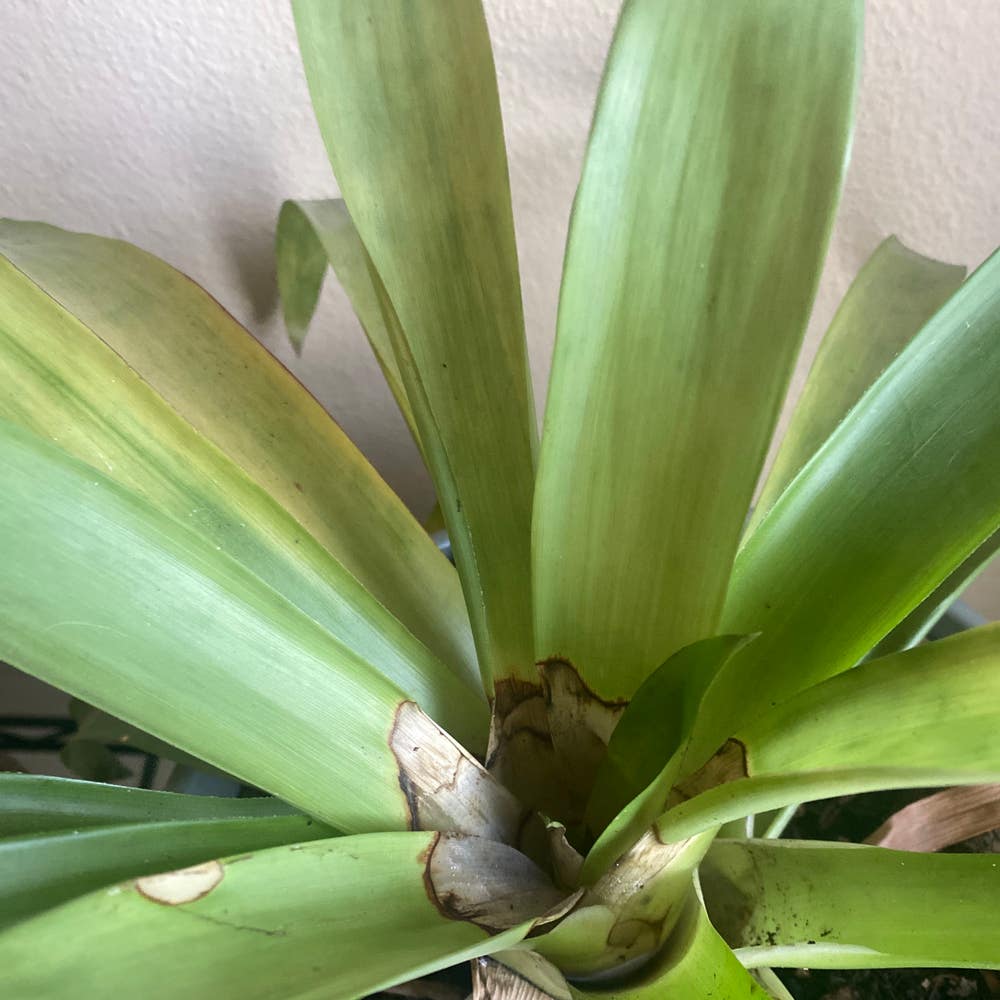
Mushy leaves in Neoregelia chlorosticta are hard to miss. Discoloration is a telltale sign, with leaves turning a sad shade of yellow, brown, or a faded green. They may feel like overcooked vegetables to the touch, and if they're dropping off with just a gentle nudge, it's a clear cry for help.
🚱 Potential Immediate Causes
Overwatering is often the culprit when you find your plant's leaves more mush than muscle. If the soil feels like a wet sponge days after watering, you've likely been too generous with the H2O. Poor drainage can also be a factor; if your pot's not letting water escape efficiently, it's time for a rethink. Keep an eye out for a moldy smell or roots that feel like they've been through a horror movie—these are signs of a swampy mess below the surface.
Getting to the Root: Causes of Mushiness
💦 Overwatering Woes
Overwatering is a common misstep that turns robust Neoregelia chlorosticta leaves into a mushy mess. Roots need to breathe, and when they're drowning in water, they can't. This leads to a soggy end for your plant's leaves.
Balancing water input with your plant's needs is crucial. It's not about sticking to a strict schedule but about observing and responding to the plant's condition. The soil should dry out between waterings, avoiding constant wetness that spells trouble.
🍄 The Dreaded Root Rot
Root rot is the silent killer in the plant world, often going unnoticed until it's too late. If your plant's roots are turning into a brown, mushy disaster, it's time for action. This is a direct result of overwatering and poor drainage, leading to the downfall of your plant's leaves.
Early detection is key. Regularly checking the roots for signs of rot can save your plant. If you spot brown or black roots or catch a whiff of decay, it's a clear sign that your plant is in distress. Immediate intervention can prevent the spread of rot and save your plant.
First Aid for Your Plant
🌿 Emergency Pruning
Immediate action is crucial when you spot mushy leaves on your Neoregelia chlorosticta. Start by sanitizing your pruning shears; cleanliness is non-negotiable. Snip off the affected leaves at the base, ensuring you only target the damaged areas. This redirects the plant's energy to the healthy foliage. Remember, you're on a rescue mission, not a styling spree.
🏜️ Soil SOS
If your plant's soil feels like a swamp, it's time for a dry-out. Cease all watering until the top inch of soil is dry. Consider integrating perlite or sand to improve drainage for the future. If the situation is dire, a complete soil swap might be necessary. Repot your plant with fresh, well-draining mix to give it a new lease on life. Keep an eye on the moisture level; your plant's not a fan of soggy feet.
Long-Term Care to Avoid Soggy Situations
💧 Watering Wisdom
Getting your Neoregelia chlorosticta's watering routine dialed in is key. Consistency is your new mantra. Check the topsoil; if it's dry to the touch, it's time to water. But remember, your plant is not a fish—it doesn't need to swim. Use room temperature water to avoid shocking the roots. In winter, ease up—plants are not as thirsty when it's cold.
🌱 Soil and Pot Perfection
The right soil mix is like the perfect mattress—supportive yet breathable. Aim for a blend that's one part drainage champion and one part moisture-retainer. Think coco coir or sphagnum moss mixed with perlite. Now, about the pot: if it doesn't have drainage holes, it's a no-go. Roots hate soggy feet. And don't let water sit in the saucer; it's not a hot tub.
⚠️ Safety First
This content is for general information and may contain errors, omissions, or outdated details. It is not medical, veterinary advice, or an endorsement of therapeutic claims.
Always consult a qualified healthcare professional before using any plant as food, medicine, or supplement.
Never eat any plant (or feed one to pets) without confirming its identity with at least two trusted sources.
If you suspect poisoning, call Poison Control (800) 222-1222, the Pet Poison Helpline (800) 213-6680, or your local emergency service immediately.
Spotted an error? Please report it here.
Ensure your Neoregelia chlorosticta thrives with just-right watering 💧 by using Greg's tailored reminders to prevent those dreaded mushy leaves.