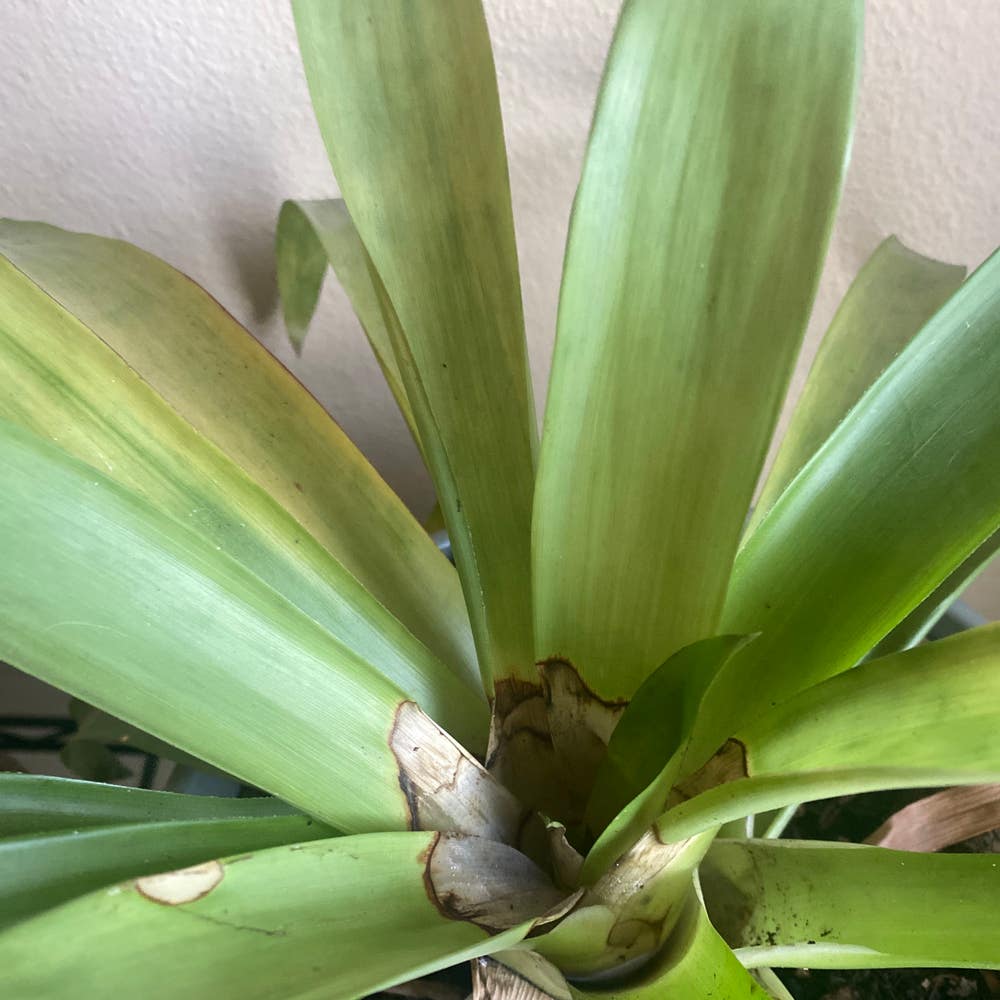
Why Is My Neoregelia chlorosticta Dropping Leaves?
Neoregelia chlorosticta
By the Greg Editorial Team
Mar 23, 2024•3 min read
This article was created with the help of AI so we can cover more plants for you. May contain errors. See one? Report it here.
Solve your Neoregelia's leaf drop mystery 🍂 and restore its vibrant health with expert care tips!
- 🍂 Leaf dropping signals distress, caused by water, light, or temperature issues.
- 💧 Master watering balance to prevent soggy or brittle leaves.
- 🌡️ Maintain cozy temperatures and bright, indirect light for healthy growth.
Spotting the Red Flags: Symptoms of Distress in Neoregelia chlorosticta
Leaf dropping in Neoregelia chlorosticta can signal distress. It's not always about seasonal changes; sometimes, it's a cry for help.
💧 When Water is the Culprit
🌊 Overwatering
Soggy soil and limp leaves are classic signs of overwatering. Your plant isn't enjoying the pool party.
🏜️ Underwatering
On the flip side, dry and brittle leaves mean your plant's thirstier than a camel on a hot day. It's begging for a drink.
🌞 Light and Temperature: Finding the Sweet Spot
🌅 Too Much Light
If your plant's leaves are more sunburnt than a tourist at the beach, dial down the light exposure.
❄️ Incorrect Temperatures
Leaves dropping like it's autumn inside your house? Your Neoregelia might be shivering from the cold.
The Rescue Plan: Addressing Leaf Drop in Neoregelia chlorosticta
Leaf drop in your Neoregelia chlorosticta can be a real head-scratcher, but don't throw in the trowel just yet. Turning the tide is all about getting back to basics and fine-tuning your care routine.
💧 Fine-Tuning Your Watering Technique
Watering is less of a science and more of an art. Consistency is key. Your plant's roots crave a drink that's just right—not too much and not too little. Think of it as keeping your Neoregelia hydrated, but never waterlogged.
Establishing a Routine
Get into a groove with your watering schedule. Stick to a routine that's as regular as your favorite TV show. Check the soil's moisture like you're testing the waters before a swim—it should feel like a well-wrung sponge.
Observing Plant Feedback
Your plant will talk to you, not with words, but with leaves. Limp, soggy leaves scream overwatering, while crispy, dry ones whisper of thirst. Adjust your watering based on these silent cues.
🌿 Creating the Ideal Environment
Your Neoregelia is a bit of a diva when it comes to its surroundings. It demands the perfect amount of light and a cozy temperature range to strut its stuff.
Light it up Right
Bright, indirect light is your plant's best friend. It's like a spotlight that makes your Neoregelia's colors pop without burning it to a crisp. Find a spot where the sun's rays are gentle yet generous.
Keeping it Cozy
Temperature is another piece of the puzzle. Your plant doesn't appreciate surprises. Keep it away from drafts and maintain a steady climate—think of it as setting the perfect room temperature for a guest you're trying to impress.
Monitoring and Adjusting
Keep an eye on your plant like it's the season finale of your favorite series. Notice how it responds to changes in its environment and tweak your care accordingly. It's about finding that sweet spot where your Neoregelia feels at home.
Prevention is Key: Keeping Your Neoregelia chlorosticta Happy
Routine checks are the backbone of Neoregelia chlorosticta care. Like a health check-up, these inspections can catch issues before they escalate.
Crafting the right environment is crucial. Your plant doesn't need a luxury spa, but it does need conditions that mimic its natural habitat.
💧 Consistency in Care
💦 Watering Wisdom
Master the watering schedule to avoid the drama of over or underwatering. Think of it as a hydration balance sheet for your plant's roots.
🌡️ Climate Control
Stable temperatures and consistent lighting are like a cozy blanket for your Neoregelia. No sudden chills or heatwaves, please.
⚠️ Safety First
This content is for general information and may contain errors, omissions, or outdated details. It is not medical, veterinary advice, or an endorsement of therapeutic claims.
Always consult a qualified healthcare professional before using any plant as food, medicine, or supplement.
Never eat any plant (or feed one to pets) without confirming its identity with at least two trusted sources.
If you suspect poisoning, call Poison Control (800) 222-1222, the Pet Poison Helpline (800) 213-6680, or your local emergency service immediately.
Spotted an error? Please report it here.
Keep your Neoregelia chlorosticta from dropping leaves 🍂 with Greg's tailored reminders for watering and environment adjustments, ensuring your plant thrives.