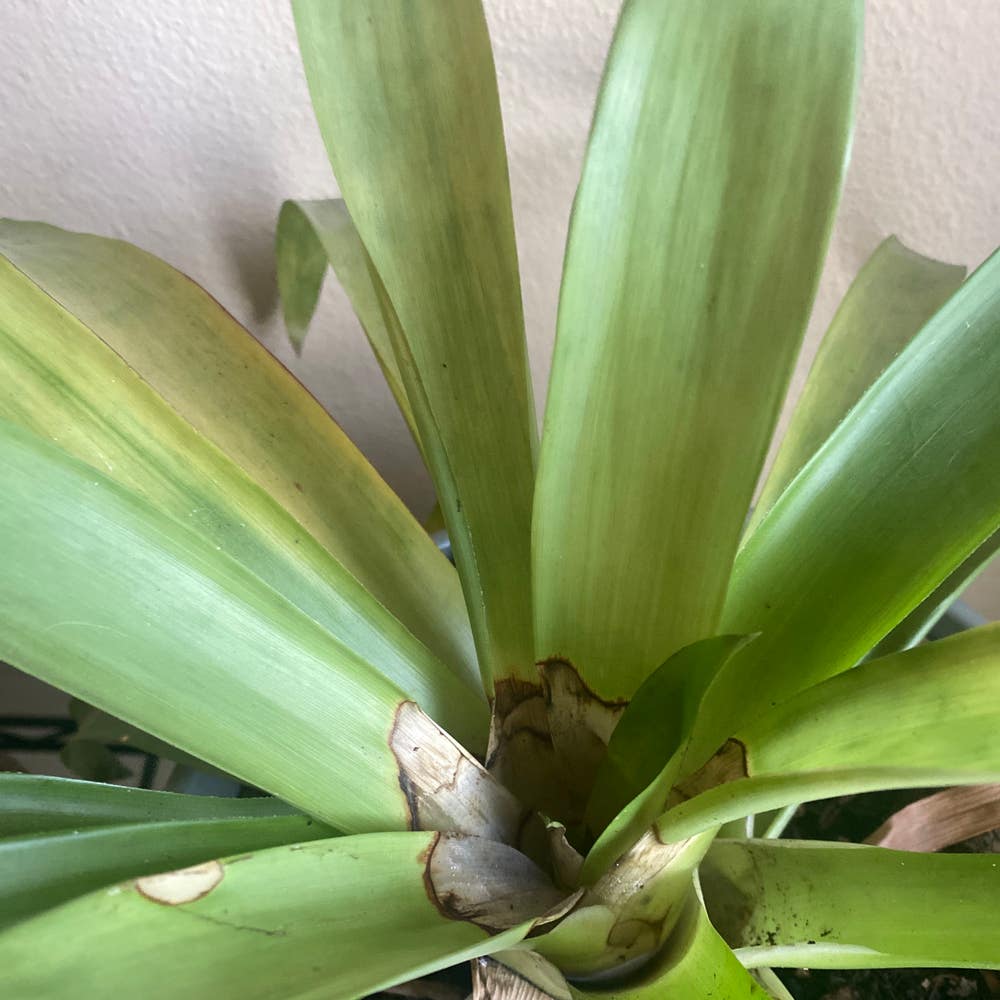
How Can You Tell If A Neoregelia chlorosticta Is Dying?
Neoregelia chlorosticta
By the Greg Editorial Team
Mar 23, 2024•4 min read
This article was created with the help of AI so we can cover more plants for you. May contain errors. See one? Report it here.
Spot and save your Neoregelia chlorosticta 🌿 from dying with these essential care tips!
- 🌱 Yellow leaves mean over-watering; wrinkled leaves mean under-watering. Adjust accordingly.
- 🌡️ Keep at 60-80°F and bright, indirect light to prevent heat stress.
- 🐛 Inspect for pests like mealybugs and aphids; use neem oil for control.
Water Woes: Too Much or Too Little
🚱 Spotting the Signs
Yellowing leaves are your first clue that you're over-watering your Neoregelia chlorosticta. If the soil feels like you've just wrung out a sponge, it's a wet mess. On the flip side, if the leaves are more wrinkled than a linen shirt and the soil is as dry as yesterday's toast, you're in under-watering territory.
Finding the Balance
To hit the sweet spot with watering, observe your plant like it's a reality TV show. When the top inch of soil feels dry, it's time to water. But don't go pouring like there's no tomorrow—moderation is key. Think of it as a sip, not a gulp. Ensure the pot drains faster than a sinkhole to avoid soggy soil syndrome. Remember, less is more during the winter months. Keep the water lukewarm and the lime at bay, and your Neoregelia chlorosticta won't give you the cold shoulder.
Light and Temperature: The Goldilocks Zone
💡 Reading the Leaves
Neoregelia chlorosticta communicates its comfort level through its leaves. If they're sporting crispy tips or brown patches, they're shouting, 'Ease up on the heat!' Conversely, a plant stretching towards the light is quietly pleading for more. It's not just about survival; it's about letting those variegated leaves flaunt their beauty without getting a sunburn.
💡 Creating the Ideal Environment
To keep your Neoregelia chlorosticta in the sweet spot, aim for bright, natural light—think east or west window vibes. Direct sunlight is a no-go; it's like putting your plant in the middle of a desert with no sunscreen. Temperature-wise, keep it cozy between 60-80°F (15-27°C). Anything colder and you're entering risky territory. Remember, these tropical beauties don't have a winter wardrobe. Keep humidity on point, around 40-60%, and consider misting to up the ante in drier climates. Stability is key—no one likes a home that feels like it's having weather mood swings.
The Unseen Enemy: Root Rot and Fungal Foes
🕵️♂️ Early Detection
Root rot and mold are the sneaky adversaries of Neoregelia chlorosticta, often going unnoticed until it's almost too late. Dark, mushy roots and a distinct, unpleasant smell are the distress signals you can't ignore. Above ground, if your plant's leaves are yellowing or growth seems stunted, it's time to investigate the roots.
🚀 Swift Solutions
When you spot the early signs of root rot or mold, it's action time. Remove the plant from its pot and gently wash the roots to reveal the extent of the damage. Using sterilized scissors, cut away the affected parts. After this impromptu surgery, repot your plant in fresh, sterile soil and ensure the pot has proper drainage to prevent a repeat performance.
For mold issues, increase airflow around your plant and consider exposing the soil to light. If you find mold on the soil, scoop it out and give the area a good airing. Regular checks are your best defense; catch these issues early, and your Neoregelia chlorosticta stands a fighting chance.
Pests and Pathogens: Keeping Bugs at Bay
🐛 Common Culprits
Mealybugs, scale insects, and aphids are the usual suspects when it comes to Neoregelia chlorosticta pests. These tiny troublemakers can wreak havoc on your plant's health, often hiding under leaves or along stems. Regular inspection is key to catching these pests before they become a full-blown infestation.
🐜 Pest Control
To combat these pests, isolation is crucial. Quarantine the affected plant to prevent the spread to your green family. Cleanliness is next; remove all infected parts and sterilize your tools. For treatment, insecticidal soap or neem oil are your go-to options for a gentler approach. If you must resort to chemical pesticides, use them sparingly and responsibly. Remember, prevention is better than cure; keep your plant's environment tidy and well-circulated to deter pests. Introducing beneficial insects like ladybugs or lacewings can also help manage these pests naturally.
When the Heat is On: Preventing Leaf Scorch
🌡️ Symptoms of Scorch
Neoregelia chlorosticta leaves show distress through brown, crispy patches when scorched by too much heat. These signs are a clear SOS; your plant is in urgent need of a cooler environment or less direct sunlight.
🛡️ Scorch-Proofing Strategies
Relocation is your first move against leaf scorch. Place your Neoregelia chlorosticta in a spot with bright, but indirect, light. Sheer curtains can be a plant's best friend, diffusing harsh rays without plunging it into darkness.
Acclimation and Adjustment
Gradually acclimate your plant to new lighting conditions to avoid shock. Rotate it regularly to ensure even exposure, preventing one side from getting too much sun.
Environmental Shields
Consider using shade cloths or positioning your plant in a less windy spot to protect against the combined effects of sun and gusts. Monitoring your plant's environment is key to preventing scorch before it starts.
⚠️ Safety First
This content is for general information and may contain errors, omissions, or outdated details. It is not medical, veterinary advice, or an endorsement of therapeutic claims.
Always consult a qualified healthcare professional before using any plant as food, medicine, or supplement.
Never eat any plant (or feed one to pets) without confirming its identity with at least two trusted sources.
If you suspect poisoning, call Poison Control (800) 222-1222, the Pet Poison Helpline (800) 213-6680, or your local emergency service immediately.
Spotted an error? Please report it here.
Ensure your Neoregelia chlorosticta avoids distress 🌿 with Greg's custom reminders for watering and environmental checks, catching early signs of trouble from the tips in this article.