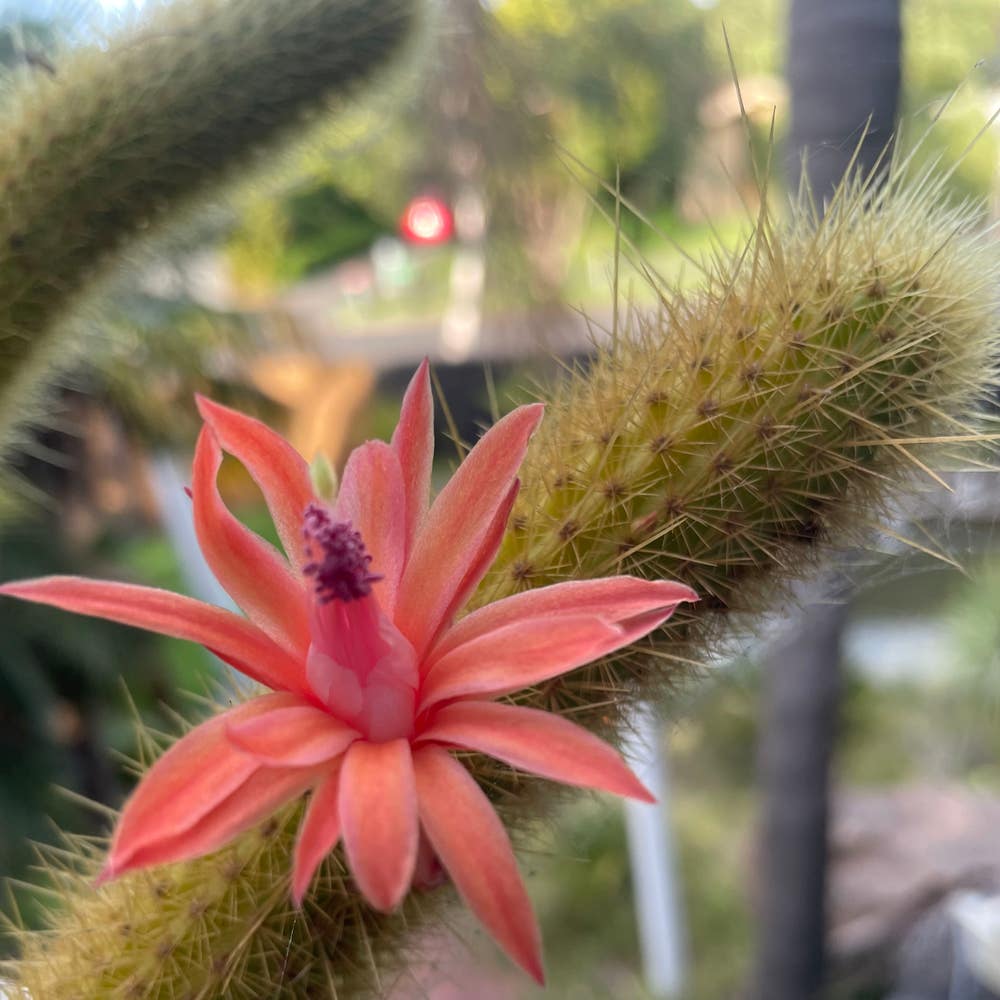
Why Is My Golden Rat Tail Not Doing Well?
Cleistocactus winteri
By the Greg Editorial Team
Jun 18, 2024•5 min read
This article was created with the help of AI so we can cover more plants for you. May contain errors. See one? Report it here.
Rescue your wilting Golden Rat Tail 🌵 from the brink with swift, life-saving care strategies!
- Wilting, yellowing, and browning indicate your Golden Rat Tail needs help.
- Act fast to fix watering, light, and temperature issues to prevent damage.
- Combat pests and root rot with insecticidal soap and prompt repotting.
Spotting Trouble in Paradise
🚨 Signs Your Golden Rat Tail Needs Help
Your Golden Rat Tail cactus is a hardy survivor, but it's not immune to distress. Wilting leaves are the first cry for help, a clear sign that your plant is not in its happy place. If the foliage is turning yellow, it's time to play detective and root out the issue. Browning can signal a sunburn or dehydration, while stunted growth whispers of potential root confinement or nutritional deficiencies. And when leaves start dropping like it's autumn in the desert, you know it's time for some serious plant parenting.
🚑 Quick Response is Key
Acting fast can mean the difference between a quick recovery and a cactus catastrophe. If you spot any of the above symptoms, don't just stand there—take action. Assess the situation, check the soil, and consider the recent care you've given your plant. Has it been watered too much, or perhaps not enough? Is it basking in the sun like a beachgoer or sulking in the shade? Quick intervention can turn the tide, transforming your Golden Rat Tail from a plant in peril to a desert champion.

Water Woes: Too Much or Too Little
🌊 Over-watering Hazards
Over-watering can turn your Golden Rat Tail's soil into a swampy mess. If the leaves are yellow and bloated, it's a red flag. Check the soil: if it clings to your fingers like a wet sponge, it's time to cut back on the water. To fix this, first, stop watering and let the soil dry out. If root rot has set in, it's surgery time: remove the plant, trim the mushy roots, and repot in fresh, well-draining soil.
🏜️ Under-watering Symptoms
Conversely, under-watering leaves your plant as limp as a noodle. If the top inch of soil is bone-dry, it's a cry for help. Hydrate slowly, letting the plant soak up moisture at its own pace. Establish a consistent watering routine; your plant's thirst isn't a guessing game. Adjust your care to meet its needs, and remember, a little attention goes a long way.

Light and Temperature: The Balancing Act
💡 Getting the Light Just Right
Golden Rat Tail cacti crave bright, indirect sunlight. Too much direct sun can lead to scorched leaves, while too little can cause the plant to stretch awkwardly towards the light, resulting in a leggy, sparse appearance. To prevent this, rotate your plant periodically, ensuring all sides receive equal light and maintain their lush, full look.
🌡 Keeping the Temperature Consistent
Temperature stability is crucial for your plant's well-being. Fluctuations can stress your Golden Rat Tail, manifesting as wilting or discolored leaves. Aim to keep the temperature between 65°F and 80°F. Avoid placing your plant near drafty areas or heating and cooling vents, as these can create sudden temperature changes that are harmful. Keep it cozy, keep it stable, and your plant will thank you.

The Unseen Enemies: Pests and Diseases
🐜 Pests Be Gone!
Mealybugs and spider mites are like squatters in your Golden Rat Tail's lush foliage, setting up camp and wreaking havoc. To spot these pests, flip the leaves and inspect closely. Mealybugs look like tiny cotton clusters, while spider mites leave fine webs and yellow speckling.
🚨 Immediate Action
Once you've found them, it's eviction time. Insecticidal soap or neem oil are your allies here, capable of clearing out these pests without the collateral damage of harsher chemicals. Spray thoroughly, making sure to hit the undersides of leaves where these critters love to hide.
🍄 Fungal Foes and Mold
Fungi and mold are stealthy invaders, often going unnoticed until they've thrown a full-blown spore party. Mold appears as a fuzzy growth, while fungal issues can present as spots or rotted areas.
🌿 Fungus Control
To combat these uninvited guests, keep your Golden Rat Tail's leaves dry and ensure good air circulation. If you spot an outbreak, prune the affected areas and apply a fungicide specifically designed for the job. Remember, overwatering is often the root of all evil when it comes to mold and fungus, so water responsibly.
When the Roots Suffer: Root Rot
🚨 Recognizing Root Rot
Root rot is the silent assassin of houseplants, often going unnoticed until it's almost too late. Yellowing leaves and a stunted growth are the plant's distress signals. If the roots are mushy and dark, you're dealing with decay. And the smell? If your plant's soil smells like a forgotten potato at the back of your pantry, it's time to investigate.
🏥 The Road to Recovery
To rescue your plant from root rot, act swiftly. First, remove the plant from its pot and inspect the roots. Healthy roots are firm and white, while rotten ones are anything but. Trim the damaged roots carefully, as if you're a surgeon on the operating table. Repot in fresh, well-draining soil, and resist the urge to overwater. Post-surgery, let the plant recover in a well-lit, warm spot without drowning it in water. Think of it as a plant ICU where tender love and care are the best medicine.
⚠️ Safety First
This content is for general information and may contain errors, omissions, or outdated details. It is not medical, veterinary advice, or an endorsement of therapeutic claims.
Always consult a qualified healthcare professional before using any plant as food, medicine, or supplement.
Never eat any plant (or feed one to pets) without confirming its identity with at least two trusted sources.
If you suspect poisoning, call Poison Control (800) 222-1222, the Pet Poison Helpline (800) 213-6680, or your local emergency service immediately.
Spotted an error? Please report it here.
Combat your Golden Rat Tail's woes with timely actions and personalized 🌵 care from Greg, ensuring it thrives under your watchful eye.