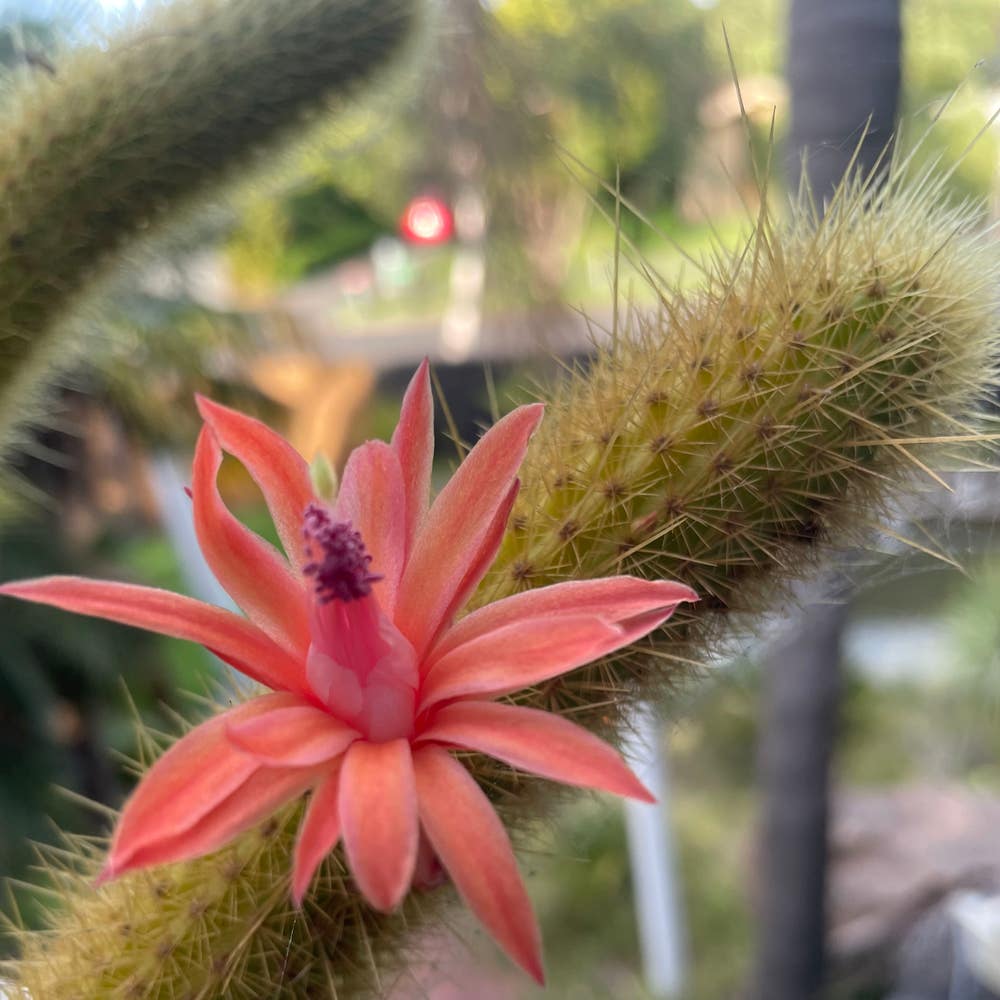
How Much Humidity Does My Golden Rat Tail Need?
Cleistocactus winteri
By the Greg Editorial Team
Jun 18, 2024•3 min read
This article was created with the help of AI so we can cover more plants for you. May contain errors. See one? Report it here.
Ensure your Golden Rat Tail flourishes 🌵 by mastering its ideal humidity balance—no more guessing games!
- Relative humidity is key for your Golden Rat Tail's transpiration.
- 🍂 Crispy tips signal low humidity; use a hygrometer to monitor.
- High humidity can harm; use fans or dehumidifiers to balance.
Spotting Your Golden Rat Tail's Humidity Sweet Spot
💧 Relative Humidity and Your Plant
Relative humidity (RH) is your Golden Rat Tail's comfort barometer. It measures the water vapor in the air as a percentage of what could be held at the current temperature. Why does this matter? Because your plant's health hinges on it. RH influences how your Golden Rat Tail breathes and drinks through its leaves, a process known as transpiration.
🌡️ Reading Your Local Humidity
To keep your Golden Rat Tail from throwing a fit, you'll need to measure the humidity. A hygrometer is your go-to tool for this task, giving you the lowdown on your air's moisture content. Don't rely on guesswork; check the readings at various times to understand your home's humidity highs and lows. Remember, your plant's leaves are like mood rings for moisture—they'll tell you when the air's too dry or too humid. Keep an eye on them.

When the Air's Too Dry
🌵 Telltale Signs of Low Humidity Distress
Crispy leaf tips and brown edges are your Golden Rat Tail crying out for moisture. If your skin is begging for lotion, your plant is likely in the same boat. Keep an eye out for leaves that look more like potato chips than lush foliage.
🌧 Quick Fixes to Ramp Up the Moisture
Grouping your plants can create a microclimate that naturally boosts humidity. A pebble tray filled with water beneath your Golden Rat Tail's pot is a simple yet effective solution. If these tricks don't cut it, consider investing in a humidifier for a more controlled environment. Avoid misting; it's a quick fix that can lead to more trouble than it's worth.

When It's a Humidity Jungle
🌿 High Humidity Havoc
In the lush world of the Golden Rat Tail, too much of a good thing can lead to trouble. High humidity can transform your plant's cozy habitat into an unwelcome swamp. Leaves may wilt or yellow, signaling distress in the tropical paradise. It's crucial to recognize these signs early to prevent more severe issues like rot or disease.
🌬️ Dehumidifying for Plant Health
Air circulation is your first line of defense against the dampness. A fan or cracked window can work wonders in reducing moisture. If the air still feels thick, a dehumidifier might be necessary to protect your plant's health. Remember, consistency is key; avoid drastic changes to maintain a stable environment. Monitor with a hygrometer to ensure your Golden Rat Tail isn't drowning in its own humidity haven.

Tools of the Trade for Humidity Control
💨 Humidifiers: Your Golden Rat Tail's Best Pal
Humidifiers are a game-changer for the Golden Rat Tail, providing that just-right mist it craves. Choose one that's quiet and can be set to maintain consistent moisture levels. Remember, aim for a gentle mist, not a deluge that'll leave your plant gasping for air.
Position it nearby but not directly on your plant to avoid overwatering. Use a hygrometer to monitor the humidity levels, ensuring they stay within the plant's comfort zone.
🌪 The Dehumidifier Dilemma
Sometimes, the air is too moist, and that's where dehumidifiers come in. They're like bouncers at a club, keeping the humidity levels in check. Place one in the room if you're dealing with a moisture overload, but watch out—too much dehumidifying can turn your tropical paradise into a desert.
Monitor the situation with a hygrometer to prevent your Golden Rat Tail from drying out. It's all about balance; you want to avoid the extremes of a rainforest or a drought.
⚠️ Safety First
This content is for general information and may contain errors, omissions, or outdated details. It is not medical, veterinary advice, or an endorsement of therapeutic claims.
Always consult a qualified healthcare professional before using any plant as food, medicine, or supplement.
Never eat any plant (or feed one to pets) without confirming its identity with at least two trusted sources.
If you suspect poisoning, call Poison Control (800) 222-1222, the Pet Poison Helpline (800) 213-6680, or your local emergency service immediately.
Spotted an error? Please report it here.
Keep your Golden Rat Tail lush and healthy 🌿 by using Greg to track humidity changes and receive custom care advice for maintaining the ideal environment.