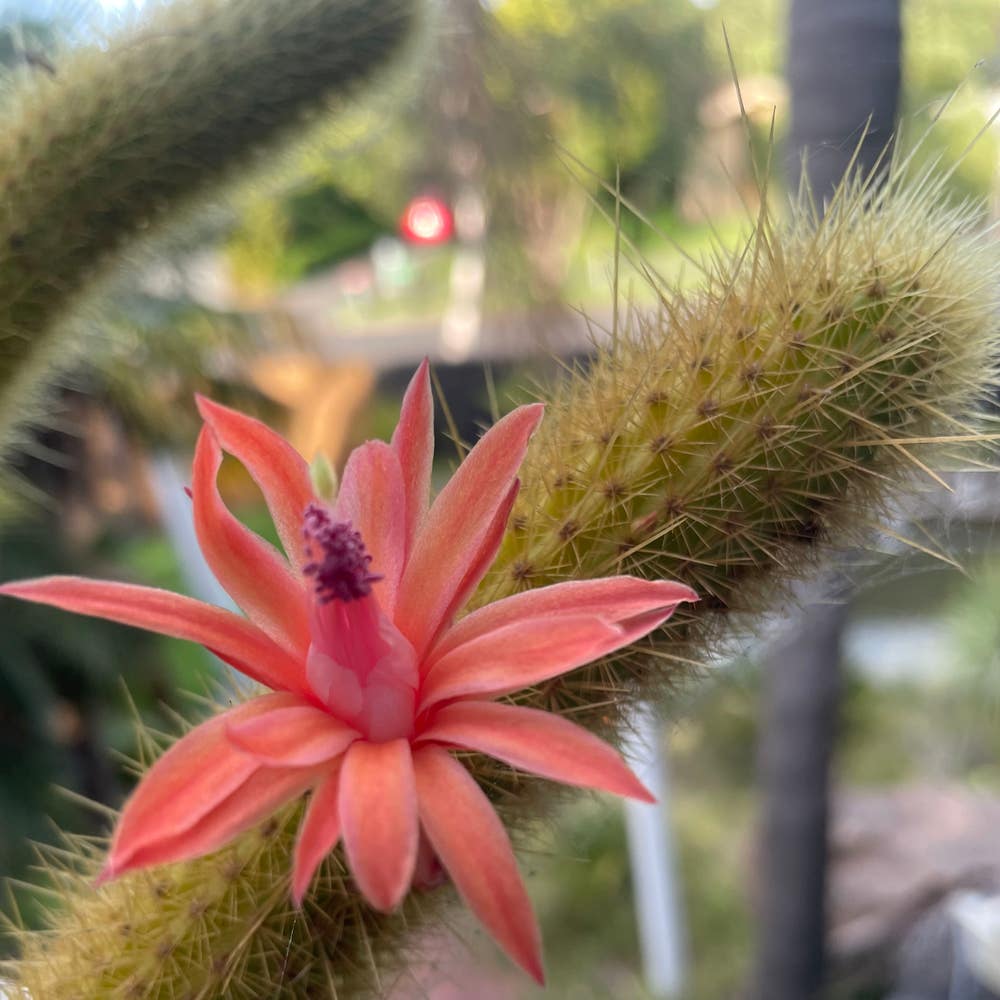
Why Are There Black Spots on My Golden Rat Tail Leaves?
Cleistocactus winteri
By the Greg Editorial Team
Jun 18, 2024•4 min read
This article was created with the help of AI so we can cover more plants for you. May contain errors. See one? Report it here.
Stop black spots from ruining your Golden Rat Tail 🌵—discover prevention and cure now!
- Black spots escalate quickly, requiring prompt treatment to save your Golden Rat Tail.
- Fungi and bacteria are the main villains, thriving in humid, poorly circulated areas.
- Prevent with wise watering and climate control to keep those black spots at bay.
Spotting the Trouble: Recognizing Black Spots
🕵️ What Do Black Spots Look Like?
Golden Rat Tail owners, take note: black spots on your plant's leaves are a red alert. These spots are typically small and dark, starting as mere specks that can expand into larger patches. They're often found on the undersides of leaves, a sneaky hiding spot. If you spot any with dark margins or concentric rings, it's time to take action. These aren't just blemishes; they're signs of an underlying issue.
🚨 The Progression of Black Spots
The spread of black spots is like a silent alarm—it starts quietly but can escalate quickly. Initially appearing as isolated dots, they can grow and merge into unsightly blotches if ignored. Keep an eye on their progression: if new leaves are getting hit first, your plant is sending an SOS. And if those spots are spreading faster than a rumor in a small town, you've got a serious problem on your hands. Quick intervention is key to prevent a full-on leafy epidemic.

Uncovering the Culprits: Causes of Black Spots
🍄 Fungal Foes
Fungi are the usual suspects when it comes to black spots on Golden Rat Tail leaves. These microscopic troublemakers thrive in humid conditions and poor air circulation. The most notorious of these is Anthracnose, which starts its life as a seemingly innocent yellow spot before turning to the dark side. Cercospora is another fungal fiend, finding dampness a perfect breeding ground for its spotty handiwork.
To spot these culprits, look for circular lesions with a powdery or bull's-eye appearance, sometimes sporting a red or yellow halo. If your plant's leaves have turned into a canvas for fungal art, it's time to reassess your watering habits and airflow around the plant.
🦠 Bacterial Bullies
Bacterial infections are the tough guys of plant problems, often entering through the smallest of wounds. They leave behind water-soaked or slimy spots that can ooze a foul odor if left unchecked. Unlike their fungal counterparts, bacterial spots lack a halo and are more uniform in color.
Pseudomonas leaf spot is one bacterial baddie that loves to party in serene, moist environments. If you see spots with a yellow or red edge, it's likely bacteria have gatecrashed your plant's peace. Keep an eye out for these signs, and remember that good sanitation practices are your best defense against these microscopic marauders.

Battling the Blight: Treatment Strategies
🍄 Fungicide to the Rescue
Fungicides are your garden's infantry against the relentless fungal invaders. Apply them with the precision of a sniper—too much, and you risk harming your plant, too little, and the enemy advances. Rotate your fungicides, like tebuconazole or triticonazole, to prevent the fungi from developing resistance. Remember, they're a preventative measure, not a cure, so use them before your Golden Rat Tail succumbs to the black spot plague.
🦠 Bacteria Busters
When bacteria are the culprits behind the black spots, it's time to switch tactics. Copper compounds and targeted bactericides are your weapons of choice. Use them judiciously; overuse can lead to antibiotic resistance, which is as unwelcome in your garden as weeds. Ensure you're not just treating symptoms—sanitation is key. Clean your tools with the thoroughness of a surgeon and remove any infected plant parts with the urgency of an EMT.

Keeping Spots at Bay: Prevention Tactics
💧 Water Wisely
Even watering is crucial for the health of your Golden Rat Tail. Ensure the soil is thoroughly soaked by distributing water evenly around the pot's rim. After watering, let the excess drain and discard it after 20-30 minutes to prevent waterlogging. Remember, it's a balance: the Golden Rat Tail is drought-tolerant, so when in doubt, underwater rather than overwater.
🌞 Climate Control
Light: Your Golden Rat Tail craves bright light but doesn't want to bake in the sun. Find that sweet spot where it gets enough light without scorching. Rotate the plant occasionally for even light exposure.
Temperature: Keep your plant cozy, but not too hot. Protect it from frost and provide a cool, well-lit spot during winter months, mimicking its natural rest period.
Humidity: Aim for moderate humidity, around 40-60%. Too much moisture invites fungi, while too little can stress the plant. If spider mites are the issue, increase humidity with regular misting or use insecticidal soap.
Air Circulation: Good airflow is like a breath of fresh air for your plant, helping to ward off disease. Think of it as setting up a dance floor with plenty of space to groove.
Routine Checks: Stay vigilant with regular inspections. Catching early signs of trouble can make all the difference. Adjust your care routine as needed, and don't forget to check for pests.
Pest Control: Consider barriers like fine mesh to keep pests at bay. It's like having a bouncer for bugs, ensuring only the VIPs (Very Important Plants) get attention.
⚠️ Safety First
This content is for general information and may contain errors, omissions, or outdated details. It is not medical, veterinary advice, or an endorsement of therapeutic claims.
Always consult a qualified healthcare professional before using any plant as food, medicine, or supplement.
Never eat any plant (or feed one to pets) without confirming its identity with at least two trusted sources.
If you suspect poisoning, call Poison Control (800) 222-1222, the Pet Poison Helpline (800) 213-6680, or your local emergency service immediately.
Spotted an error? Please report it here.
Eradicate those alarming black spots on your Golden Rat Tail and keep them at bay with proactive care 🛡️, guided by Greg's custom reminders and tips.