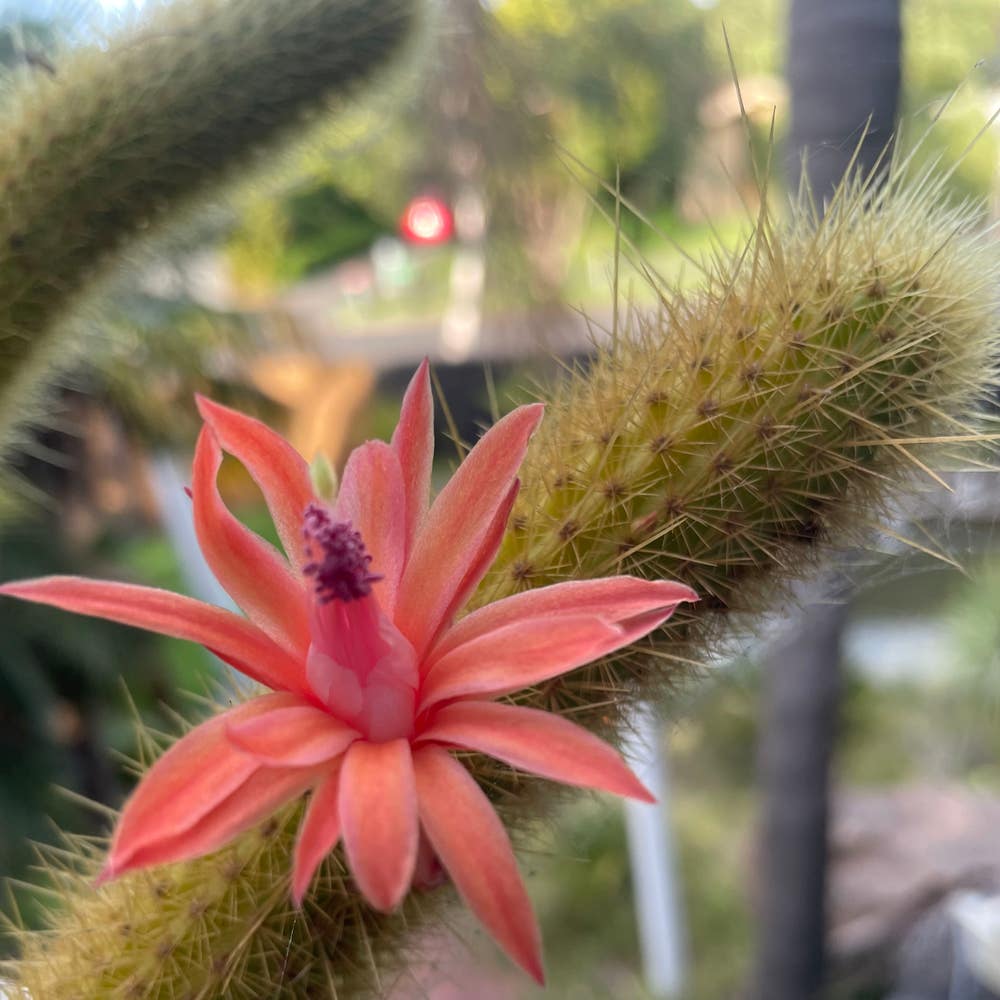
Golden Rat Tail Fertilizer: How and When to Use It
Cleistocactus winteri
By the Greg Editorial Team
Jun 18, 2024•5 min read
This article was created with the help of AI so we can cover more plants for you. May contain errors. See one? Report it here.
Boost your cactus's bloom and vigor with tailored Golden Rat Tail fertilizer tips! 🌵💪
- Balanced NPK and micronutrients are key for Golden Rat Tail cacti.
- Liquid fertilizers for growth, granular for sustained nutrient release.
- Observe and adjust fertilization to prevent over-fertilization damage.
Picking the Perfect Fertilizer for Your Golden Rat Tail
💡 Balanced Diet: NPK Ratios and Micronutrients
Golden Rat Tail cacti crave a balanced diet. The NPK ratio—nitrogen (N), phosphorus (P), and potassium (K)—is your roadmap to nutritional bliss. Nitrogen supports lush foliage, phosphorus strengthens roots and blooms, and potassium boosts overall health and disease resistance. Aim for a low-nitrogen mix to prevent lush growth at the expense of flowers. Don't forget the micronutrients; they're like the secret sauce in your cactus's meal.
🍽️ Liquid Gold: Choosing Between Liquid and Granular Options
Liquid or granular? That's the question. Liquid fertilizers are like a quick sip of energy, fast-acting and perfect for a mid-season pick-me-up. Granular types, on the other hand, are the slow burners, releasing nutrients gradually. They're the set-it-and-forget-it option, reducing the risk of overfeeding and saving you from the hassle of frequent applications.
🌵 Cactus Cuisine: Specialized Fertilizers for Succulents
Your Golden Rat Tail isn't just any plant; it's a succulent with specific needs. Specialized cactus fertilizers are tailored to these needs, often featuring a 1-1-1 or 2-1-1 NPK ratio. They're the gourmet meal in the world of plant food, designed to cater to your cactus's every whim. Remember, a happy cactus is a blooming cactus.

Timing is Everything: When to Feed Your Golden Rat Tail
🌱 Growth Spurts: Fertilizing in the Growing Season
Spring and summer are prime time for your Golden Rat Tail cactus. This is when it's actively growing, stretching out its quirky, spiny tendrils towards the sun. Feed it with a balanced, high-potassium liquid fertilizer to support this growth. Start with a light application and increase as the plant gets more vigorous. It's like giving your cactus a steady diet of the good stuff when it's hitting the gym hard.
❄️ Winter Slumber: Understanding Dormancy and Fertilization Breaks
When the chill sets in, your Golden Rat Tail starts to snooze. It's the plant equivalent of binge-watching shows under a blanket—minimal activity. During this dormant phase, cut back on the fertilizer. Think of it as reducing snacks during movie marathons; your cactus doesn't need the extra calories. If you notice new growth, a light feeding might still be appreciated, but generally, it's time to ease off and let your plant rest.

Serving Up Nutrients: How to Apply Fertilizer
💧 The Right Amount: Dilution Ratios and Frequency
Dilution is not just a buzzword; it's a plant lifesaver. Overzealous fertilization is a no-go. Start with half the recommended dose and observe. Your Golden Rat Tail will tell you if it's craving more. Stick to a schedule—monthly during the growing season is a solid bet. Remember, a little goes a long way.
🌱 Method to the Madness: Soil vs. Container Fertilization Techniques
For soil dwellers, think of fertilizer as a gentle seasoning, not a main course. Sprinkle evenly, avoiding direct contact with the plant. Containers, on the other hand, are nutrient nomads. They need regular feeding, especially mid-season. A water-soluble pick-me-up every two weeks keeps them from going hungry.
🌿 Observing and Adapting: Adjusting Based on Your Plant's Feedback
Plants don't have a poker face. Yellow leaves? Maybe it's time to up the ante. Lush and green? Hold steady. If you've tipped the scales and overdone it, flush the soil with water. It's like a detox for your plant's roots. Stay vigilant, adapt, and your Golden Rat Tail will thrive.

Blooming Marvelous: Fertilizing for Flower Power
💐 Boosting Blooms: Adjusting Fertilization for Flowering
To encourage flowering in your Golden Rat Tail, adjust your fertilization strategy. During the flowering stage, opt for a phosphorus-rich fertilizer to promote blooms. A balanced formula with a higher phosphorus ratio, such as 3:1:2, is ideal. Apply it sparingly; over-fertilization can lead to lush foliage at the expense of flowers.
🌸 Seasonal Shifts: Preparing Your Plant for Blooming Season
As spring unfurls, so should your fertilization efforts. Increase nutrients to support the active growth phase, with a focus on phosphorus for flower development. However, as autumn nears, it's time to reduce fertilizer input about 8 weeks before the first frost, helping your plant transition smoothly into dormancy. Remember, less is more—overdoing it can cause nutrient burn and stress your cactus.
Oops, Too Much!: Recognizing and Fixing Over-Fertilization
🚨 Telltale Signs: Spotting Over-Fertilization Symptoms
Yellowing leaves or browning tips might not just be your cactus playing dress-up for autumn—it's likely crying out from the excess nutrients. If you spot a crusty layer of fertilizer on the soil, that's the equivalent of a flashing neon sign for over-fertilization. Wilting despite moist soil, or roots that look like they've been through a goth phase—dark and limp—are also distress signals. And if your cactus's flowers are as lackluster as a deflated balloon at an after-party, it's time to reassess your fertilization strategy.
🛠️ The Recovery Plan: Remedies to Rescue Your Cactus
First, remove any visible fertilizer from the soil surface to stop the nutrient onslaught. Then, give your cactus a spa day by flushing the soil with water—think of it as a detox for your prickly friend. You might need to repeat this every few days, keeping an eye on your plant's recovery like a hawk. If the damage is done, prune away the wounded foliage to help your cactus focus on growing new, healthy parts. For those with potted plants, consider replacing the top layer of soil or going full makeover with a repot into fresh, nutrient-free soil. Remember, when it comes to cacti, less is often more—like a minimalist approach to a maximalist problem.
⚠️ Safety First
This content is for general information and may contain errors, omissions, or outdated details. It is not medical, veterinary advice, or an endorsement of therapeutic claims.
Always consult a qualified healthcare professional before using any plant as food, medicine, or supplement.
Never eat any plant (or feed one to pets) without confirming its identity with at least two trusted sources.
If you suspect poisoning, call Poison Control (800) 222-1222, the Pet Poison Helpline (800) 213-6680, or your local emergency service immediately.
Spotted an error? Please report it here.
Ensure your Golden Rat Tail thrives with the perfect NPK balance and seasonal feeding schedules 📅, all tailored by Greg to keep your spiky friend flourishing year-round!