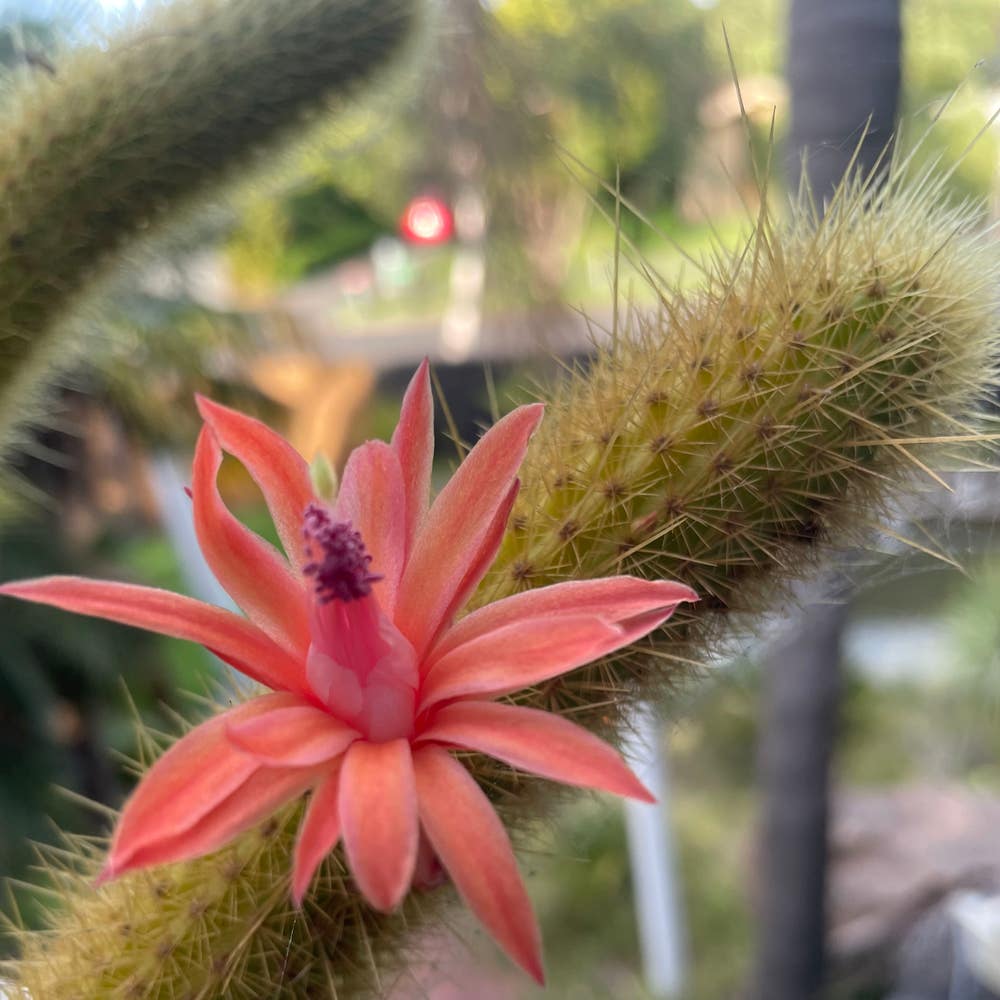
Why Are My Golden Rat Tail Leaves Mushy? 💧
Cleistocactus winteri
By the Greg Editorial Team
Jun 18, 2024•4 min read
This article was created with the help of AI so we can cover more plants for you. May contain errors. See one? Report it here.
Prevent mushy mayhem 🌵 in your Golden Rat Tail with these crucial, easy-to-follow plant care secrets.
- Overwatering leads to mushy leaves; let soil dry out completely.
- Root rot and fungi threaten; identify quickly, use well-draining soil.
- Prune for health; sterilize tools, remove affected leaves.
When Too Much Love Drowns: Overwatering Woes
💧 Spotting the Signs of Overwatering
Golden Rat Tail cacti are hardy, but overwatering is their kryptonite. Look for leaves that have gone from firm and plump to mushy and swollen. These are the distress signals of a cactus begging you to put down the watering can.
If the leaves are starting to resemble a sad, deflated balloon, it's a clear sign that the water is too much. Overwatering can make the leaves lose their structure, turning them into a squishy mess that's more akin to a waterlogged sponge than a desert dweller.
🚱 Turning Down the Tap
Fine-tuning your watering schedule is crucial. Golden Rat Tails need less water than your average houseplant. Let the soil dry out completely between waterings—think desert, not rainforest.
The touch test is your best friend. Before you water, poke your finger into the soil. If it clings to your skin like an overly attached octopus, hold off on watering. Your cactus will thank you for it by not turning into a mushy casualty.

Root of the Problem: Tackling Root Rot
🕵️♀️ Unearthing the Issue
Root rot in your Golden Rat Tail is like a bad relationship—it's not going to get better if you ignore it. Inspect your plant's roots by gently removing it from its pot. Healthy roots are firm and white, while rotten ones are mushy and dark. If the roots squish like overcooked pasta, it's time to take action.
🌱 Repotting and Recovery
If you've caught the rot early, there's hope. Trim the affected roots with sterilized scissors—think of it as giving your plant a life-saving haircut. Next, repot using a well-draining cactus mix to prevent future waterlogging. Choose a pot with drainage holes that's not too big; you want to avoid moisture overstaying its welcome. Remember, moderation is key—water with care and keep an eye out for new growth as a sign of recovery.

Fungus Among Us: Dealing with Fungal Foes
🍄 Recognizing Fungal Culprits
Golden Rat Tail cacti can fall victim to fungal infections, particularly when overwatered. Brown or black spots on leaves are the red flags of fungal invasion. High humidity and poor air circulation compound the problem, creating a fungi-friendly fiesta.
🚨 Symptoms that scream 'fungus!'
Look out for discolored spots with a yellowish halo. Unlike pests, fungi leave no sticky residue or webbing. Instead, they throw a powdery or mushy party on your cactus's leaves. Quick identification is your best bet to nip the issue in the bud.
🌿 Fungicide to the Rescue
When fungi crash your cactus party, it's time to act fast. Start with organic options like a baking soda and soap mix. If those pesky fungi persist, escalate to copper-based fungicides, but remember—read the label. This isn't a pour-and-pray situation.
🛡️ Preventative measures to keep fungi at bay
Prevention is better than cure. Ensure your cactus is in well-draining soil with proper drainage holes. Let the soil dry out between waterings. Keep your plant healthy and stress-free, which naturally boosts its resistance to fungal gatecrashers.

Cut It Out: Pruning for Plant Health
🌱 When to Snip
Pruning your Golden Rat Tail isn't just about aesthetics; it's a vital intervention. Mushy leaves need to go—they're not pulling their weight and can compromise the rest of the plant. Best practices include:
- Sterilize your shears before and after use; think surgeon-level cleanliness.
- Cut above a leaf node to encourage new growth.
- Remove overcrowded or dead foliage to improve airflow and light penetration.
- Snip at a 45-degree angle to prevent water accumulation.
🧼 Cleanliness is Key
Keeping your pruning tools and environment clean is non-negotiable. It's like the difference between a five-star restaurant's kitchen and a dingy back alley eatery—you know which one you'd trust for a good meal.
- Disinfect tools with isopropyl alcohol or a bleach solution.
- Clear away debris promptly to deter fungal growth.
- Ensure good airflow around your plant; stagnant air is a playground for pathogens.
- Regularly inspect for pests—catching them early is like nipping a problem in the bud. Literally.
⚠️ Safety First
This content is for general information and may contain errors, omissions, or outdated details. It is not medical, veterinary advice, or an endorsement of therapeutic claims.
Always consult a qualified healthcare professional before using any plant as food, medicine, or supplement.
Never eat any plant (or feed one to pets) without confirming its identity with at least two trusted sources.
If you suspect poisoning, call Poison Control (800) 222-1222, the Pet Poison Helpline (800) 213-6680, or your local emergency service immediately.
Spotted an error? Please report it here.
Ensure your Golden Rat Tail cactus avoids the dreaded mush by letting Greg alert 🚨 you to the ideal dryness for watering, keeping fungal foes and overwatering woes at bay.