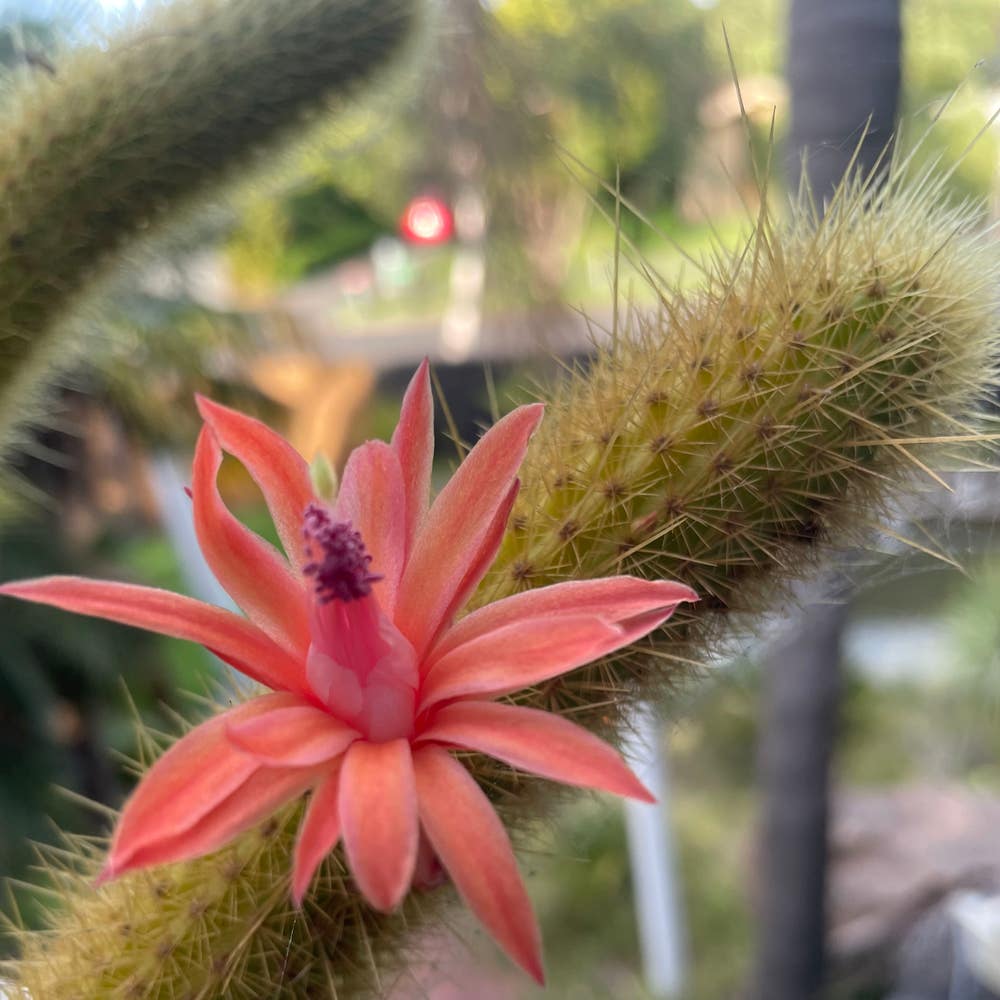
Why Are My Golden Rat Tail Leaves Curling?
Cleistocactus winteri
By the Greg Editorial Team
Jun 18, 2024•4 min read
This article was created with the help of AI so we can cover more plants for you. May contain errors. See one? Report it here.
Unravel the secret behind your Golden Rat Tail's curling leaves and keep it thriving with expert care tips! 🌵🔍
- 💧 Over/underwatering? Aim for moist soil, avoid soggy.
- 🌞 Bright, indirect light for 4-6 hours prevents curling.
- 🐛 Inspect for pests like spider mites, aphids, and mealybugs.
When Water Works Against You: Over and Underwatering
💧 Spotting the Signs of Overwatering
Overwatering can turn your Golden Rat Tail's roots into an unwanted swamp. Leaves may look as sad as a deflated balloon, and the soil will feel like a wet sponge. Yellowing leaves or a funky smell? You've overdone it with the H2O.
🏜️ Underwatering: Recognizing the Thirst
When your plant's leaves are as crispy as autumn leaves, it's a cry for water. Soil that's drier than a stand-up comedian's wit is a clear sign. Shriveled leaves? Your plant's thirstier than a marathon runner without a water station.
⚖️ Balancing Act: Finding the Right Watering Rhythm
Perfecting your watering schedule is like finding the sweet spot in a hammock – too much or too little, and you'll hit the ground. Aim for soil that's moist but not soggy. Consistency is your best friend here; a routine check-up can save your plant from a hydration rollercoaster. Remember, weather changes are like mood swings for your plant's thirst – adjust accordingly.

Too Hot, Too Cold, Just Right: Light and Temperature Factors
🌞 The Sunburnt Tail: Too Much Light
Golden Rat Tail cacti love bright, indirect sunlight. Direct sun can lead to leaf curl as the plant tries to shield itself. If your cactus is basking in too many rays, move it to a spot with filtered light or use a sheer curtain to diffuse the intensity.
❄️ Chilly Tails: Temperature Troubles
Temperature consistency is crucial for your Golden Rat Tail. Avoid placing it near drafty windows or heaters to prevent temperature-induced curling. Aim for a stable environment that doesn't swing between extremes, as sudden changes can cause stress. Keep it cozy to avoid the drama of temperature tantrums.

Unwanted Guests: Tackling Pest Problems
🐜 Identifying Common Culprits
Pests are stealthy invaders, turning your Golden Rat Tail's leaves into their personal playground. Spider mites spin fine webs and leave the foliage looking war-torn. Aphids prefer to huddle under leaves, sapping the plant's vitality. Mealybugs announce their presence with a fluffy white residue. To spot these pests, inspect the undersides of leaves for bugs, webbing, or unusual markings.
🛡️ Natural and Chemical Warriors
When pests throw a party on your plant, it's time to play bouncer. Start with a blast of water under the leaves to dislodge the softer-bodied pests. If they're stubborn, escalate to insecticidal soap or horticultural oil. These are like the polite bouncers, effective yet gentle on your plant. In case of a full-blown infestation, you may need to resort to pyrethrum spray or other targeted insecticides. However, always read the label—overuse can harm more than the pests. For an eco-friendly approach, introduce natural predators like ladybugs or apply neem oil. These methods are akin to hiring a security team for your plant's personal safety.

The Best Offense is a Good Defense: Preventative Care
🌊 Consistency is Key: Watering and Feeding
Creating a routine is the backbone of Golden Rat Tail health.
🚰 Watering Wisdom
Water evenly around the pot's rim for a thorough soak. This prevents root dryness on one side and swamp conditions on the other.
🍽️ Feeding Fundamentals
Feed with precision. A balanced diet, not excessive, keeps your plant robust. Less is more when it comes to fertilizer—think of it as a light snack rather than a full meal.
🌞 Ideal Environment: Light and Temperature
Golden Rat Tails thrive in a Goldilocks zone: not too hot, not too cold, just right.
⛅️ Light: The Bright Spot
Bright, indirect light is the sweet spot. Too much sun and you'll have a leafy tantrum on your hands. Too little, and your plant will sulk. Aim for a consistent 4-6 hours of gentle sunlight.
🌡️ Temperature: Keeping it Cozy
Stability is key. Avoid the shock of sudden temperature changes—your plant's comfort zone should be as stable as your favorite coffee shop's Wi-Fi.
⚠️ Safety First
This content is for general information and may contain errors, omissions, or outdated details. It is not medical, veterinary advice, or an endorsement of therapeutic claims.
Always consult a qualified healthcare professional before using any plant as food, medicine, or supplement.
Never eat any plant (or feed one to pets) without confirming its identity with at least two trusted sources.
If you suspect poisoning, call Poison Control (800) 222-1222, the Pet Poison Helpline (800) 213-6680, or your local emergency service immediately.
Spotted an error? Please report it here.
With Greg, strike the perfect care balance ⚖️ for your Golden Rat Tail cactus, ensuring it's neither overwatered nor sun-stressed, for those ideal curls.