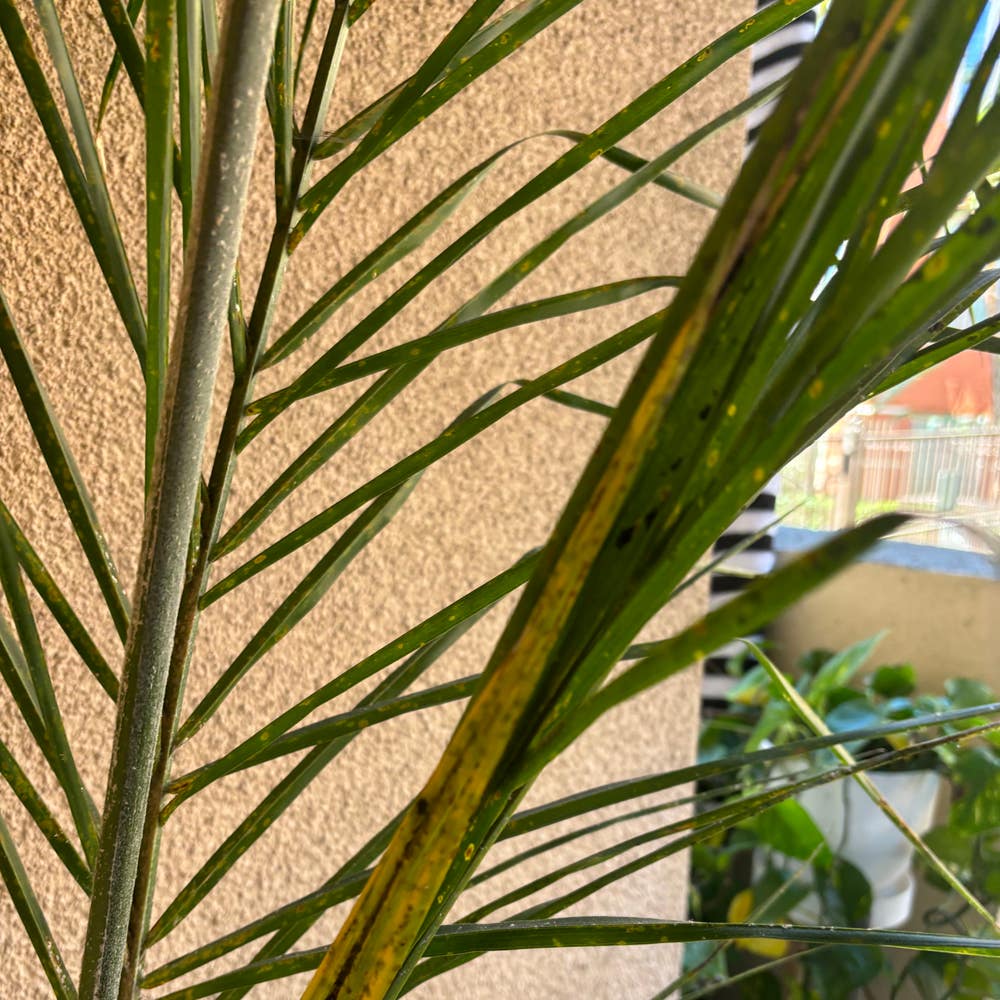
🌴 Understanding Why Your Coco Palm Has Yellow Leaves
Syagrus cocoides
By the Greg Editorial Team
Nov 23, 2024•4 min read
This article was created with the help of AI so we can cover more plants for you. May contain errors. See one? Report it here.
Transform your Coco Palm's health 🌴 by learning to prevent and treat yellow leaves effectively!
- 🌱 Yellow leaves indicate nutrient deficiencies, especially nitrogen and magnesium.
- 💧 Overwatering and underwatering both cause yellowing; check soil moisture regularly.
- 🐛 Pests and diseases can lead to yellow leaves; inspect and treat promptly.
Causes of Yellow Leaves
🌱 Nutrient Deficiencies
Nutrient deficiencies are a common culprit behind yellowing leaves in Coco Palms.
Nitrogen Deficiency
When your palm suffers from nitrogen deficiency, older leaves will turn yellow while new growth remains vibrant and green. To remedy this, consider using balanced NPK fertilizers that have a higher nitrogen content.
Magnesium Deficiency
Magnesium deficiency manifests as yellowing between leaf veins, typically starting with the older leaves. Epsom salt (magnesium sulfate) or magnesium-rich fertilizers can help restore balance.
💧 Watering Issues
Watering practices play a crucial role in maintaining the health of your Coco Palm.
Overwatering
Overwatering can lead to yellowing leaves, wilting, and even root rot. If you notice that the soil remains soggy and waterlogged, it’s a clear sign that you need to adjust your watering habits.
Underwatering
On the flip side, underwatering can also cause yellowing leaves, along with dry fronds and leaf drop. If the soil feels dry and crumbly, it’s time to give your palm a drink.
🐞 Pest Infestations
Pests can wreak havoc on your Coco Palm, leading to unsightly yellow leaves.
Common Pests
Spider mites are notorious for leaving fine webbing and stippled leaves, while scale insects can create a sticky residue that also results in yellowing.
Control Methods
To combat these pests, consider using neem oil or insecticidal soap. Regular inspections can help catch infestations early before they cause significant damage.
🍄 Fungal Diseases
Fungal diseases are another serious threat to your Coco Palm's health.
Common Diseases
Leaf spot disease presents as dark spots on leaves, which can lead to yellowing. Root rot, characterized by yellowing leaves and mushy roots, is equally concerning.
Prevention
To prevent these issues, focus on proper watering techniques and ensure good air circulation around your plant.
Understanding these causes is the first step to restoring your Coco Palm's health. Next, we’ll explore effective treatment options to address yellow leaves and revive your plant.
Treating Yellow Leaves
🌱 Treatment Options for Nutrient Deficiencies
If your Coco Palm is showing signs of nutrient deficiencies, the right fertilizers can make all the difference. Opt for slow-release fertilizers with balanced NPK ratios to ensure your plant receives the essential nutrients it needs over time.
When applying fertilizers, always follow the package instructions for dosage and frequency. This will help you avoid over-fertilizing, which can lead to more problems down the line.
💧 Adjusting Watering Practices
Understanding the signs of overwatering and underwatering is crucial for your Coco Palm's health. Overwatering typically results in soggy soil and yellowing leaves, while underwatering leads to dry soil and crispy leaf edges.
To maintain optimal moisture levels, water your Coco Palm when the top 1-2 inches of soil feel dry. This simple practice can prevent many issues related to yellow leaves.
🐛 Pest Control Methods
Pest infestations can also contribute to yellowing leaves, so it's essential to address them promptly. For organic pest control, consider using neem oil and insecticidal soap, which are effective and safe options.
If pests persist, targeted chemical pesticides can be used as a last resort. Additionally, regularly inspecting your plants and maintaining cleanliness can help prevent infestations before they start.
By following these treatment options, you can restore your Coco Palm's vibrancy and health. Next, let’s explore how to prevent yellow leaves from becoming a recurring issue.
Preventing Yellow Leaves
🌱 Best Practices for Coco Palm Care
To keep your Coco Palm thriving, start with the right soil mix. A well-draining mix is essential to prevent root issues that can lead to yellowing leaves.
When potting your palm, choose pots with drainage holes. This simple step helps avoid compacted soil, which can trap excess moisture and harm your plant.
🌦️ Seasonal Care Adjustments
Adjust your care routine based on seasonal changes. Temperature and humidity fluctuations can impact your Coco Palm's health, so be mindful of these factors throughout the year.
🔧 Regular Maintenance Routines
Establish a fertilization schedule to support growth. Fertilize your Coco Palm every 4-6 weeks during the growing season to ensure it receives the nutrients it needs.
Don't forget about pruning and cleaning leaves. Regularly remove dead or yellowing fronds to encourage new growth and maintain your plant's overall appearance.
By following these best practices and maintenance routines, you can significantly reduce the chances of yellow leaves on your Coco Palm. This proactive approach not only enhances the plant's health but also brings a vibrant touch to your space.
Next, let's explore effective treatment options for yellow leaves when they do occur.
⚠️ Safety First
This content is for general information and may contain errors, omissions, or outdated details. It is not medical, veterinary advice, or an endorsement of therapeutic claims.
Always consult a qualified healthcare professional before using any plant as food, medicine, or supplement.
Never eat any plant (or feed one to pets) without confirming its identity with at least two trusted sources.
If you suspect poisoning, call Poison Control (800) 222-1222, the Pet Poison Helpline (800) 213-6680, or your local emergency service immediately.
Spotted an error? Please report it here.
Revive your Coco Palm's vibrancy by understanding yellow leaves and let Greg provide tailored care tips 🌱 to keep your plant thriving and healthy!