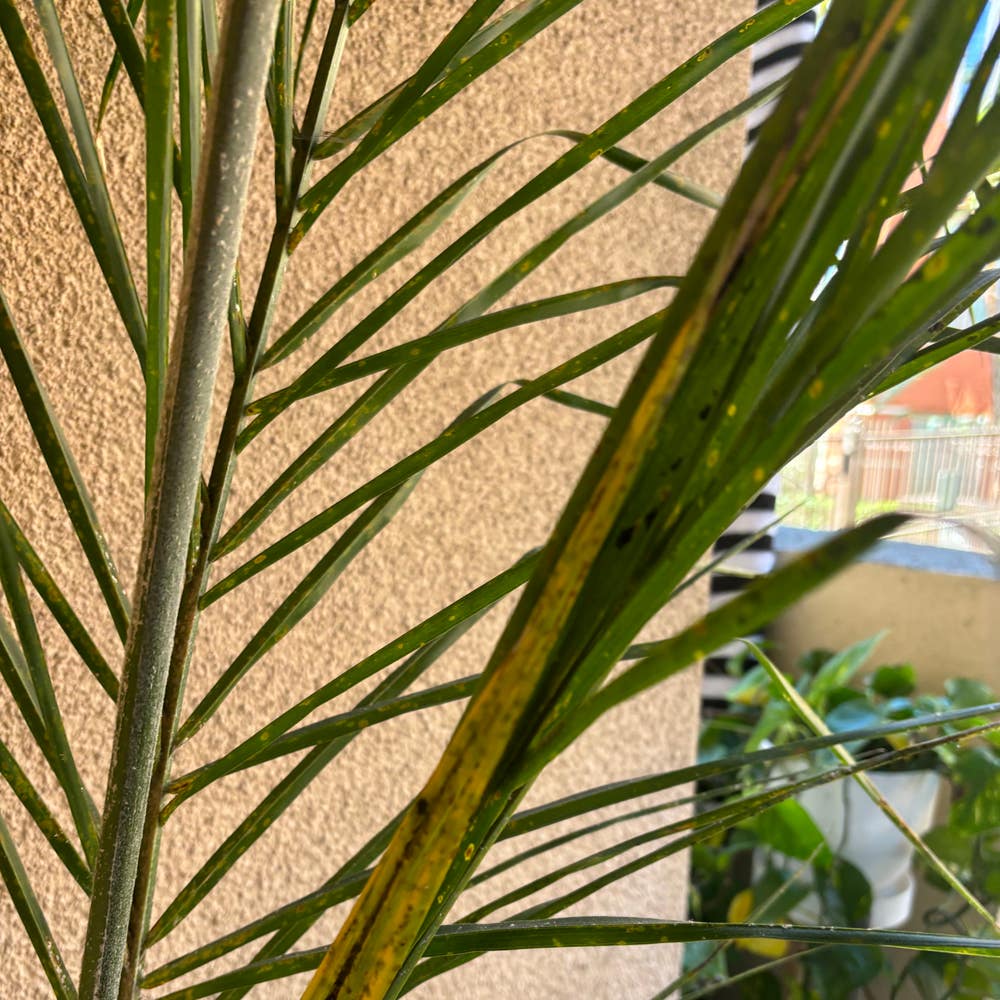
How to Cure Black Spots on Your Coco Palm 🥥
Syagrus cocoides
By the Greg Editorial Team
Nov 23, 2024•4 min read
This article was created with the help of AI so we can cover more plants for you. May contain errors. See one? Report it here.
Transform your Coco Palm's health 🌴 by mastering the art of diagnosing and preventing black spots for vibrant growth!
- 🌞 Bright, indirect light prevents black spots on Coco Palm leaves.
- 💧 Humidity and well-draining soil are crucial for Coco Palm health.
- 🐛 Regular pest checks help protect Coco Palms from black spots.
Diagnosing Black Spots
🌤️ Assessing Environmental Conditions
Light Requirements
Coco Palms thrive in bright, indirect light. Too little light can lead to weak growth and black spots on the leaves.
Humidity Levels
These palms prefer humidity levels between 40% and 60%. Low humidity can cause leaf tips to brown and develop unsightly spots.
Temperature
Coco Palms flourish in temperatures ranging from 65°F to 85°F. Extreme temperatures can stress the plant, leading to black spots.
🐜 Checking for Pests and Their Impact on Leaf Health
Common Pests Affecting Coco Palm
Common pests like spider mites and scale insects can wreak havoc on your Coco Palm. Look for webbing or sticky residue as signs of infestation.
Effects of Pests on Leaf Health
Pests suck the sap from leaves, weakening them and making them more susceptible to disease. This stress can manifest as black spots on the foliage.
💧 Evaluating Watering Practices and Soil Drainage
Watering Frequency
Coco Palms need consistent moisture but dislike soggy soil. Water when the top inch of soil feels dry, typically every 1-2 weeks.
Soil Drainage
Well-draining soil is crucial for Coco Palm health. Signs of poor drainage include water pooling on the surface or a musty smell from the soil.
Understanding these factors is essential for diagnosing black spots on your Coco Palm. By assessing environmental conditions, checking for pests, and evaluating watering practices, you can take the first steps toward restoring your plant's health. Next, let’s explore effective treatment options for those pesky black spots.
Treating Black Spots
🌱 Step-by-step guide to treating fungal infections
Dealing with black spots on your Coco Palm often starts with identifying the type of fungal infection. This is crucial, as different fungi require different treatments.
Once you've identified the infection, it's time to remove the affected leaves. Use clean, sharp pruning shears to cut them off at the base, ensuring you don’t damage healthy parts of the plant.
Next, apply a fungicide to combat the infection. Choose a product specifically designed for palm trees and follow the application instructions carefully for the best results.
🧪 Recommended fungicides and natural remedies
When it comes to chemical fungicides, there are several effective types available. Look for those that contain active ingredients like chlorothalonil or propiconazole, and always follow safety guidelines during application.
If you prefer natural remedies, options like neem oil or a baking soda solution can be effective. Mix one tablespoon of baking soda with a gallon of water and spray it on the affected areas to help reduce fungal growth.
✂️ How to prune affected leaves properly
To prune affected leaves effectively, start with the right tools. Clean, sharp pruning shears are essential to make precise cuts and minimize stress on the plant.
When pruning, aim to cut just above a leaf node or the base of the leaf. This technique encourages new growth while ensuring the plant remains healthy and vibrant.
By following these steps, you can effectively treat black spots on your Coco Palm and restore its health. Next, let’s explore how to prevent these issues from arising in the first place.
Preventing Black Spots
🌿 Best practices for Coco Palm care to prevent black spots
To keep your Coco Palm thriving and free from black spots, regular inspections are crucial. Checking the leaves frequently helps you catch any issues early, allowing for timely intervention.
Proper spacing is another key factor. Ensure your Coco Palm has enough room to breathe, promoting adequate air circulation around the plant. This simple step can significantly reduce the risk of fungal infections.
💧 Importance of proper watering and drainage
Watering techniques play a vital role in Coco Palm health. Water effectively by allowing the top inch of soil to dry out before the next watering, preventing overwatering, which can lead to root rot and black spots.
Soil amendments can also enhance drainage. Incorporating organic matter into the soil improves its structure, ensuring excess water drains away and roots remain healthy.
🌱 Nutritional needs and fertilization schedule
Understanding your Coco Palm's nutritional needs is essential for its overall health. Key nutrients like nitrogen, potassium, and magnesium support lush growth and resilience against diseases.
Establishing a fertilization frequency is equally important. Aim to fertilize your Coco Palm every 4-6 weeks during the growing season to provide the necessary nutrients for optimal growth.
By following these preventive measures, you can help your Coco Palm flourish and minimize the chances of black spots appearing. Next, let’s explore how to treat any black spots that do occur effectively.
⚠️ Safety First
This content is for general information and may contain errors, omissions, or outdated details. It is not medical, veterinary advice, or an endorsement of therapeutic claims.
Always consult a qualified healthcare professional before using any plant as food, medicine, or supplement.
Never eat any plant (or feed one to pets) without confirming its identity with at least two trusted sources.
If you suspect poisoning, call Poison Control (800) 222-1222, the Pet Poison Helpline (800) 213-6680, or your local emergency service immediately.
Spotted an error? Please report it here.
Keep your Coco Palm spot-free 🌿 by using Greg's tailored watering reminders and pest alerts to help it thrive in the perfect environment!