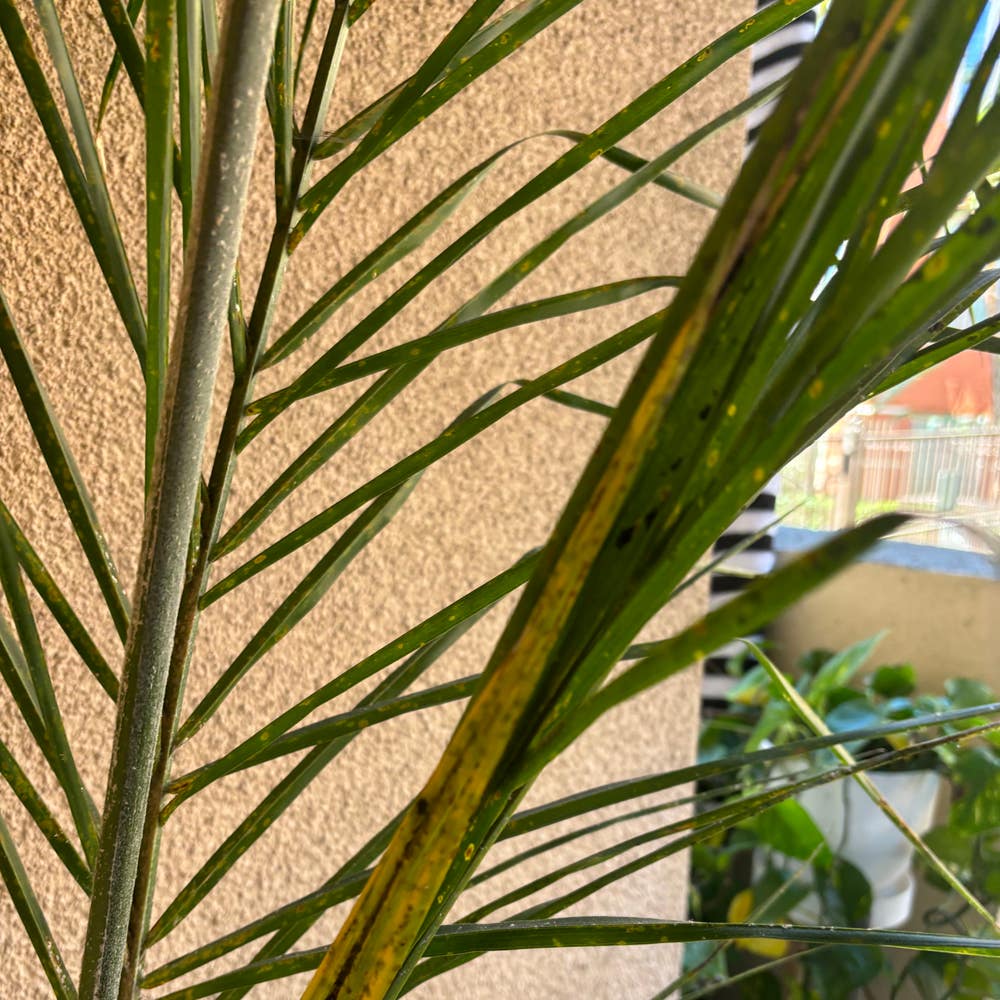
What to Do About Your Coco Palm Wilting 🥥
Syagrus cocoides
By the Greg Editorial Team
Nov 23, 2024•5 min read
This article was created with the help of AI so we can cover more plants for you. May contain errors. See one? Report it here.
Revive your wilting Coco Palm 🌴 by mastering how to tackle water and heat stress effectively!
- 💧 Wilting indicates water stress; check for underwatering or overwatering issues.
- ☀️ Heat stress causes wilting; relocate to shade during peak sunlight hours.
- 🌱 Regular soil checks and a consistent watering schedule prevent wilting in Coco Palms.
Common Causes of Wilting Leaves
💧 Water Stress
Wilting leaves on your Coco Palm often signal water stress. Symptoms include drooping fronds, yellowing leaves, and dry soil.
Causes of Water Stress:
- Underwatering: If you’re not watering frequently enough, the soil can dry out, leading to stress.
- Overwatering: Conversely, waterlogged soil can cause root rot and deprive roots of oxygen.
🔥 Heat Stress
Heat stress is another common culprit behind wilting. Look for browning leaf tips, curling leaves, and overall wilting as key indicators.
Causes of Heat Stress:
- Excessive Sunlight Exposure: Direct sunlight can scorch the leaves, causing damage.
- High Ambient Temperatures: Prolonged heat without adequate hydration can stress the plant.
🦠 Disease-Related Wilting
While it’s easy to jump to conclusions about diseases, pathogenic wilt is rare in healthy Coco Palms. It’s best to focus on environmental factors first before considering disease as a cause.
Understanding these common causes is crucial for effective care. By identifying whether your plant is suffering from water or heat stress, you can take the necessary steps to revive it. Next, let’s explore how to diagnose wilting in your Coco Palm.
Diagnosing Wilting
Step-by-Step Guide 🌱
Diagnosing wilting in your Coco Palm starts with assessing soil moisture. Check the top 2 inches of soil; if it feels dry, your plant may be underwatered, while sogginess indicates overwatering.
Next, evaluate the environmental conditions. Measure the temperature and humidity levels around your plant to ensure they are within a suitable range.
Inspecting Leaves 🍃
Inspect the leaves for any discoloration, spots, or signs of pests. Healthy leaves should be vibrant and free from blemishes, so any abnormalities can signal underlying issues.
Review your watering schedule to determine how often and how much water you’ve been giving your plant. Consistency is key, so make adjustments as needed.
Considering Recent Changes 🔄
Finally, consider any recent changes that might have affected your Coco Palm. Relocation or shifts in environmental conditions can significantly impact plant health.
By following these steps, you can pinpoint the cause of wilting and take appropriate action. This proactive approach will help ensure your Coco Palm thrives in its environment.
Solutions for Wilting Leaves
🌊 Addressing Water Stress
Water stress is a common culprit behind wilting leaves in Coco Palms. To tackle underwatering, start by giving your plant a thorough drink until excess water drains from the bottom of the pot.
Next, establish a consistent watering schedule based on the moisture level of the soil. This will help prevent the soil from drying out too much between waterings.
On the flip side, if overwatering is the issue, allow the soil to dry out before watering again. It's crucial to ensure proper drainage in the pot to avoid waterlogged conditions that can lead to root rot.
☀️ Addressing Heat Stress
Heat stress can also lead to wilting, especially during the hottest months. If you notice browning leaf tips or curling leaves, consider relocating your Coco Palm to a shadier spot during peak sunlight hours.
Additionally, adjust your watering routine during hot spells. Increase the frequency of watering to keep the soil moist but not soggy, helping your plant cope with the heat.
By addressing both water and heat stress effectively, you can help your Coco Palm thrive and prevent further wilting. Next, let’s explore preventive measures to keep your plant healthy and vibrant.
Preventive Measures
Tips to Minimize Future Wilting Episodes 🌱
To keep your Coco Palm thriving, regularly check soil moisture levels. This simple habit can help you catch water stress before it leads to wilting.
Adjust your watering frequency based on seasonal changes. During hotter months, your plant may need more water, while cooler months might require less.
Environmental Adjustments 🌤️
Maintaining humidity levels is crucial for your Coco Palm's health. Consider using a humidifier or placing a pebble tray filled with water beneath the pot to boost moisture in dry environments.
Monitor light exposure carefully. Ensure your plant receives filtered sunlight instead of harsh direct rays, which can scorch its leaves and lead to stress.
By implementing these preventive measures, you can create a nurturing environment for your Coco Palm, reducing the chances of wilting and promoting vibrant growth.
Next, let’s explore when it might be time to seek professional help for your plant care challenges.
When to Seek Help
Signs That Professional Assistance is Needed 🌱
If your Coco Palm continues to wilt despite your best care efforts, it may be time to seek professional help. Persistent wilting can indicate deeper issues, such as root rot or severe pest infestations, which require expert intervention.
Resources for Local Nurseries and Plant Experts 🏪
Local nurseries are a fantastic resource for expert advice on Coco Palm care. They can provide tailored guidance and may even offer diagnostic services to pinpoint the problem.
Engaging with the Online Plant Care Community 🌐
Don’t underestimate the power of community! Joining forums or social media groups focused on plant care can connect you with fellow plant enthusiasts. Sharing experiences and seeking advice from others can provide valuable insights and support in your plant care journey.
As you navigate the challenges of caring for your Coco Palm, remember that help is always available. Whether through local experts or online communities, you’re never alone in your quest for a thriving plant.
⚠️ Safety First
This content is for general information and may contain errors, omissions, or outdated details. It is not medical, veterinary advice, or an endorsement of therapeutic claims.
Always consult a qualified healthcare professional before using any plant as food, medicine, or supplement.
Never eat any plant (or feed one to pets) without confirming its identity with at least two trusted sources.
If you suspect poisoning, call Poison Control (800) 222-1222, the Pet Poison Helpline (800) 213-6680, or your local emergency service immediately.
Spotted an error? Please report it here.
Keep your Coco Palm vibrant 🌴 by using Greg's tailored watering reminders and community insights to tackle wilting before it starts!