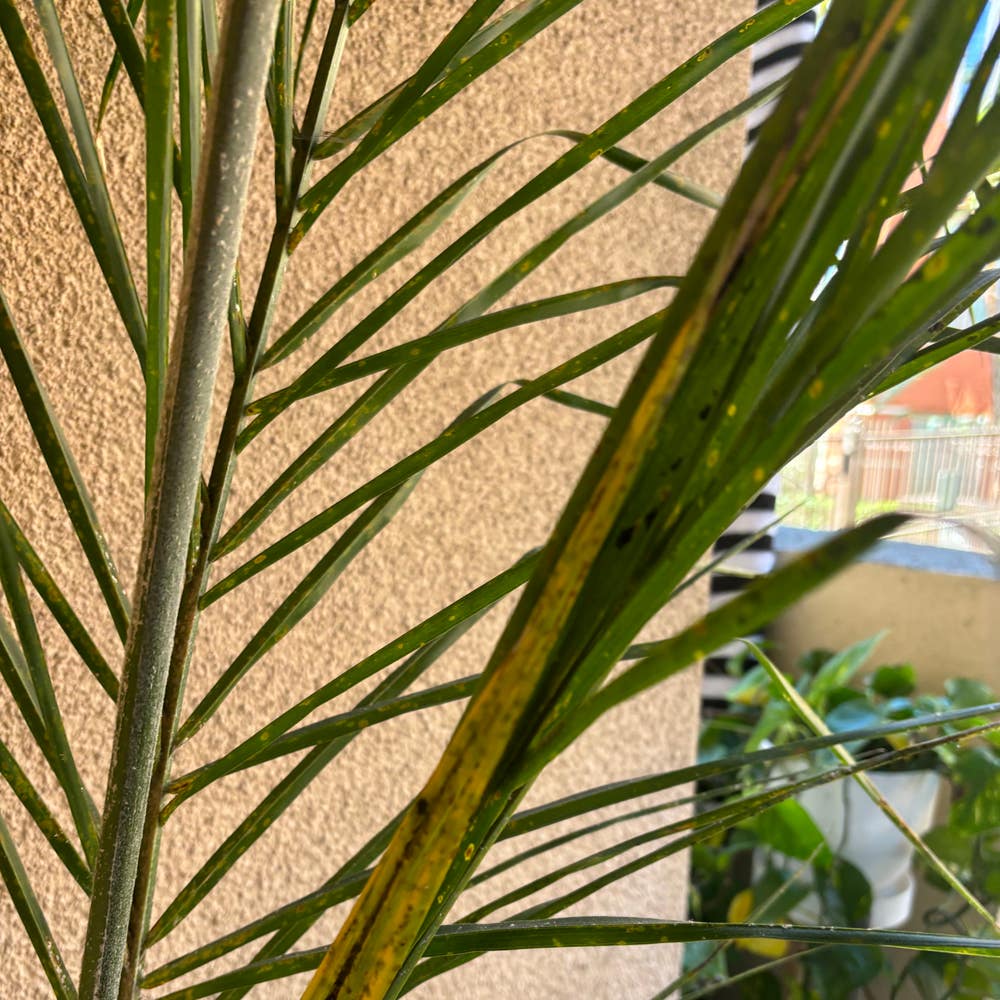
How to Fix Droopy Leaves on Your Coco Palm 🥥
Syagrus cocoides
By the Greg Editorial Team
Nov 23, 2024•5 min read
This article was created with the help of AI so we can cover more plants for you. May contain errors. See one? Report it here.
Transform your droopy coco palm leaves 🌴 back to life with essential care tips for vibrant, healthy growth!
- 🌱 Droopy leaves indicate overwatering, underwatering, or nutrient deficiencies. Assess conditions.
- 💧 Maintain humidity above 40% and consistent watering for healthy coco palms.
- 🌞 Adjust light and soil conditions to prevent droop and promote growth.
Common Causes of Droopy Leaves
Droopy leaves on your coco palm can be a sign of several underlying issues. Understanding these common causes is crucial for restoring your plant's health.
💧 Overwatering
Overwatering is one of the most frequent culprits behind droopy leaves. Symptoms include yellowing leaves and soggy soil, which can lead to root rot if not addressed promptly.
🚰 Underwatering
Conversely, underwatering can also cause droop. Look for crispy leaf edges and dry soil, which indicate dehydration and can severely impact your plant's vitality.
🌱 Nutrient Deficiency
Nutrient deficiencies can play a significant role in leaf droop. Common deficiencies include nitrogen, potassium, and magnesium, often resulting in yellowing or browning leaf tips.
🌡️ Environmental Stress
Environmental factors can stress your coco palm, leading to droopy leaves. Temperature fluctuations outside the ideal range of 70°F to 85°F (21°C to 29°C) and humidity levels below 40% can both contribute to this issue.
🏵️ Poor Soil Conditions
The type of soil you use is essential for your palm's health. A well-draining potting mix is crucial, as compacted soil can lead to poor root health and subsequent droop.
Recognizing these causes is the first step toward reviving your coco palm. Next, we’ll explore how to identify the specific symptoms of droopy leaves to better understand your plant's needs.
Identifying Symptoms of Droop
Recognizing the signs of droopy leaves on your coco palm is crucial for timely intervention. Let's explore the key symptoms to watch for.
🌿 Leaf Appearance
One of the first indicators of trouble is the appearance of the leaves. Look for wilting, curling, or drooping fronds, which signal that your palm may be struggling.
🎨 Color Changes
Next, pay attention to color changes in the leaves. Yellowing or browning leaf tips can indicate stress, often linked to watering issues or nutrient deficiencies.
📈 Growth Patterns
Finally, observe the growth patterns of your coco palm. Stunted growth or a lack of new fronds can suggest that your plant is not thriving, which could be a sign of underlying problems.
By keeping an eye on these symptoms, you can take proactive steps to revive your coco palm and ensure it remains healthy and vibrant. Now that you know how to identify droop symptoms, let’s move on to the steps you can take to revive those droopy leaves.
Steps to Revive Droopy Leaves
Reviving droopy leaves on your coco palm is a straightforward process. Follow these steps to bring your plant back to life.
1. Assess Watering 💧
Start by checking the soil moisture. If it feels soggy, you may be overwatering; if it's dry, your palm is likely underwatered.
2. Increase Humidity 🌫️
Coco palms thrive in humid environments. Use a humidifier or place pebble trays filled with water near your plant to boost humidity levels.
3. Adjust Light 💡
Evaluate the light conditions. If your palm isn't getting enough light, consider moving it to a brighter location to encourage healthy growth.
By following these simple steps, you can help your coco palm recover from droopy leaves and thrive once again. Next, let’s explore some long-term care tips to keep your palm healthy and prevent future droop.
Long-term Care Tips to Prevent Droop
To keep your coco palm thriving, regular monitoring is essential. Check for pests and assess environmental conditions frequently to catch any issues early.
💧 Consistent Watering Schedule
Establishing a consistent watering schedule is crucial. Avoid extremes of wet and dry soil to maintain healthy roots and prevent droop.
🌱 Fertilization Routine
A well-planned fertilization routine helps maintain nutrient levels throughout the growing season. Ensure your coco palm receives the necessary nutrients to support robust growth and vibrant leaves.
By following these long-term care tips, you can create a nurturing environment for your coco palm. This proactive approach not only prevents droopy leaves but also promotes overall plant health.
Next, let’s explore how to identify symptoms of droop effectively.
Seasonal Care Adjustments
Caring for your coco palm requires seasonal adjustments to keep those leaves perky and vibrant. Understanding how to adapt your care routine can make all the difference.
❄️ Winter Care
During the winter months, it's crucial to reduce your watering frequency. The cooler temperatures slow down the plant's growth, meaning it needs less moisture.
Maintaining humidity is also essential. Consider using a humidifier or placing your palm on a pebble tray filled with water to keep the air around it moist.
☀️ Summer Care
As temperatures rise in summer, your coco palm will thrive with increased watering. Ensure the soil remains consistently moist, but avoid waterlogging.
Humidity levels should also be elevated during this season. Regular misting or using a humidifier can help create a tropical environment that your palm loves.
Lastly, ensure your coco palm receives adequate light. If it's not getting enough, consider moving it to a brighter spot to promote healthy growth.
By adjusting your care routine seasonally, you can prevent droopy leaves and keep your coco palm looking its best. Next, let’s explore long-term care tips to ensure your palm remains healthy year-round.
⚠️ Safety First
This content is for general information and may contain errors, omissions, or outdated details. It is not medical, veterinary advice, or an endorsement of therapeutic claims.
Always consult a qualified healthcare professional before using any plant as food, medicine, or supplement.
Never eat any plant (or feed one to pets) without confirming its identity with at least two trusted sources.
If you suspect poisoning, call Poison Control (800) 222-1222, the Pet Poison Helpline (800) 213-6680, or your local emergency service immediately.
Spotted an error? Please report it here.
Transform your coco palm's droopy leaves into vibrant fronds 🌿 by using Greg's tailored watering and humidity reminders to meet its unique needs for thriving health!