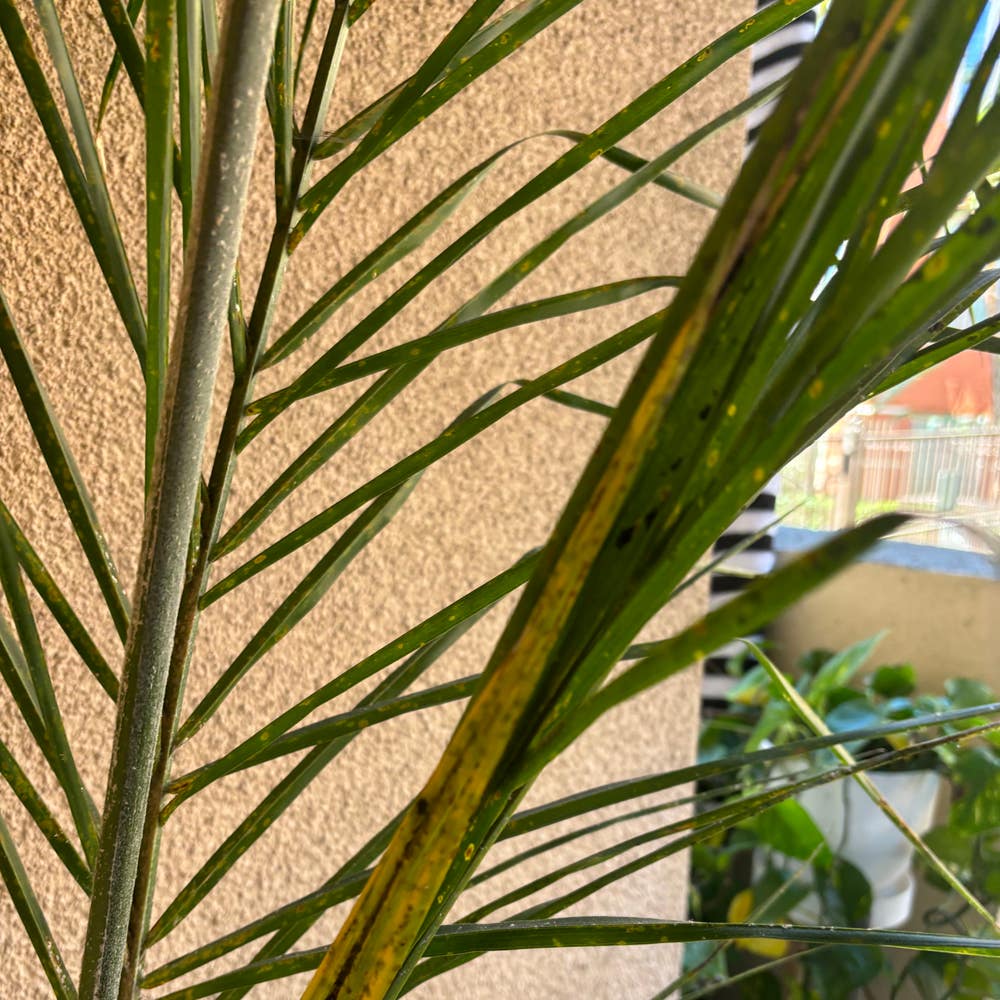
Ultimate Guide to Fixing Leaves Falling Over on Coco Palm 🌴
Syagrus cocoides
By the Greg Editorial Team
Nov 23, 2024•6 min read
This article was created with the help of AI so we can cover more plants for you. May contain errors. See one? Report it here.
Revive your drooping coco palm 🌴 with essential care tips to ensure vibrant growth and prevent leaf loss!
- 🌡️ Coco palms thrive in 70°F-85°F with humidity above 50% to prevent drooping.
- 💧 Overwatering and underwatering both cause leaf issues; check soil moisture regularly.
- 🐛 Inspect for pests and diseases regularly to maintain healthy coco palms.
Causes of Leaves Falling Over
🌪️ Environmental Stress Factors
Coco palms thrive in a specific temperature range of 70°F to 85°F (21°C to 29°C). Fluctuations outside this range can stress the plant, leading to leaves falling over.
Humidity is another critical factor; coco palms prefer levels above 50%. Low humidity can cause the leaves to droop and fall, so consider using a humidifier if your environment is dry.
Drafts and exposure to extreme conditions can also harm your palm. Protect it from cold drafts and heat sources to maintain a stable environment.
🥦 Nutrient Deficiencies
Nutrient deficiencies can significantly impact the health of your coco palm. Common deficiencies include nitrogen, potassium, and magnesium.
Symptoms of these deficiencies often manifest as yellowing leaves and stunted growth. If you notice these signs, it might be time to reassess your fertilization routine.
💧 Watering Issues
🚰 Overwatering
Overwatering is a common issue that can lead to serious problems. Signs include yellowing leaves, wilting, and root rot.
To prevent waterlogging, ensure your coco palm is planted in well-draining soil. This is crucial for maintaining healthy roots.
🌵 Underwatering
On the flip side, underwatering can also cause distress. Look for signs like drooping leaves, dry soil, and brown leaf tips.
Adjust your watering frequency based on environmental conditions. Coco palms typically need watering every 1-2 weeks, but this can vary.
🐜 Pest Infestations
Pests can wreak havoc on your coco palm if left unchecked. Common culprits include spider mites and mealybugs.
Symptoms of infestations often include webbing, sticky residue, and leaf discoloration. Regular inspections can help catch these issues early.
🦠 Disease Symptoms
Diseases can also lead to leaves falling over. Root rot and leaf spot are two common diseases affecting coco palms.
Symptoms include wilting, yellowing, and browning of leaves. If you suspect a disease, prompt action is essential to save your plant.
Understanding these causes can help you take proactive steps to keep your coco palm healthy. Next, we’ll explore how to diagnose the specific problems affecting your plant.
Diagnosing the Problem
🌊 Assessing Watering Practices
Understanding your watering habits is crucial for the health of your coco palm.
Signs of Overwatering
If your plant shows signs of soil saturation, yellowing leaves, and mushy roots, it’s likely overwatered. This condition can lead to root rot, which is detrimental to your palm's health.
Signs of Underwatering
On the flip side, if you notice dry soil, wilting leaves, and crispy leaf edges, your palm may be underwatered. Adjusting your watering routine can help restore its vitality.
💡 Evaluating Light Conditions
Light plays a significant role in the growth of your coco palm.
Ideal Light Requirements
Coco palms thrive in bright, indirect light but can tolerate some direct sunlight. Finding the right balance is key to keeping your plant healthy.
Effects of Too Much or Too Little Light
Too much light can lead to leaf scorch and browning, while too little light results in stunted growth and drooping leaves. Monitoring light exposure is essential for optimal growth.
🌱 Checking Soil Quality
The quality of your soil directly impacts your palm's health.
Best Soil Types
A well-draining potting mix enriched with organic matter is ideal for coco palms. This type of soil promotes healthy root development.
Importance of Drainage
Proper drainage is vital to prevent root rot. Ensuring excess water can escape will keep your palm thriving and vibrant.
By carefully assessing watering practices, light conditions, and soil quality, you can effectively diagnose the issues affecting your coco palm. This foundational understanding will guide you toward implementing the right solutions and treatments.
Solutions and Treatments
🌊 Adjusting Watering Techniques
How to Properly Water
Proper watering is crucial for the health of your coco palm. Start by checking the soil moisture level before watering to ensure it’s not already saturated.
Next, water thoroughly until you see excess water draining from the bottom of the pot. This ensures that the roots receive adequate moisture. Finally, allow the top inch of soil to dry out between waterings to prevent root rot.
Recommended Watering Schedule
As a general rule, water your coco palm every 1-2 weeks. Adjust this frequency based on environmental conditions, such as temperature and humidity.
💡 Improving Light Exposure
How to Reposition for Optimal Light
Light plays a vital role in the growth of your coco palm. Move your plant to a location with bright, indirect light to promote healthy growth.
Avoid placing it near heat sources or drafty windows, as these can cause stress and lead to falling leaves.
Using Grow Lights if Necessary
If natural light is insufficient, consider using grow lights. LED or fluorescent lights are excellent options for providing the necessary light.
Aim for a duration of 12-14 hours of light per day to mimic natural sunlight and support your plant's growth.
🌱 Fertilization Strategies
Recommended Fertilizers
To keep your coco palm thriving, use a balanced liquid fertilizer with an NPK ratio of 10-10-10 during the growing season. This will provide essential nutrients for healthy foliage.
When and How to Fertilize
Fertilize every 4-6 weeks during spring and summer for optimal results. Dilute the fertilizer in water and apply it to moist soil to avoid burning the roots.
By following these solutions and treatments, you can effectively address the issues causing your coco palm's leaves to fall over. Next, let's explore preventative measures to keep your plant healthy and thriving.
Preventative Measures
Regular Maintenance Practices 🌱
Keeping your coco palm healthy starts with regular maintenance. Inspect your leaves weekly for any signs of pests or diseases; early intervention can save your plant from serious infestations.
Seasonal Care Tips
Adjust your watering and fertilization routines based on the seasons. During the growing season, your palm may need more attention, while in the dormant months, you can scale back.
Environmental Adjustments 🌍
Creating the right environment is crucial for your coco palm's health.
Ideal Temperature and Humidity Levels
Aim to maintain temperatures between 70°F and 85°F (21°C to 29°C). Additionally, ensure humidity levels stay above 50%—consider using a humidifier if your home is dry.
Protecting from Drafts and Extreme Conditions
Position your palm away from air conditioning vents and heaters to avoid temperature shocks. During extreme weather, use protective covers to shield your plant from harsh conditions.
By implementing these preventative measures, you can create a thriving environment for your coco palm. Next, let’s explore how to diagnose any issues that may arise.
⚠️ Safety First
This content is for general information and may contain errors, omissions, or outdated details. It is not medical, veterinary advice, or an endorsement of therapeutic claims.
Always consult a qualified healthcare professional before using any plant as food, medicine, or supplement.
Never eat any plant (or feed one to pets) without confirming its identity with at least two trusted sources.
If you suspect poisoning, call Poison Control (800) 222-1222, the Pet Poison Helpline (800) 213-6680, or your local emergency service immediately.
Spotted an error? Please report it here.
Keep your coco palm thriving 🌿 by using Greg's tailored watering reminders and expert tips to create the perfect environment for those beautiful leaves!