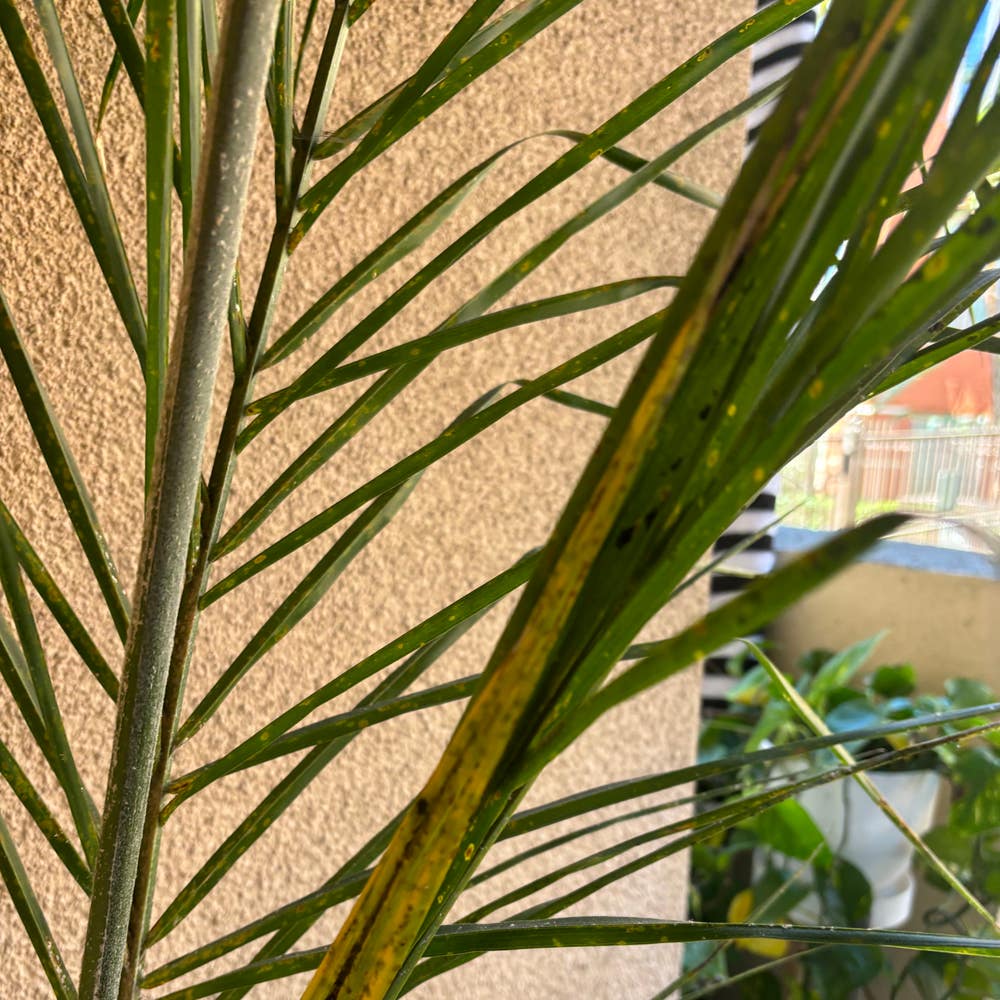
Ultimate Guide to Fixing Brown Spots on Coco Palm 🥥
Syagrus cocoides
By the Greg Editorial Team
Nov 23, 2024•3 min read
This article was created with the help of AI so we can cover more plants for you. May contain errors. See one? Report it here.
Transform your coco palm's health 🌴 by mastering the art of diagnosing and treating pesky brown spots!
- 🌞 Coco palms need 6 hours of indirect sunlight daily for optimal growth.
- 💧 Humidity levels of 60-80% are essential to prevent brown spots.
- 🌱 Nutrient deficiencies like nitrogen and potassium cause brown spots on leaves.
Diagnosing the Problem
🌍 Assessing Environmental Factors
To keep your coco palm thriving, start by evaluating its environment. Ensure it receives a minimum of 6 hours of indirect sunlight daily, as this is crucial for healthy growth.
Humidity plays a significant role too. Aim for humidity levels between 60-80% to create a comfortable atmosphere for your plant.
Temperature is another key factor. The optimal range for your coco palm is between 70°F to 90°F (21°C to 32°C). Keeping these conditions in check will help prevent brown spots from developing.
💧 Evaluating Watering Practices
Next, let's look at your watering habits. Overwatering can lead to yellowing leaves and mushy roots, signaling distress in your plant.
On the flip side, underwatering manifests as brown, crispy leaf tips. To strike the right balance, water your coco palm every 1-2 weeks, adjusting based on the soil's moisture level.
🥦 Checking for Nutrient Deficiencies
Nutrient deficiencies can also contribute to brown spots. For instance, nitrogen deficiency often results in yellowing leaves and stunted growth.
If you notice brown spots on the edges of leaves, potassium deficiency might be the culprit. Additionally, magnesium deficiency leads to interveinal chlorosis, where the area between leaf veins turns yellow.
🐛 Inspecting for Pests
Finally, inspect your plant for pests. Scale insects appear as hard, raised bumps on leaves, while spider mites leave fine webbing and stippled leaves.
Mealybugs can be identified by their cotton-like masses on the undersides of leaves. Regularly checking for these pests will help you catch any issues early on.
By thoroughly diagnosing these factors, you can take the necessary steps to restore your coco palm's health. Next, we will explore effective treatment options to address the brown spots.
Treatment Options
Step-by-step guide to treating brown spots 🌱
Treating brown spots on your coco palm starts with identifying the root cause. This could be due to environmental factors, pests, or diseases.
Next, adjust your watering practices. Ensure proper drainage and maintain appropriate moisture levels to prevent further damage.
Once you've diagnosed the issue, apply the necessary treatments. For fungal problems, use fungicides as directed. If pests are the culprit, consider insecticides or natural remedies.
Finally, monitor your plant's health regularly. Look for signs of improvement to ensure your treatment is effective.
Recommended products for leaf treatment 🛒
When it comes to products for treating brown spots, several options stand out.
- Fungicides: Copper-based or systemic fungicides are effective choices.
- Insecticides: Neem oil and insecticidal soap can help manage pest infestations.
- Fertilizers: Use balanced NPK fertilizers to replenish essential nutrients.
Natural remedies for common issues 🌿
Natural remedies can be a great alternative for treating brown spots.
Applying neem oil is particularly effective against both pests and fungal issues.
You can also create a homemade insecticidal soap by mixing liquid soap with water in a 1:10 ratio. This simple solution can help combat unwanted pests without harsh chemicals.
By following these treatment options, you can restore your coco palm's health and vibrancy. Next, we’ll explore how to prevent these issues from arising in the first place.
⚠️ Safety First
This content is for general information and may contain errors, omissions, or outdated details. It is not medical, veterinary advice, or an endorsement of therapeutic claims.
Always consult a qualified healthcare professional before using any plant as food, medicine, or supplement.
Never eat any plant (or feed one to pets) without confirming its identity with at least two trusted sources.
If you suspect poisoning, call Poison Control (800) 222-1222, the Pet Poison Helpline (800) 213-6680, or your local emergency service immediately.
Spotted an error? Please report it here.
Transform your coco palm into a vibrant 🌴 centerpiece by using Greg's tailored watering alerts and nutrient tips to tackle brown spots and promote lasting health!