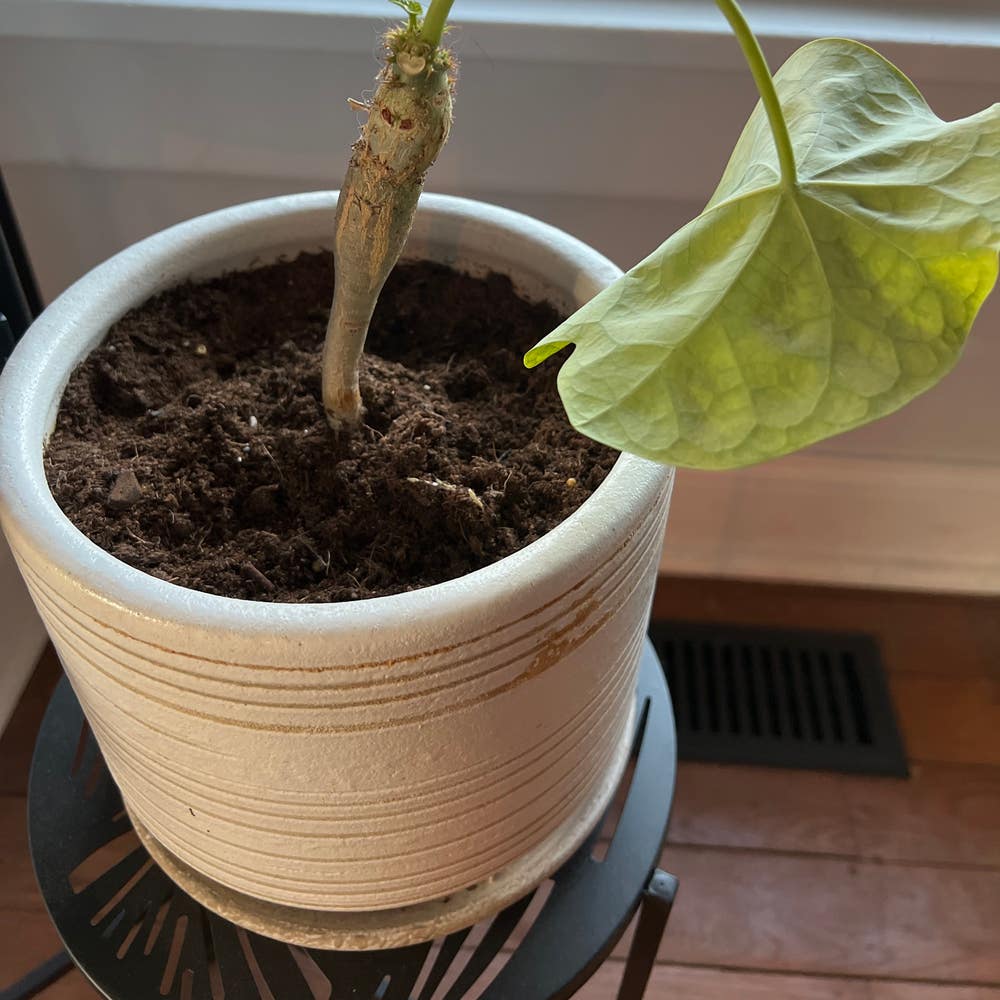
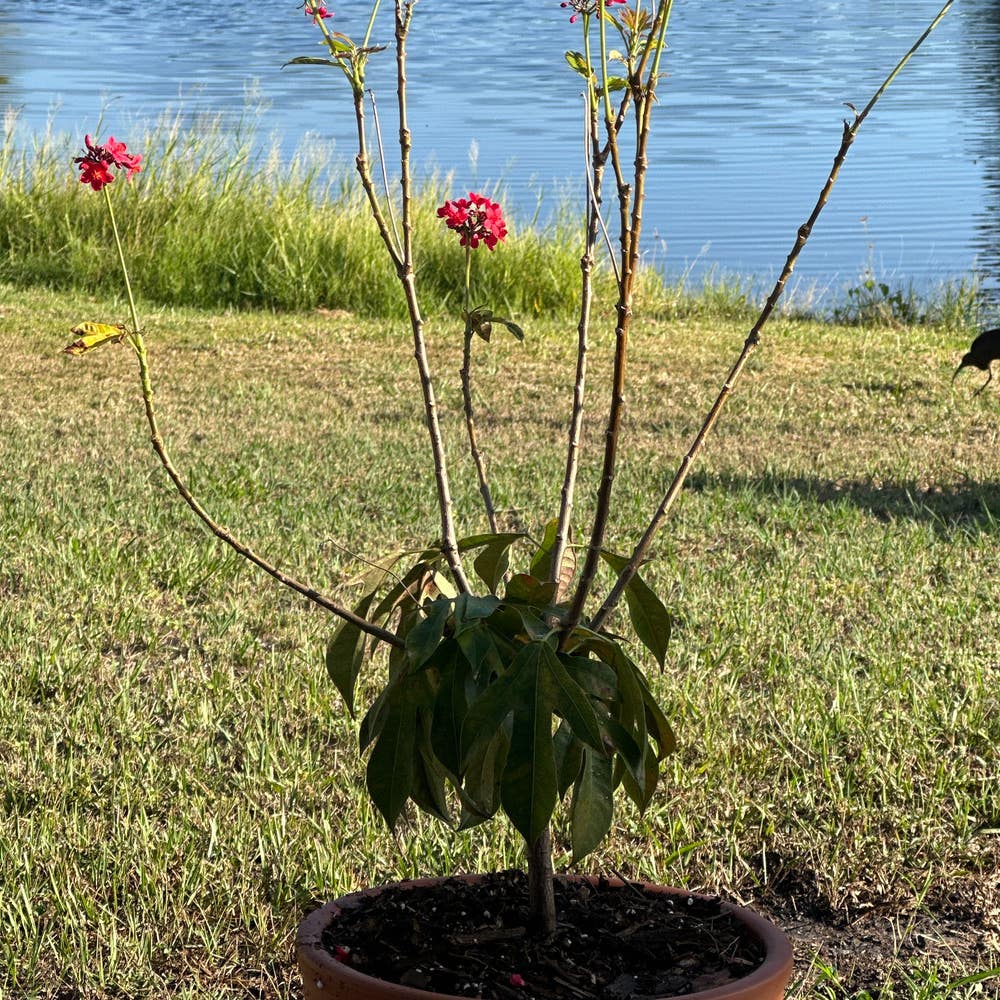
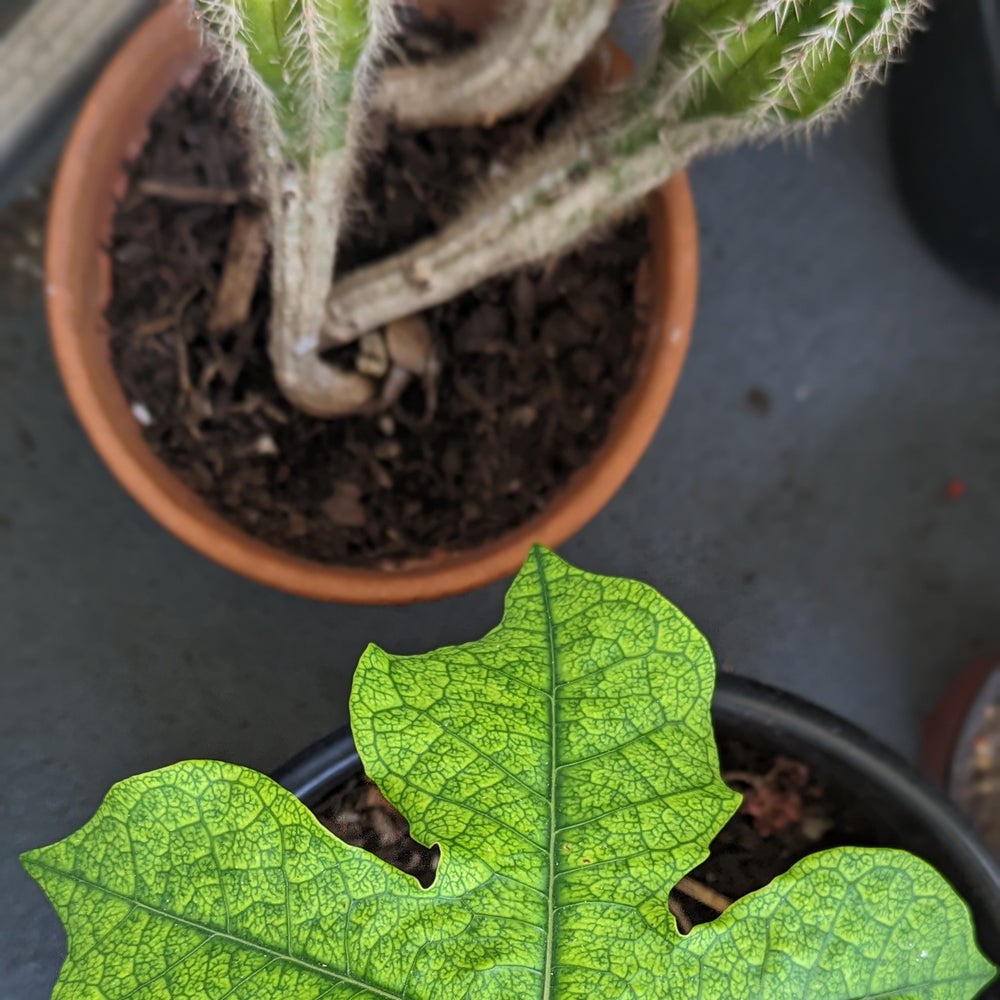
🧘 Why Are My Buddha Belly Plant Leaves Dropping?
Jatropha podagrica
By the Greg Editorial Team
Jun 18, 2024•5 min read
This article was created with the help of AI so we can cover more plants for you. May contain errors. See one? Report it here.
Prevent leaf loss and ensure your Buddha Belly Plant's 🌿 vitality with these crucial care secrets.
- 🌧️ Overwatering and underwatering both lead to leaf drop.
- 🌡️ Temperature fluctuations and drafts can also cause leaves to fall.
- 🌿 Proper fertilization and pest control are key to leaf retention.
Why Leaves Take the Plunge: Pinpointing the Culprits
🌊 Overwatering Woes
Soggy soil is a no-go for the Buddha Belly Plant. Overwatering turns the soil into a wet sponge, suffocating roots and leading to leaf drop. If your plant's leaves are yellowing or wilting, and the soil feels like it's been through a monsoon, it's time to ease up on the H2O.
🏜️ The Thirsty Plant Predicament
On the flip side, leaves that are dry and crispy with soil as barren as a desert landscape scream underwatering. Don't wait for your plant to start looking like a piece of toast before you give it a drink. Aim for consistent soil moisture, letting the top inch dry out before watering again.
❄️ Feeling the Chill: Temperature and Drafts
Temperature swings and drafts are like kryptonite to your Buddha Belly Plant's leaves. If they're dropping like flies, it might be time to check for a drafty window or an overzealous AC. Keep the temps steady and the breezes at bay to avoid a leafy downfall.

Nutrient Know-How: Feeding for Leaf Stability
💪 The Starvation Connection
Your Buddha Belly Plant dropping leaves could be shouting for help, and the culprit might just be nutrient deficiency. When it doesn't get what it craves, it lets go of leaves like a hot potato.
- Essential nutrients are non-negotiable for your plant's wardrobe of leaves.
🍽️ What Your Buddha Belly Plant Craves
Think of your plant as a mini gourmet diner; it needs a balanced diet. A sprinkle of nitrogen here, a dash of potassium there, and don't forget the phosphorus. It's the trio that keeps the leaves on.
- Balanced fertilizer: the secret sauce for leaf retention.
🌱 Fertilizer Fix: Timing and Type
Springtime is the plant's New Year's party, and that's when you should bring out the balanced fertilizer. But remember, it's a fine line between feast and famine.
Timing is everything: an annual nutrient boost can prevent a leafy letdown.
Foliar feeding: a quick nutrient snack, but don't turn your plant into a crispy critter with a misting in the midday sun.
Organic matter: because your plant deserves the good stuff, not just any old dirt.
pH levels: Keep them as balanced as a tightrope walker to avoid a greenery graveyard.
🌿 When and What to Feed for Optimal Leaf Health
Feed your Buddha Belly Plant like you're its personal chef—too much and you'll spoil it, too little and it'll sulk. Stick to the fertilizer's instructions like a sacred text.
Overfeeding is the helicopter parent of plant care; it smothers and stunts growth.
Underfeeding is like sending your plant to bed without dinner; it'll wake up hangry and drop leaves in protest.
Adjust your feeding strategy like a plant whisperer, responding to your Buddha Belly's subtle hints of distress.

Root of the Problem: Soil and Space Issues
🌱 Cramped Quarters: When to Repot
Roots peeking out of drainage holes or circling the surface are your Buddha Belly Plant's cry for help—it's repotting time. Stunted growth or water flowing through the pot too quickly are also telltale signs.
🌿 The right way to give roots room to grow
Choose a pot one size larger with proper drainage to prevent your plant from feeling like it's in a straightjacket. Use fresh, well-draining soil—think of it as a comfy new bed for your plant's roots.
🌱 Drainage Dilemmas
Compacted soil is a silent leaf dropper. If your soil is harder than a week-old baguette, it's time to refresh.
🌿 Ensuring your soil setup supports leaf retention
A well-draining potting mix is non-negotiable. It should be as reliable as a Swiss watch, allowing water to pass through without turning the pot into a swamp. Remember, soggy roots are as unhappy as a cat in a bathtub.

Battling Bugs and Blights
🐜 Pests: The Leaf-Dropping Invaders
In the world of Buddha Belly Plants, pests are the uninvited guests at the leafy ball. Aphids, mealybugs, spider mites, and scale insects are the usual suspects when leaves start to bail. These critters are like tiny vampires, draining the life from your plant's foliage.
Visual checks are your first line of defense. If you spot any of these pests, it's time to act. Neem oil and insecticidal soap are your go-to weapons, perfect for a stealth attack on the undersides of leaves where these pests plot their next move.
🦠 Disease Defense
Fungal diseases are the silent assassins of the plant world. They love nothing more than a moist leaf to sink their spores into. Discoloration and spots on leaves are your plant crying out for help.
To keep these fungal party crashers at bay, water at the base of your plant to keep the leaves dry. Good air circulation is like social distancing for plants; it helps prevent the spread of disease. If you're already facing a fungal uprising, a targeted fungicide might just be the cure.
Regular inspections are crucial. It's like a check-up for your plant. Catching these issues early can be the difference between a quick fix and a plant apocalypse. Remember, the best defense is a strong offense: keep your plant healthy, and it'll be less likely to succumb to pests and diseases.
⚠️ Safety First
This content is for general information and may contain errors, omissions, or outdated details. It is not medical, veterinary advice, or an endorsement of therapeutic claims.
Always consult a qualified healthcare professional before using any plant as food, medicine, or supplement.
Never eat any plant (or feed one to pets) without confirming its identity with at least two trusted sources.
If you suspect poisoning, call Poison Control (800) 222-1222, the Pet Poison Helpline (800) 213-6680, or your local emergency service immediately.
Spotted an error? Please report it here.
Ensure your Buddha Belly plant thrives with zero leaf drop 🍃 by following Greg's custom watering schedules and tapping into community wisdom for pest and disease management.