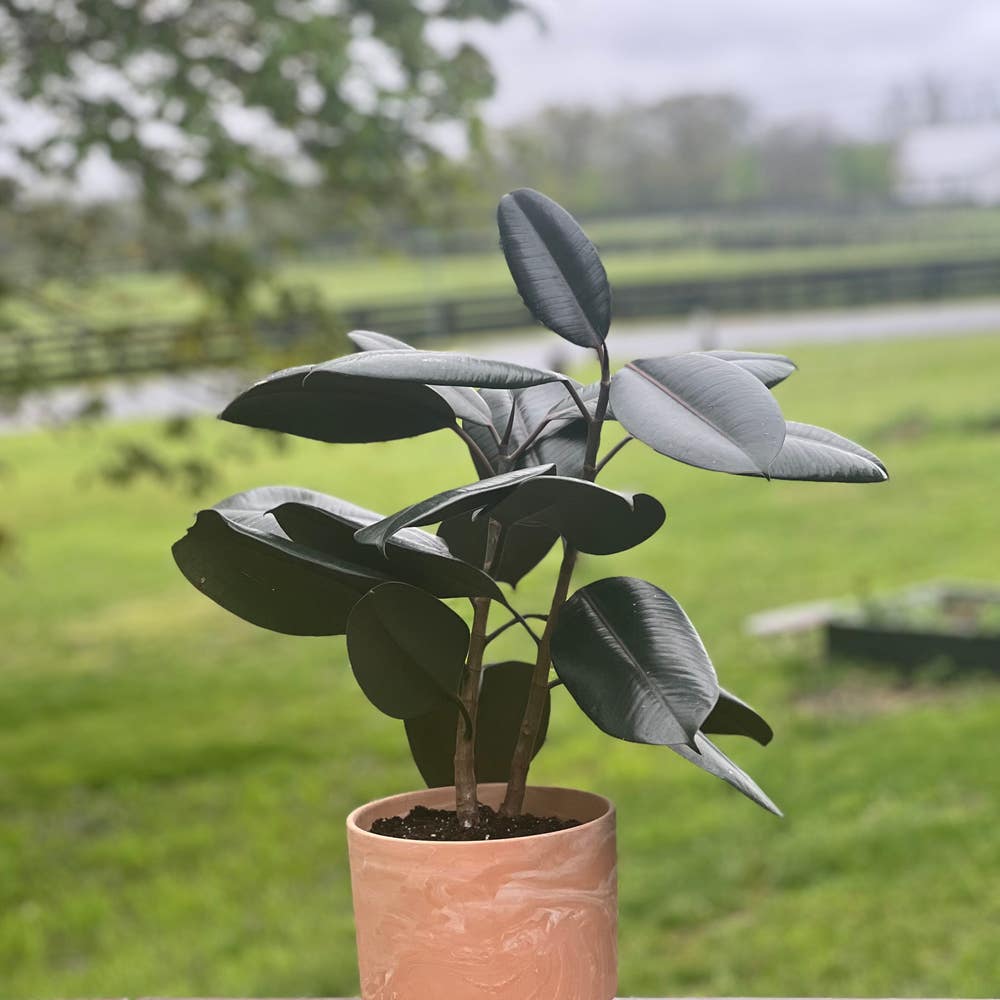
💜 How Big Purple Rubber Plant Grows
Ficus elastica 'Burgundy'
By the Greg Editorial Team
Oct 17, 2024•5 min read
This article was created with the help of AI so we can cover more plants for you. May contain errors. See one? Report it here.
Master the art of growing a Big Purple Rubber Plant 🌱 and watch it thrive in your home!
- 🌱 Big Purple Rubber Plants grow 6-10 feet indoors; outdoors, they can reach 100 feet!
- 💡 Optimal light and care are crucial for healthy growth and size management.
- ✂️ Prune in spring for bushier growth and to control size effectively.
Growth Characteristics
Mature Height and Spread 🌳
The Big Purple Rubber Plant typically reaches a height of 6 to 10 feet when grown indoors. In its native habitat, it can soar up to 100 feet, showcasing its impressive potential.
Indoors, you can expect an average spread of 3 to 5 feet. Several factors influence these mature dimensions, including container size and overall growing conditions.
Growth Rate and Time to Full Size ⏳
This plant boasts a moderate to fast growth rate, depending on its environment. Indoor plants usually take about 5 to 10 years to reach full size, while outdoor specimens may require 10 to 20 years.
Key factors affecting growth rate include light availability, watering frequency, and nutrient levels. Ensuring optimal conditions can significantly enhance your plant's growth journey.
Size Variability Based on Conditions 📏
The height and spread of the Big Purple Rubber Plant can vary widely based on its growing conditions. Indoor plants often grow smaller due to limited light and space, while outdoor plants thrive in more natural settings.
Container restrictions and environmental factors like light, humidity, and soil quality also play a crucial role. For instance, plants grown in low light may end up shorter, and overly restricted root systems can stunt their growth.
This variability highlights the importance of understanding your plant's environment. By adjusting care practices, you can help your Big Purple Rubber Plant reach its full potential.
As we explore further, we'll delve into how specific growing conditions impact the plant's overall size and health.
Influence of Growing Conditions
Impact of Light on Size 🌞
Light plays a crucial role in the growth of your Big Purple Rubber Plant. For optimal growth, it thrives in bright, indirect light, which encourages robust development.
In contrast, low light conditions can lead to leggy growth and reduced height. If your plant is stretching toward the light, it might be time to adjust its placement.
Direct sunlight, while seemingly beneficial, can cause leaf burn and stunt growth. It's essential to find that sweet spot where your plant can soak up the light without getting scorched.
Soil Type and Its Effect on Growth 🌱
The right soil type is vital for your plant's health. A well-draining potting mix is preferred, allowing roots to breathe and absorb nutrients effectively.
Aim for a soil pH range of 6.0 to 7.0 for optimal growth. Poor soil conditions, like heavy, compacted soil, can lead to root rot and stunt your plant's growth.
Ensuring your Big Purple Rubber Plant has the right light and soil conditions will set the stage for vibrant growth. Next, let’s explore how different environments can further influence its size.
Varieties and Size Control
🌱 Dwarf and Giant Varieties
When it comes to the Big Purple Rubber Plant, size can vary significantly based on the variety.
Dwarf varieties typically reach heights of 3-4 feet, making them perfect for small spaces or indoor settings. Their compact growth habit allows them to thrive without overwhelming your living area.
On the other hand, giant varieties can grow impressively tall, reaching 10-15 feet indoors under optimal conditions. In their native tropical environments, they may even exceed 100 feet, showcasing their potential when given the right care.
✂️ Pruning Techniques for Size Management
Pruning is essential for managing the size of your Big Purple Rubber Plant.
It encourages bushier growth and prevents that dreaded legginess that can occur when plants stretch for light.
To effectively prune, consider pinching back new growth to promote branching. Alternatively, cutting back to just above a leaf node can stimulate healthy regrowth.
Timing is also crucial; the best periods for pruning are spring or early summer. This ensures your plant has the energy to bounce back and flourish.
Understanding these varieties and pruning techniques will empower you to cultivate a Big Purple Rubber Plant that fits perfectly in your space while thriving beautifully.
Next, let’s explore how environmental factors can further influence the growth of your plant.
Environmental Factors
How Different Environments Affect Growth 🌍
The growth of a Big Purple Rubber Plant varies significantly between indoor and outdoor settings. Indoor plants tend to be smaller due to limited space and light, while outdoor plants thrive in natural conditions, allowing them to reach their full potential.
Urban environments can further complicate growth. Pollution and restricted light often hinder plant development, making it challenging for these beauties to flourish compared to their rural counterparts.
Seasonal Changes and Their Impact on Size 🍂
Seasonal shifts play a crucial role in the growth patterns of your plant. During spring and summer, expect an active growth phase, which means your plant has the potential to grow larger and more robust.
As fall and winter approach, the plant enters a dormant phase, leading to reduced growth and size. To counteract this, consider adjusting care routines, such as increasing light and humidity during winter months to help maintain size and vitality.
This understanding of environmental factors can empower you to create the best conditions for your Big Purple Rubber Plant, ensuring it thrives year-round. Next, let’s explore how different growing conditions, like light and soil type, can further influence its growth.
⚠️ Safety First
This content is for general information and may contain errors, omissions, or outdated details. It is not medical, veterinary advice, or an endorsement of therapeutic claims.
Always consult a qualified healthcare professional before using any plant as food, medicine, or supplement.
Never eat any plant (or feed one to pets) without confirming its identity with at least two trusted sources.
If you suspect poisoning, call Poison Control (800) 222-1222, the Pet Poison Helpline (800) 213-6680, or your local emergency service immediately.
Spotted an error? Please report it here.
Unlock the full potential of your Big Purple Rubber Plant by mastering its light, watering, and soil needs, and let Greg's tailored care plans help you grow big and bold! 🌱