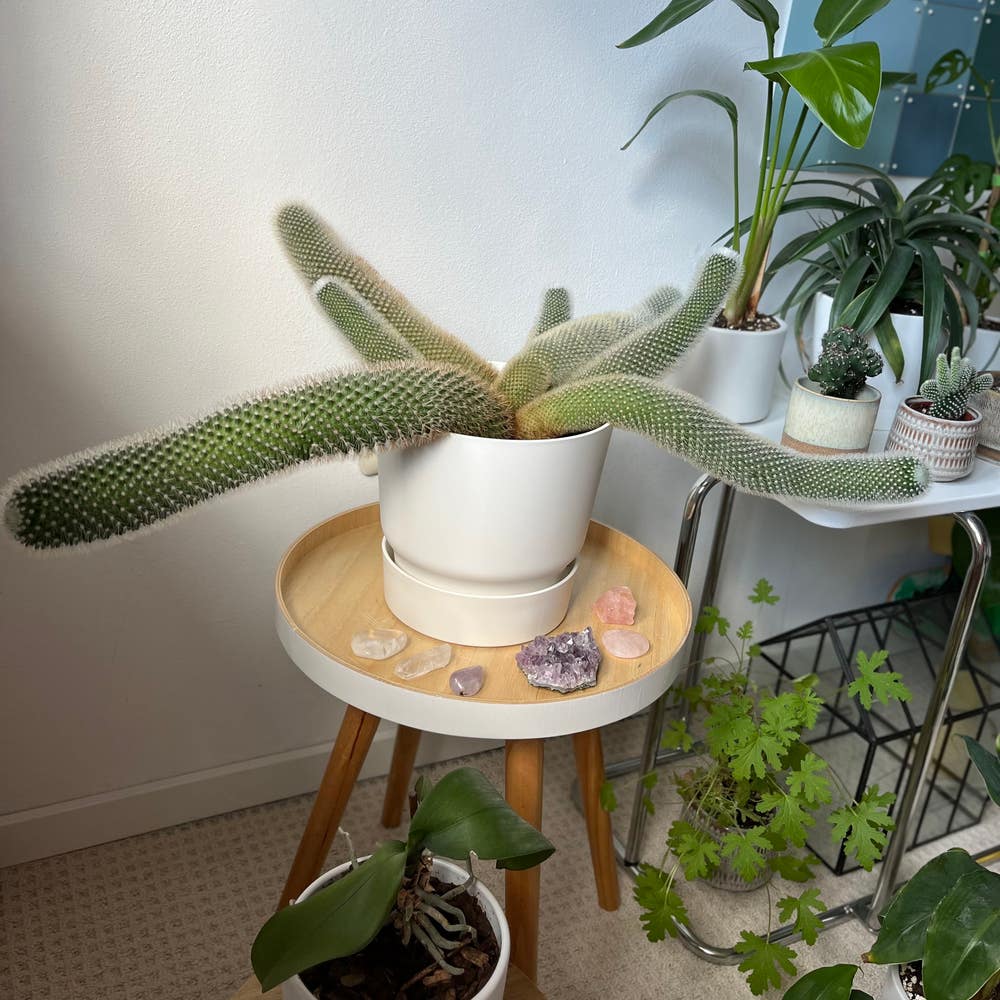
🌵 Propagating Lace Hedgehog Cactus: Step-by-Step Guide
Echinocereus reichenbachii
By the Greg Editorial Team
Jun 08, 2024•4 min read
This article was created with the help of AI so we can cover more plants for you. May contain errors. See one? Report it here.
Propagate your Lace Hedgehog Cactus 🌵 effortlessly with this step-by-step guide to a thriving cacti collection!
- Offsets ensure success: Look for healthy pups and let wounds callus.
- Seed patience pays off: Harvest mature fruit and provide warmth for germination.
- Grafting boosts growth: Choose compatible rootstock and use grafting tape for union.
Popping Off Those Pups: Propagating through Offsets
🌱 Spotting the Right Offsets: What to Look For
Size and health are your guiding stars when hunting for the perfect pups. Seek out offsets that mimic the mother plant but with their own roots, like mini-me's ready for independence. Ignore the runts; bigger offsets mean a head start in the growth race.
✂️ Snip and Separate: Safely Detaching Offsets from the Mother Plant
Gentle wiggles or a clean snip with sterilized scissors are your tools of choice here. Think surgical precision, not brute force. Post-separation, let the offset's wound dry and callus in the shade—think of it as a cactus band-aid.
🌵 Rooting for Success: Prepping and Potting Your New Cactus Babies
Once callused, it's time for the offsets to strike out on their own. Plant them in a well-draining mix, ensuring they stand upright and secure. Watering is a delicate dance—too little and they shrivel, too much and they rot. Aim for the sweet spot of moist, not soggy, and watch your cactus pups thrive.

From Tiny Seeds to Thorny Wonders: Propagating through Seeds
🌱 Seed Collection: How and When to Harvest
Timing is everything when it comes to harvesting seeds from your Lace Hedgehog Cactus. Wait for the fruit to mature; this is when seeds are ripe for the picking. Handle with care—those spines are no joke.
🌞 Germination Station: Setting Up for Seedling Success
Light and warmth are your seeds' best friends. Set up a cozy germination station with a seed-starting mix, ensuring consistent moisture but not a swamp. If your seeds prefer the dark, a light blanket of substrate or turning off the lights will do the trick.
🕰 The Waiting Game: Tips for Patient Gardeners During Germination
Patience isn't just a virtue; it's a requirement. Germination can take from a week to a fortnight, so keep calm and carry on watering. Remember, each sprout is a genetic grab bag—expect the unexpected.

Cut and Callus: Propagating through Stem Cuttings
🌱 Choosing Champions: Selecting the Best Cuttings
Vigorous and healthy stems are your golden tickets to propagation success. Look for stems that are disease-free and have a semi-hardwood consistency. About 4-6 inches in length is ideal, with several leaf nodes—those are the spots where roots will eagerly emerge. Use sharp, sterilized scissors or pruners to make a clean, angled cut just below a node. This increases the surface area and the potential for rooting.
🛡️ The Callusing Phase: Encouraging a Tough Skin for Better Rooting
Before your cutting touches soil, it needs to toughen up. Place it in a spot with indirect light and let the cut end form a callus. This can take a few days, but it's crucial—it's like giving your cutting a suit of armor against rot and infection. Larger cuts may need more time to callus, so use your best judgment and be patient.
🌱 Rooting Your Cuttings: Best Practices for Soil and Water
Once callused, plant your cutting about an inch deep into well-draining soil, ensuring at least one node is buried. This is where the roots will start to develop. Water sparingly—think of it as a neglectful watering schedule. The cutting needs to search for moisture, which encourages root growth. Keep it in bright, indirect light and resist the urge to poke or prod. Patience is key. If you're feeling adventurous, a dab of rooting hormone on the cut end before planting can act as a pep talk, boosting your cutting's chances of success.

Joining Forces: Propagating through Grafting
🌵 Grafting 101: Why it's a game-changer for your Lace Hedgehog Cactus
Grafting isn't just plant surgery; it's alchemy. By fusing a Lace Hedgehog Cactus scion with a robust rootstock, you're giving it a leg-up in life. This method is especially crucial for those finicky, slow-growing, or weak-rooted varieties that need a bit more oomph to thrive.
🎯 The Perfect Match: Finding and Preparing Your Rootstock
Compatibility is the name of the game. Choose a rootstock that's vigorous and disease-resistant, ensuring it's a good fit for your scion. Clean cuts and sterile tools are your best friends here. Slice the rootstock smoothly, and prepare for the grafting dance.
💃 The Grafting Dance: Techniques for a Successful Union
Now, let's tango. The flat graft is your go-to move for cacti. Make sure the scion and rootstock are the same diameter for a seamless connection. Use grafting tape to hold the duo in place, like a botanical bandage. Keep them warm and dry, and soon, they'll grow together as one. Remember, patience is key; it's a slow dance, not a quickstep.
⚠️ Safety First
This content is for general information and may contain errors, omissions, or outdated details. It is not medical, veterinary advice, or an endorsement of therapeutic claims.
Always consult a qualified healthcare professional before using any plant as food, medicine, or supplement.
Never eat any plant (or feed one to pets) without confirming its identity with at least two trusted sources.
If you suspect poisoning, call Poison Control (800) 222-1222, the Pet Poison Helpline (800) 213-6680, or your local emergency service immediately.
Spotted an error? Please report it here.
Embark on your propagation adventure and ensure your Lace Hedgehog Cactus cuttings thrive 🌵 with Greg's custom watering schedules and real-time advice from our plant-loving community.