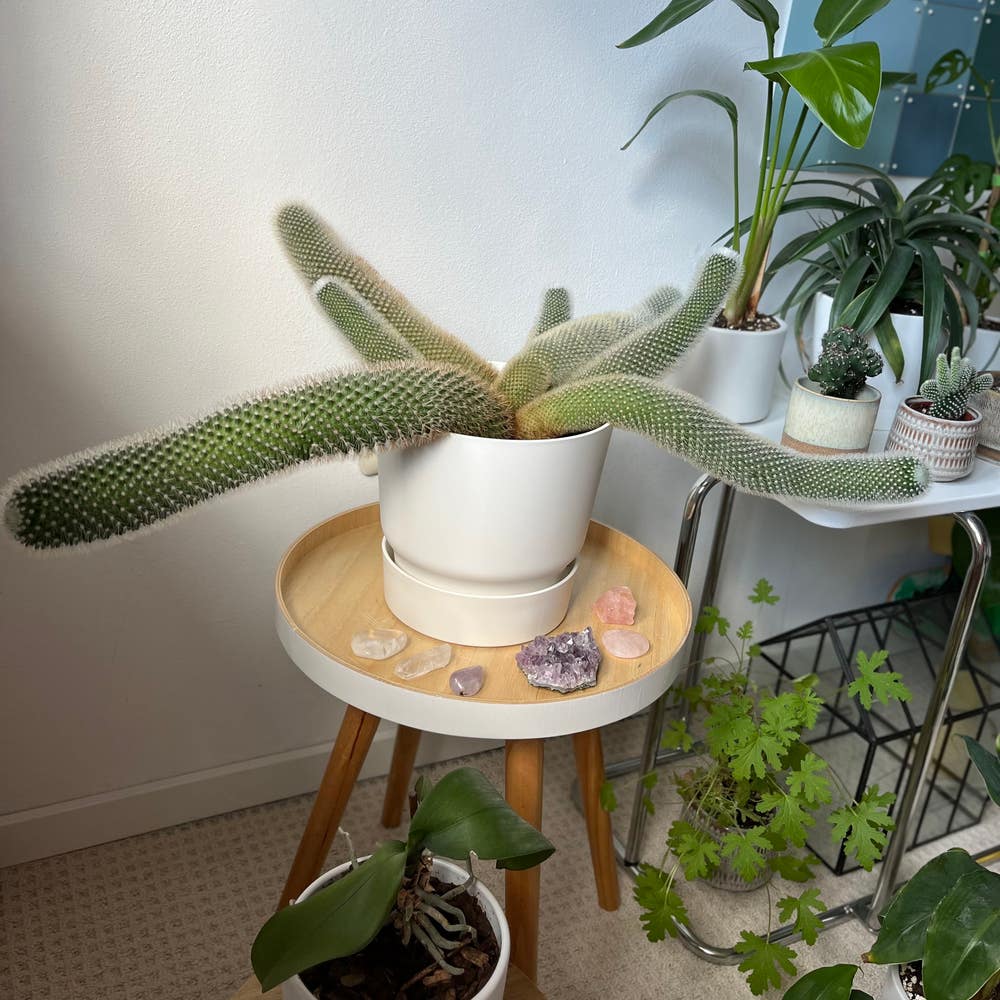
Lace Hedgehog Cactus - Ultimate Guide to Fertilizing
Echinocereus reichenbachii
By the Greg Editorial Team
Jun 08, 2024•4 min read
This article was created with the help of AI so we can cover more plants for you. May contain errors. See one? Report it here.
Nurture stunning cactus blooms 🌵✨ by nailing the fertilizing formula and schedule—no overfeeding woes!
- 🌵 Balanced or low-nitrogen fertilizers are best for Lace Hedgehog Cactus.
- Fertilize in spring/summer; avoid winter to prevent overgrowth.
- Dilute and apply carefully to prevent nutrient burn and over-fertilization.
Picking the Perfect Fertilizer
🌵 Types of Fertilizers that Make Lace Hedgehog Cactus Happy
Balanced versus low-nitrogen fertilizers is the debate at hand. The Lace Hedgehog Cactus, with its slow growth, doesn't scream for frequent feedings. A balanced fertilizer might be your go-to, but too much nitrogen could turn your cactus into a leafy beast, sacrificing those coveted blooms. Low-nitrogen options, on the other hand, cater to the cactus's need for a gentle boost without the risk of overgrowth.
Liquid fertilizers are the secret sauce for those seeking quick results. They're like a shot of espresso for your cactus—fast-acting and potent. Water-soluble options are particularly golden, offering a no-fuss application and ensuring that nutrients are evenly dispersed for your cactus to gulp down.
📜 Reading the Labels: What to Look For
Nutrient ratios on labels can be cryptic, but they're the Rosetta Stone for plant care. Key nutrients to look for are nitrogen (N), phosphorus (P), and potassium (K). The Lace Hedgehog Cactus will thank you for a fertilizer with a low nitrogen content—think 5-10-5 or even a balanced 10-10-10, sparingly used.
Understanding the N-P-K ratio is like decoding a secret message. It tells you the proportion of each nutrient compared to the others. A 10-10-10 ratio means the fertilizer is evenly balanced, while a 5-10-5 ratio indicates lower nitrogen and higher phosphorus, which is ideal for flowering and root development. Remember, the Lace Hedgehog Cactus isn't a hungry beast; it's more of a light snacker when it comes to nutrients.

Timing is Everything: When to Fertilize
🌱 Growing Season Galore
In the life cycle of a Lace Hedgehog Cactus, the growing season is the equivalent of a green light on a race track. Spring and summer are the months when your spiky friend is in the fast lane, actively growing and ready to soak up nutrients. This is the time to fertilize, aligning with the cactus's natural growth spurt.
❄️ Winter Woes: When to Hold Back
Conversely, winter is when your cactus hits the brakes. It's a period of dormancy, and your cactus is essentially snoozing. No fertilizers should be introduced during this time. Think of it as giving your plant a well-deserved nutrient nap. Overdoing it with the feed can lead to a groggy and overburdened cactus come spring.

The Fertilization Process: Step by Step
🍹 Mixing it Up: Diluting Your Fertilizer
Getting the concentration right is like mixing a delicate cocktail for your cactus. Dilute your fertilizer to 1/4 or 1/2 the strength recommended on the package. This prevents the nutrient equivalent of a hangover for your Lace Hedgehog Cactus.
🌱 Application Techniques: Feeding Without Harming
Pour the diluted fertilizer near the soil's surface, where it can be absorbed without causing root burn. Keep it away from the cactus's base to avoid damage—think of it as avoiding the plant's personal space.

Oops, Too Much! Dealing with Over-Fertilization
🚫 Spotting the Telltale Signs
Yellowing or browning at the tips? Your Lace Hedgehog Cactus might be waving a flag of distress. These visual cues often point to nutrient burn—a sign that you've been a tad too generous with the fertilizer.
Wilting despite your careful watering schedule? It's a classic symptom of overindulgence in the nutrient department. Your cactus is telling you it's had enough.
Stunted growth can also signal over-fertilization. If your cactus is more of a slowpoke than a sprinter, it's time to reassess its diet.
Watch out for leaf burn or spots. These are the cactus equivalent of a chemical burn and a clear indicator that you've gone overboard.
An increase in pests and diseases? Excess nutrients can weaken your cactus's defenses, turning it into a bug buffet.
🛠️ Quick Fixes for a Greener Tomorrow
First things first: stop fertilizing. Give your cactus a break from the nutrient smorgasbord.
Flush the soil with water to wash away the excess salts. This might need to be repeated every few days, but it's crucial for your cactus's recovery.
Trim away any visibly damaged parts of the plant. It's like cutting off split ends—it won't reverse the damage, but it'll help your cactus focus on healthy growth.
If the situation looks dire, consider a soil swap. Sometimes, starting fresh is the best way to help your cactus bounce back.
Remember, your Lace Hedgehog Cactus doesn't need a feast of nutrients—just a well-balanced snack. Keep that in mind for the future, and you'll avoid the over-fertilization trap.
⚠️ Safety First
This content is for general information and may contain errors, omissions, or outdated details. It is not medical, veterinary advice, or an endorsement of therapeutic claims.
Always consult a qualified healthcare professional before using any plant as food, medicine, or supplement.
Never eat any plant (or feed one to pets) without confirming its identity with at least two trusted sources.
If you suspect poisoning, call Poison Control (800) 222-1222, the Pet Poison Helpline (800) 213-6680, or your local emergency service immediately.
Spotted an error? Please report it here.
Ensure your Lace Hedgehog Cactus flourishes with perfect blooms by using Greg's custom reminders 🌵 for when and how to fertilize, based on this ultimate guide.