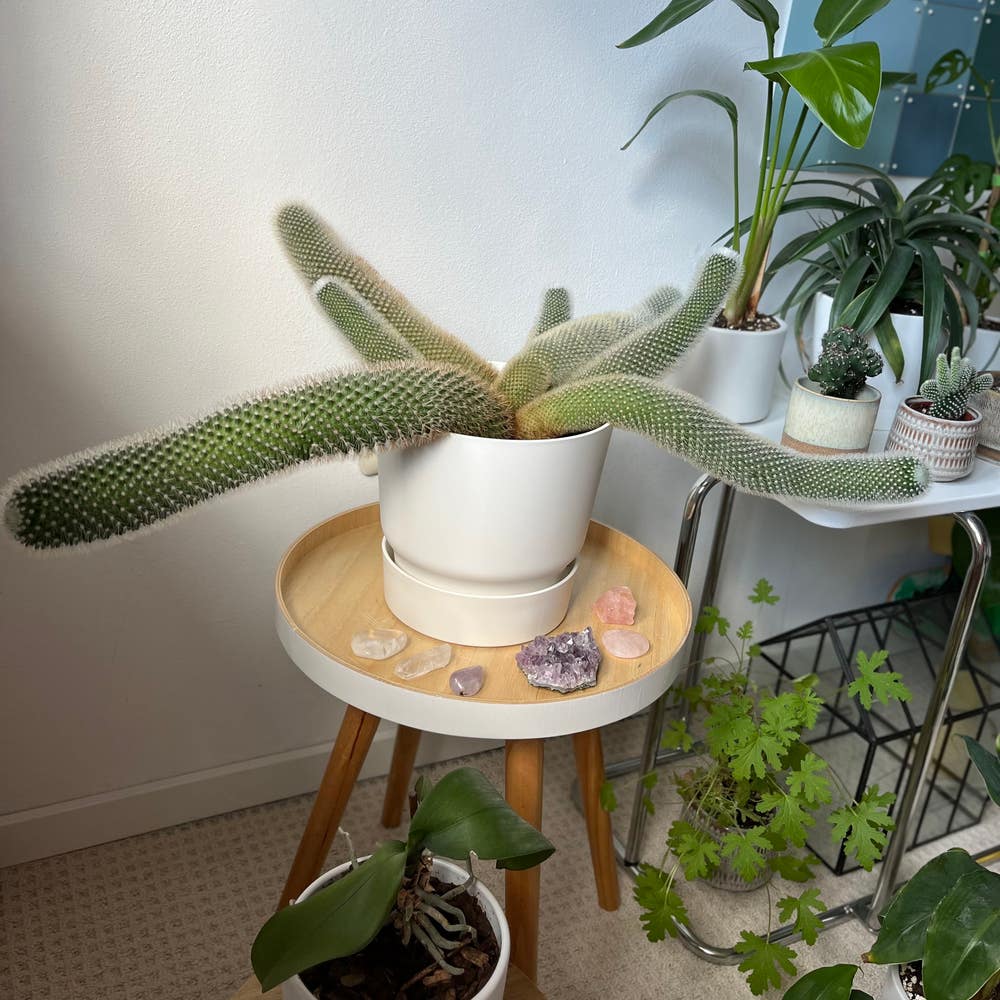
🌵 Top 3 Signs Your Lace Hedgehog Cactus is Stressed in Winter
Echinocereus reichenbachii
By the Greg Editorial Team
Oct 02, 2024•6 min read
This article was created with the help of AI so we can cover more plants for you. May contain errors. See one? Report it here.
Unlock the secrets to winter care for your Lace Hedgehog Cactus 🌵 and keep it thriving all season long!
- 🌵 Lace Hedgehog Cactus grows slowly in winter, needing specific care to thrive.
- ❄️ Frost damage appears as brown or black spots, indicating freezing exposure.
- 💧 Overwatering causes yellowing and mushy stems; adjust watering to every 4-6 weeks.
Winter Behavior of Lace Hedgehog Cactus
🌱 Characteristics of Evergreen vs. Dormant Cacti
Understanding the differences between evergreen and dormant cacti is essential for proper care. Evergreen cacti like the Lace Hedgehog Cactus exhibit continuous growth throughout the year, requiring consistent care and attention.
In contrast, dormant cacti halt their growth during winter months. They need specific care to survive the cold, including reduced watering and protection from frost.
❄️ How Lace Hedgehog Cactus Fits into These Categories
The Lace Hedgehog Cactus primarily falls into the evergreen category. This means it remains active, albeit at a slower pace, during winter.
While it doesn't completely shut down like dormant species, it still requires careful management to thrive. Understanding its needs can help you keep your cactus healthy and vibrant through the chilly months.
With this knowledge, you're better equipped to recognize the signs of stress and take action before issues escalate. Next, we’ll delve into the signs of stress in winter, ensuring your Lace Hedgehog Cactus remains in top shape.
Signs of Stress in Winter
🌊 Identifying Signs of Overwatering
Overwatering is a common issue for Lace Hedgehog Cacti during winter dormancy. Look for symptoms like yellowing, mushy stems, and root rot, which indicate that your cactus is drowning.
Adjusting your watering schedule is crucial during this time. Allow the soil to dry out completely before the next watering to prevent stress.
❄️ Recognizing Signs of Frost Damage
Frost damage can be detrimental to your cactus's health. Watch for brown or blackened areas on the cactus, which signal that it has been exposed to freezing temperatures.
Long-term effects of frost damage can include stunted growth and increased vulnerability to pests. It's essential to address these signs promptly.
🎨 Observing Changes in Color and Texture
The appearance of your Lace Hedgehog Cactus can tell you a lot about its health. A healthy cactus will have a firm structure and vibrant color, while a stressed cactus may exhibit dull color, shriveling, or a soft texture.
Regularly checking for these changes can help you catch stress early and take action to restore your cactus's vitality.
With these signs in mind, you can better care for your Lace Hedgehog Cactus during the winter months. Next, let's explore the winter care requirements to keep your cactus thriving.
Winter Care Requirements
Adjusting Watering Schedules During Dormancy 🌵
During winter, your Lace Hedgehog Cactus needs a different approach to watering. Aim to water it once every 4-6 weeks, allowing the soil to dry out completely between waterings.
This adjustment is crucial because overwatering can lead to root rot, especially when the cactus is dormant. Keeping a close eye on soil moisture will help maintain its health through the colder months.
Fertilizing Needs in Winter 🚫
Fertilization is a no-go during dormancy. Your cactus is in a resting phase, and adding nutrients can disrupt its natural cycle.
However, it's essential to resume fertilization in spring when growth picks up again. A balanced cactus fertilizer will help your plant thrive as temperatures rise.
Importance of Light Exposure During Winter Months ☀️
Light is vital for your cactus, even in winter. Aim for bright, indirect sunlight to keep it healthy and vibrant.
Insufficient light can stunt growth and lead to stress. Position your cactus near a window where it can soak up the necessary light without being exposed to harsh conditions.
By following these winter care requirements, you'll set your Lace Hedgehog Cactus up for a successful transition into spring. Next, let’s explore effective frost protection strategies to keep your cactus safe from winter's chill.
Frost Protection Strategies
🌨️ Best Practices for Outdoor Frost Protection
When winter hits, protecting your Lace Hedgehog Cactus is crucial. Using frost cloths or blankets during cold snaps can provide a much-needed barrier against harsh temperatures.
Positioning your cactus in sheltered areas, like against a wall or under a tree, can also minimize exposure to biting winds and frost. This simple step can make a significant difference in your cactus's winter survival.
🏠 Indoor Care Tips to Prevent Frost Damage
For indoor cacti, maintaining the right temperature is essential. Aim for a cozy range of 50°F to 70°F (10°C to 21°C) to keep your cactus happy.
Avoid placing your cactus near drafts or cold windows. Instead, find a spot that gets bright, indirect light to ensure it thrives throughout the winter months.
🌿 Using Mulch and Coverings for Outdoor Cacti
Mulch can be a game-changer for outdoor cacti during winter. Organic options like straw or shredded bark can insulate the soil and protect roots from freezing.
When covering your cacti, ensure you do it correctly to avoid moisture retention. A loose covering allows for air circulation while still providing the frost protection your cactus needs.
By following these frost protection strategies, you can help your Lace Hedgehog Cactus weather the winter and emerge healthy in spring. Next, let’s explore how to assess and recover from any winter damage your cactus may have sustained.
Recovery from Winter Damage
🌱 Assessing Damage in Spring
As spring arrives, it's crucial to assess your Lace Hedgehog Cactus for any winter damage. Look for soft spots or discoloration, which are clear indicators of stress.
Early assessment is vital for effective recovery. Catching issues early can make a significant difference in your cactus's health.
🛠️ Steps for Rehabilitation of Stressed Cacti
- Remove Damaged Areas: Prune back to healthy tissue to prevent further decay.
- Adjust Watering: Gradually increase watering as temperatures rise, allowing the soil to dry out between sessions.
- Provide Optimal Light: Transition your cactus to brighter conditions to encourage growth.
These steps will help your cactus bounce back from winter's challenges.
🌼 Signs of Healthy Recovery and Growth
Watch for new growth indicators like fresh spines and vibrant color. Recovery timelines can vary, taking weeks to months depending on the severity of the damage.
🌸 Spring Preparation
🌞 Transitioning Care from Winter to Spring
As your cactus recovers, gradually increase its watering frequency. Resuming a balanced cactus fertilizer schedule will also support its growth.
💧 Preparing for Increased Watering and Fertilization
Ensure proper drainage by adjusting soil moisture levels. Nutrient replenishment is essential for robust growth as the season changes.
🌿 Signs That the Cactus is Ready for Spring Growth
Keep an eye out for new growth, such as fresh spines and flowers. Changes in color and firmness will also indicate that your cactus is regaining its health and vigor.
With these steps, your Lace Hedgehog Cactus will be well on its way to thriving in the warmer months. Now, let’s explore how to protect your cactus from frost damage in the future.
⚠️ Safety First
This content is for general information and may contain errors, omissions, or outdated details. It is not medical, veterinary advice, or an endorsement of therapeutic claims.
Always consult a qualified healthcare professional before using any plant as food, medicine, or supplement.
Never eat any plant (or feed one to pets) without confirming its identity with at least two trusted sources.
If you suspect poisoning, call Poison Control (800) 222-1222, the Pet Poison Helpline (800) 213-6680, or your local emergency service immediately.
Spotted an error? Please report it here.
Keep your Lace Hedgehog Cactus thriving this winter ❄️ by using Greg's tailored reminders for watering and light, ensuring it stays healthy and vibrant all season long!