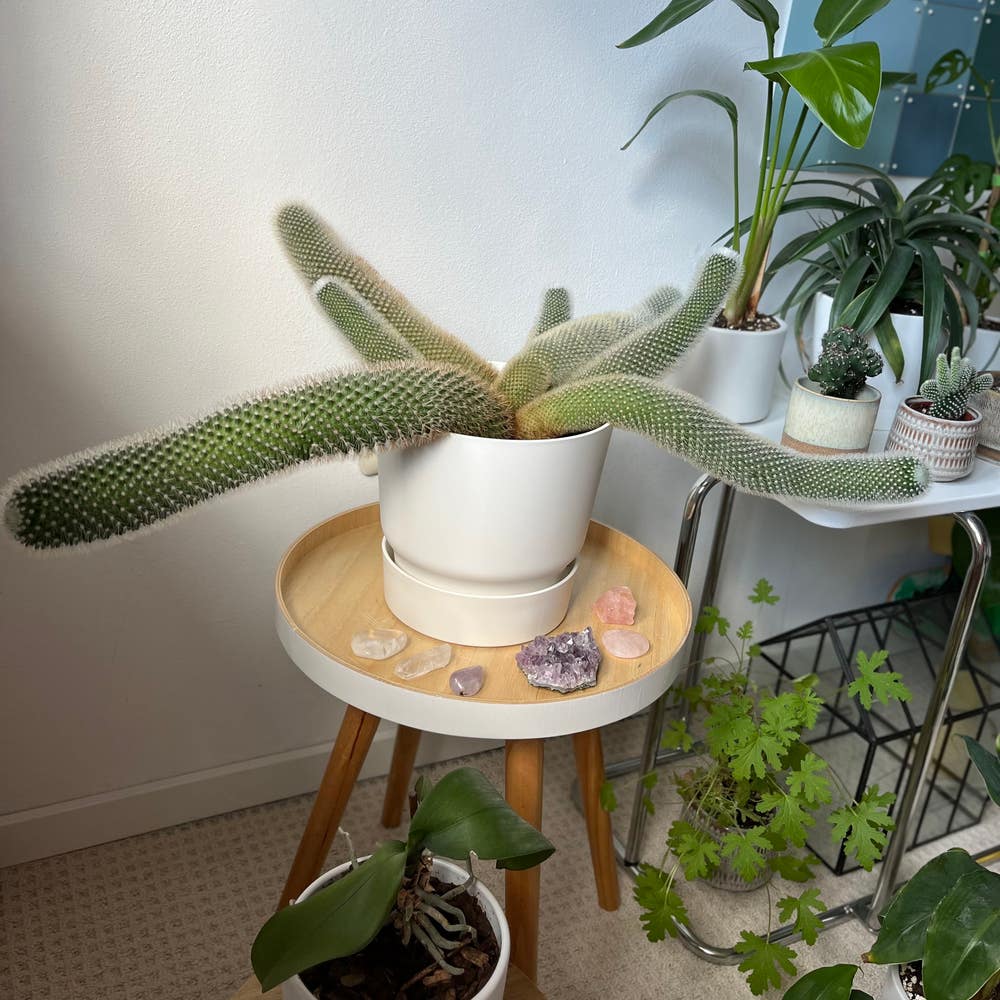
Black Spots on My Lace Hedgehog Cactus Leaves
Echinocereus reichenbachii
By the Greg Editorial Team
Jun 08, 2024•5 min read
This article was created with the help of AI so we can cover more plants for you. May contain errors. See one? Report it here.
Prevent the spread of pesky black spots on your cactus 🌵 with this crucial plant-saving guide!
- Fungal infections cause black spots with red/yellow halos.
- Sunburn shows as dry, brown spots with tanned tips.
- Overwatering leads to black spots; adjust watering routine.
Spotting the Trouble: Symptoms of Black Spots
🕵️♂️ Visual cues of black spots
When your Lace Hedgehog Cactus starts sporting black spots, it's not trying to keep up with the latest plant fashion trends. These spots are typically circular or irregular, and they scream trouble. They might appear powdery if it's a fungal party or slimy if bacteria crashed the bash.
Textural changes and spot patterns
The texture of these spots can be a dead giveaway. A crusty surface hints at a fungal fiesta, while a soggy feel suggests bacterial gatecrashers. If you spot concentric rings or dark margins, it's time to play plant detective—these patterns are the fingerprints of an infection. Remember, size matters too. Tiny specks or larger blotches each tell a tale of woe for your cactus. Keep an eye out for any yellow halos that might form around older spots, as they indicate the issue is spreading.
Pro Tip: Whip out a magnifying glass to get up close and personal with those spots. If they're on the underside of leaves or causing discoloration, it's a sign your cactus is crying out for help. Don't just stand there—isolate the affected plant to prevent an epidemic.

Rooting Out the Cause
🍄 Fungal Foes: Identifying signs of fungal infections
Red or yellow halos around black spots scream fungal invasion, especially if your cactus is lounging in the sauna-like conditions of high humidity. Fungi love a good steam as much as the next guy, but your cactus? Not so much. If the black spots look like they're throwing a party with concentric rings or dark borders, it's time to crash it.
🌞 Sunburn or Scorch: Recognizing light-related damage
When your cactus sports dry, brown spots with tips that look like they've just walked out of a tanning booth, it's likely sunburn. These cacti enjoy basking in the sun, but too much of a good thing can lead to a scorching. If the spots are appearing faster than a sunburn on a pale tourist, you might need to rethink your plant's sunbathing habits.
💧 Water Woes: Connecting overwatering to black spots
If your cactus is sitting in soil that's wetter than a rainforest floor, you've got overwatering issues. Black spots accompanied by mushy, discolored roots are the plant equivalent of a soggy diaper. It's uncomfortable, unhealthy, and a free ticket for fungi and bacteria to move in. Remember, roots need air as much as they need water; don't make them swim for it.

The Treatment Plan
🍄 Battling Fungus: Choosing and Applying Antifungal Treatments
When your Lace Hedgehog Cactus sports those unwanted tattoos of black spots, it's time to play doctor. Fungicides are your go-to meds. Copper-based options have a fan club, but don't just jump on the bandwagon—check if it's a match for your cactus. If you're more of a naturalist, neem oil might be your jam. Whichever you pick, follow the label like it's a treasure map—no room for freestyling here. Coat every leaf, no skimping, and stick to the schedule. Think of it as a vaccination program for your plant.
☀️ Sunburn Soothers: Adjusting Light Exposure and Plant Location
If your cactus is throwing shade because it's had too much sun, it's time to dial down the solar love. Gradually transition it to a spot with more indirect light. Think of it as moving from the beach to the cabana. And give your plant a twirl occasionally; every side deserves its moment away from the limelight. This isn't just about aesthetics—it's about even tanning, minus the burn.
💧 Watering Wisdom: Fine-Tuning Your Watering Routine
Overwatering can turn your cactus's life into a soggy mess. The trick is to water like a ninja—stealthily and with precision. Wait for the soil to dry out before going in for another pour. And always aim at the base, because wet leaves are party central for fungi. If you've been heavy-handed with the H2O, it's time to show some restraint. Your cactus will thank you with growth, not groans.

Keeping Black Spots at Bay
🛡️ Proactive Plant Care: Regular inspections and optimal growing conditions
Regular inspections are your first line of defense. Like a health check-up, catching issues early can save your Lace Hedgehog Cactus from a world of hurt. Ensure your plant enjoys the optimal growing conditions: plenty of sunlight, but not so much that it gets a sunburn, and just enough water to quench its thirst without drowning it.
🍽️ Soil and Drainage: Ensuring the right mix for health
Soil is the unsung hero in the fight against black spots. Use a well-draining mix to prevent water from throwing a pool party for fungi at your plant's roots. Think of your pot as a mini ecosystem; it needs the right balance of air and moisture. Drainage holes are non-negotiable—without them, you're basically giving black spots a VIP pass to your plant.
⚠️ Safety First
This content is for general information and may contain errors, omissions, or outdated details. It is not medical, veterinary advice, or an endorsement of therapeutic claims.
Always consult a qualified healthcare professional before using any plant as food, medicine, or supplement.
Never eat any plant (or feed one to pets) without confirming its identity with at least two trusted sources.
If you suspect poisoning, call Poison Control (800) 222-1222, the Pet Poison Helpline (800) 213-6680, or your local emergency service immediately.
Spotted an error? Please report it here.
Eradicate black spots 🚫 on your Lace Hedgehog Cactus and prevent future issues by letting Greg tailor your watering schedule and monitor your plant's sun exposure.