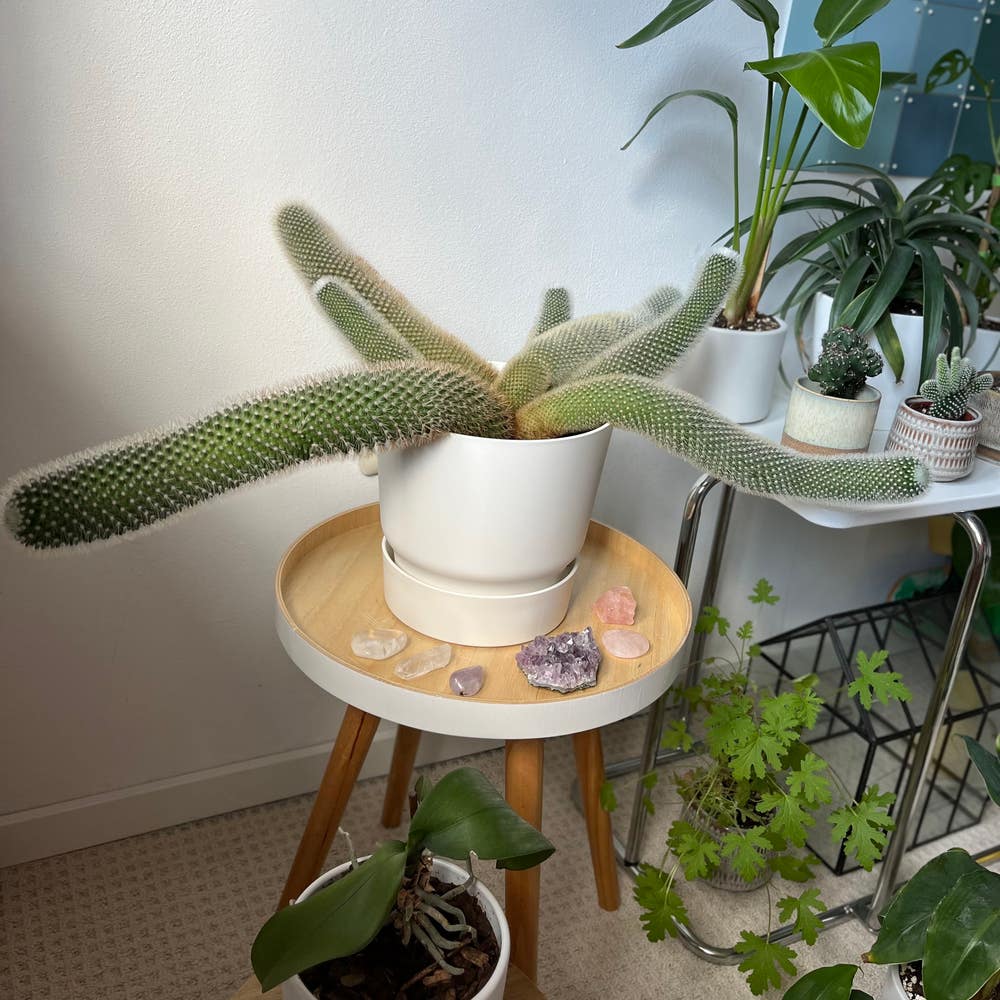
🌵 All About Your Lace Hedgehog Cactus's Roots
Echinocereus reichenbachii
By the Greg Editorial Team
Oct 02, 2024•6 min read
This article was created with the help of AI so we can cover more plants for you. May contain errors. See one? Report it here.
Master the art of nurturing lace hedgehog cacti 🌵 by understanding their unique root systems for vibrant growth!
- 🌵 Lace hedgehog cactus roots access deep moisture, thriving in well-drained soils.
- 💧 Deep watering promotes robust taproot development, essential for drought resilience.
- ⚠️ Healthy roots are firm and light-colored; watch for signs of rot or pests.
Root System Characteristics
Type of Root System 🌱
The lace hedgehog cactus features a prominent taproot. This deep anchor allows it to access moisture from deeper soil layers.
Additionally, the taproot is adapted for water storage, making it resilient during drought conditions. This unique adaptation is crucial for survival in arid environments.
Specific Characteristics 🌵
This cactus thrives in well-drained soils, which prevent waterlogging and promote healthy root growth.
Its multiple stems influence root spread and growth, allowing the plant to maximize its nutrient and moisture absorption.
Moreover, the lace hedgehog cactus is resilient against drought and pests, showcasing its ability to thrive in challenging conditions.
Understanding these root system characteristics is essential for ensuring your cactus remains healthy and vibrant.
Next, we’ll explore the depth and spread of these roots, providing insight into their growth patterns.
Root Depth and Spread
Typical Depth and Spread 🌵
The lace hedgehog cactus boasts an impressive root depth, typically ranging from 12 to 24 inches (30 to 60 cm). Its lateral roots can spread up to 2 feet (60 cm), allowing the cactus to efficiently absorb moisture.
Growth Patterns 🌱
During dry spells, the roots dig deeper into the soil, seeking out water reserves. Meanwhile, lateral roots emerge to explore the surrounding area for essential nutrients.
Understanding these growth patterns is crucial for ensuring your cactus thrives. With the right care, your lace hedgehog cactus will flourish, showcasing its unique beauty and resilience.
As we move forward, let’s explore how to properly care for these roots through watering, fertilizing, and transplanting.
Watering, Fertilizing, and Transplanting
💧 Watering Needs
Watering your Lace Hedgehog Cactus is crucial for its health. Deep watering encourages the development of a robust taproot, allowing the plant to access moisture more effectively.
Make sure to let the soil dry completely between watering sessions. This practice not only prevents overwatering but also mimics the cactus's natural habitat, promoting resilience.
🌱 Fertilizing Considerations
When it comes to fertilizing, a diluted, balanced fertilizer works wonders during the growing season. This approach provides essential nutrients without overwhelming the roots.
Keep an eye on root health to adjust the frequency and concentration of fertilizer as needed. Healthy roots are your best indicator of whether your cactus is thriving.
🌼 Best Practices for Transplanting
Timing is everything when transplanting your cactus. Aim for spring or early summer, as this is when the plant is most active and can recover quickly.
Follow these steps for a successful transplant:
- Prepare a well-draining soil mix to prevent root rot.
- Gently remove the cactus from its pot, taking care to avoid damaging the roots.
- Place the cactus in a slightly larger pot, allowing room for growth.
By following these practices, you can ensure your Lace Hedgehog Cactus remains healthy and vibrant. Next, let’s explore common root issues and how to tackle them effectively.
Common Root Issues and Solutions
🪴 Root Rot and Pests
Root rot is a common issue for lace hedgehog cacti, primarily caused by overwatering and poor drainage. This condition leads to dark, mushy roots that can severely compromise the plant's health.
Pests, particularly root mealybugs, can also pose a threat. These tiny invaders feed on the roots, weakening the plant and making it more susceptible to diseases.
🛠️ Prevention and Treatment Tips
To prevent root rot, ensure your cactus is planted in well-draining soil. Water only when the soil is completely dry, allowing the roots to breathe and thrive.
Regular inspections of the root system are crucial. If you spot any pests, treat them promptly to maintain root health. Keeping an eye on your cactus can save you from bigger problems down the line.
By understanding these common root issues and implementing preventive measures, you can keep your lace hedgehog cactus thriving. Next, let’s explore how to recognize and address rootbound conditions.
Indicators of Root Health
🌱 Visual Cues for Healthy Roots
Healthy roots are a gardener's delight. Look for roots that are white or light tan and have a firm texture, indicating vitality and strength.
🚩 Signs of Unhealthy Roots
On the flip side, dark, mushy roots are a red flag, signaling rot. If you notice a foul smell, it could mean decay or pest issues lurking beneath the surface.
⚠️ Additional Warning Signs
Stunted growth or yellowing stems often point to root problems. These symptoms can indicate that your cactus is struggling to absorb nutrients and water effectively.
Understanding these indicators is crucial for maintaining your lace hedgehog cactus's health. By keeping an eye on root conditions, you can ensure your plant thrives and flourishes.
Next, let’s explore how to recognize and address rootbound conditions, which can further impact your cactus's growth.
Recognizing and Addressing Rootbound Conditions
📖 Definition and Implications
Rootbound conditions occur when a cactus's roots grow in tight circles within the pot. This growth pattern restricts the plant's overall development, leading to limited nutrient and water absorption.
🔍 Recognition and Action Steps
Identifying rootbound issues is crucial for maintaining your lace hedgehog cactus's health. Look for signs such as roots emerging from drainage holes or circling the soil surface.
✂️ Steps to Address Rootbound Conditions
- Remove the cactus from its pot: Gently lift it out, taking care not to damage the roots.
- Trim the circling roots: Use clean scissors to cut away any roots that are tightly wound.
- Repot in a larger container: Choose a pot that allows for further growth, ensuring it has good drainage.
By addressing rootbound conditions promptly, you can help your cactus thrive and continue to grow beautifully. Understanding these signs and taking action will lead to a healthier plant overall.
As we move forward, let’s explore the importance of root health in propagation.
Importance of Root Health in Propagation
🌱 Role in Propagation Success
Healthy roots are the backbone of successful propagation. They provide the necessary support for new growth, ensuring your lace hedgehog cactus thrives in its new environment.
✂️ Techniques for Propagation
To propagate effectively, start with clean tools for cutting. This minimizes the risk of disease.
Allow your cuttings to callous before planting; this helps prevent rot. Once planted, water sparingly until roots establish, as too much moisture can hinder growth.
🏁 Conclusion
In summary, understanding and maintaining a healthy root system is crucial for thriving plants. By focusing on root health, you set the stage for successful propagation and vibrant growth.
⚠️ Safety First
This content is for general information and may contain errors, omissions, or outdated details. It is not medical, veterinary advice, or an endorsement of therapeutic claims.
Always consult a qualified healthcare professional before using any plant as food, medicine, or supplement.
Never eat any plant (or feed one to pets) without confirming its identity with at least two trusted sources.
If you suspect poisoning, call Poison Control (800) 222-1222, the Pet Poison Helpline (800) 213-6680, or your local emergency service immediately.
Spotted an error? Please report it here.
Unlock the secret to a thriving lace hedgehog cactus 🌵 with Greg's tailored watering reminders that keep your cactus's roots healthy and resilient!