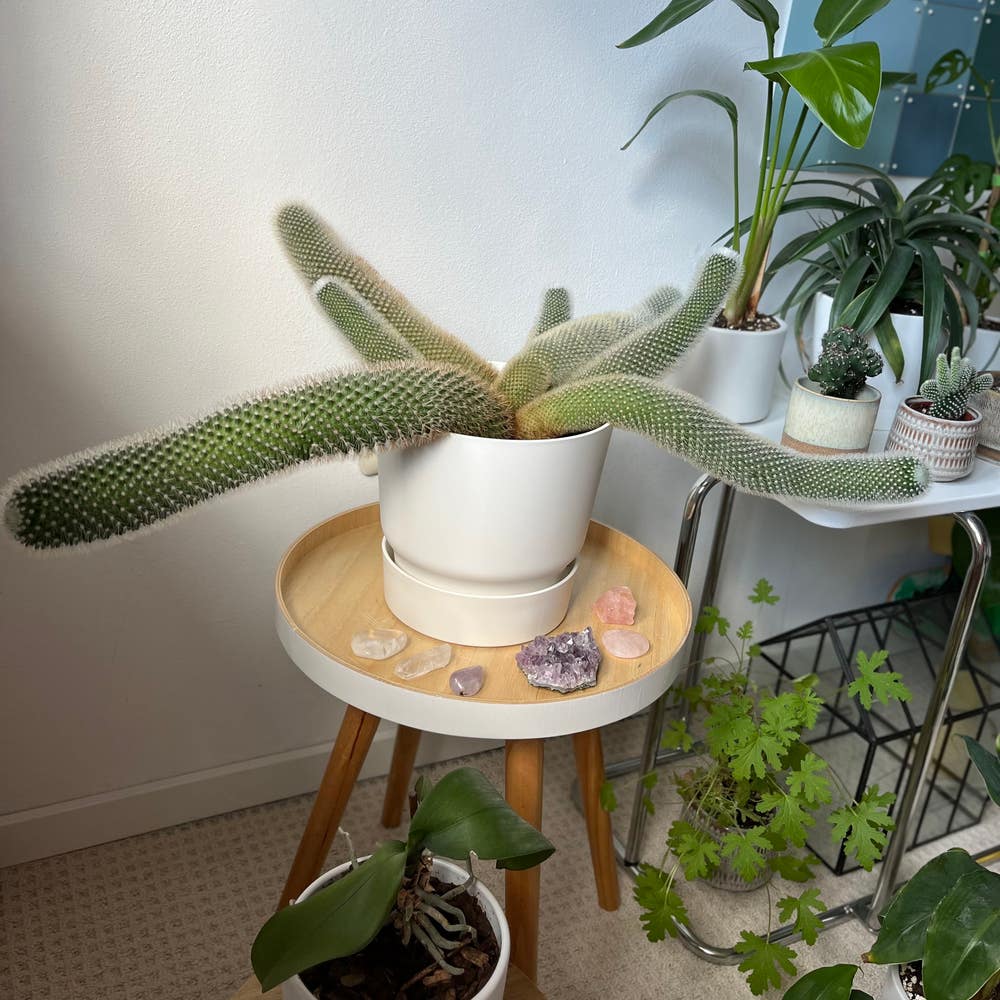
🏥 How Do I Cure Lace Hedgehog Cactus Root Rot?
Echinocereus reichenbachii
By the Greg Editorial Team
Jun 08, 2024•3 min read
This article was created with the help of AI so we can cover more plants for you. May contain errors. See one? Report it here.
Rescue your lace hedgehog cactus 🌵 from root rot's grip with this life-saving care guide!
- Discoloration and mushy roots signal root rot in lace hedgehog cactus.
- Immediate action and isolation are crucial for cactus recovery.
- Trim, dry, repot, and water wisely to prevent and treat root rot.
Spotting the Trouble: Signs of Root Rot
🚩 Visual Red Flags
In the world of cacti, discoloration is the equivalent of a flashing neon sign that spells trouble. If your Lace Hedgehog Cactus is sporting roots that have turned from a healthy white to ominous shades of brown or black, it's sounding the alarm. Above the soil, keep an eye out for a cactus that's beginning to yellow or sag—these are visual cues that your spiky companion is not feeling its best.
🕰 When to Worry
The moment your cactus's roots feel as mushy as a marshmallow, it's time to spring into action. A foul odor wafting from the soil is another distress signal you can't ignore. It's like your cactus is holding up a sign that says, "Help, I'm drowning here!"—because, in essence, it is. Root rot is a race against time, and the faster you catch these symptoms, the better the chances of your cactus making a full recovery.

The Rescue Mission: Treating Root Rot
🌱 Immediate First Aid
Upon suspecting root rot, time is of the essence. Isolate your Lace Hedgehog Cactus to prevent any spread of disease. Gently remove it from its pot and shake off the soil to get a clear view of the roots.
🏥 Surgical Precision
With a sterilized pair of scissors, snip away the rotted roots. Remember, even roots that appear healthy might be compromised, so remove an additional half-inch of tissue beyond the visibly affected area. This is like cutting out the rot from the core, ensuring it doesn't fester.
🛌 Post-Op Care
After surgery, let your cactus rest in a dry, warm spot to develop a callus over the cuts—think of it as a cactus band-aid. Once healed, repot in fresh, well-draining soil and place it in a pot with enough drainage to make a colander jealous. Water sparingly, as if you're in the Mojave with a single canteen. Keep an eye on your prickly patient for signs of recovery, such as new growth or a return to its vibrant color.

Keeping the Roots Happy: Prevention Strategies
💧 Watering Wisdom
Watering your Lace Hedgehog Cactus isn't a daily chore—it's a strategic move. Wait until the top inch of soil is desert-dry before giving it a drink. Overwatering is like throwing a pool party in the desert; it just doesn't make sense. Keep it sparse and your cactus will be sparse with gratitude.
🏡 The Right Home for Your Cactus
Choosing the right soil is like picking a mattress; it needs to support without suffocating. A well-draining cactus mix is your gold standard. Avoid garden-variety soil that holds moisture like a grudge. Mix in some perlite or sand to keep things loose and airy. It's all about creating a mini ecosystem that mimics their arid homeland.
Regularly check the pot for drainage. If it's more plugged up than a congested nose, it's time for a change. And remember, repotting isn't just a change of scenery—it's a health check-up. Inspect those roots as if you're looking for gold. Trim the bad, keep the good, and let your cactus breathe easy in its new digs.

⚠️ Safety First
This content is for general information and may contain errors, omissions, or outdated details. It is not medical, veterinary advice, or an endorsement of therapeutic claims.
Always consult a qualified healthcare professional before using any plant as food, medicine, or supplement.
Never eat any plant (or feed one to pets) without confirming its identity with at least two trusted sources.
If you suspect poisoning, call Poison Control (800) 222-1222, the Pet Poison Helpline (800) 213-6680, or your local emergency service immediately.
Spotted an error? Please report it here.
Ensure your lace hedgehog cactus thrives after root rot by spotting early signs 🌵 and letting Greg nudge you with the perfect watering times!