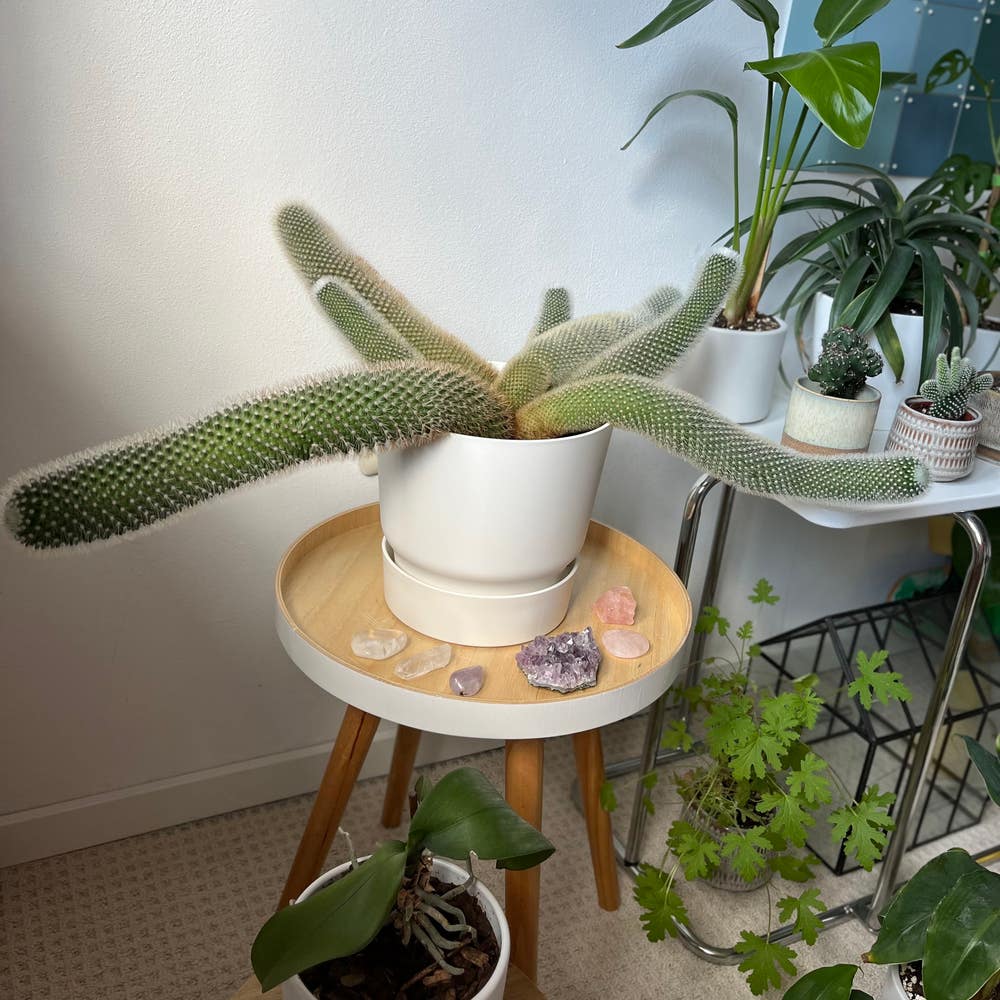
🌵 How Frequently Should I Water My Lace Hedgehog Cactus?
Echinocereus reichenbachii
By the Greg Editorial Team
Jun 08, 2024•4 min read
This article was created with the help of AI so we can cover more plants for you. May contain errors. See one? Report it here.
Nurture a vibrant Lace Hedgehog Cactus by mastering its unique watering needs 🌵✨.
- Check soil dryness up to first knuckle; water if dry.
- 🌵 Water every 1-2 weeks in summer, monthly in winter.
- Soak and dry method works best for lace hedgehog cactus.
When to Water: Reading Your Cactus's Thirst Cues
💧 Assessing Soil Moisture
Stick your finger in the soil up to the first knuckle—if it feels like a desert, it's time to water. For the squeamish or tech-savvy, a moisture meter or even a humble chopstick can serve as a proxy for your digit.
🌵 Visual Signs of Water Needs
A plump cactus is a happy cactus. If yours looks like it's been on a crash diet, give it a drink. Conversely, if it's sporting a squishy, overindulged belly, lay off the watering can.

Environmental Factors Influencing Watering Schedules
🌿 Seasonal Shifts and Dormancy
When the seasons change, so does your lace hedgehog cactus's thirst. In the summer heat, it's like a marathon runner after the finish line—parched. But come winter, it's more of a bear in hibernation, barely needing a sip. Decrease watering as the days shorten and temperatures drop, mimicking the cactus's natural desert dormancy period.
🏡 Home Environment Variables
Your lace hedgehog cactus doesn't care for your thermostat settings, but it's at the mercy of them. A heated room in winter might trick it into thinking it's still party time in the desert, demanding more water. A cool, humid spot, on the other hand, is like a chill lounge for your cactus—less watering needed. Always keep an eye on the humidity and temperature of the room; these are silent players in the watering game.

The Perfect Soak: Watering Your Cactus Just Right
💧 Frequency Fundamentals
In the realm of lace hedgehog cactus care, less is often more. Watering frequency is not set in stone; it's a rhythmic dance with the environment. Typically, these cacti prefer a drink every 1-2 weeks in the summer and a more abstinent schedule of once a month during winter dormancy.
🌵 The Soak and Dry Method
The soak and dry method is like a trusty compass for navigating the arid landscape of cactus hydration. Fully saturate the soil until water escapes from the drainage holes, then wait. Patience is key; hold off on the next watering until the soil is bone dry. This method mimics the natural desert downpours followed by droughts, which your lace hedgehog cactus is evolutionarily ready to embrace.
💦 Deep Watering Sessions
Occasionally, your cactus craves a deep, thorough quenching. These deep watering sessions should be sporadic, ensuring the roots get a full soak and encouraging them to grow deeper into the pot. This is especially crucial during the active growing season, when the cactus is more gluttonous for resources. Remember, deep watering is not a daily affair—it's the occasional feast in a diet of moderation.

Troubleshooting Watering Woes
💧 Overwatering: The Warning Signs
Overwatering is the silent killer of the lace hedgehog cactus. Recognize the distress signals: leaves turning a sickly yellow, wilting despite wet soil, and roots that feel more like mush than firm anchors. If your cactus is more drama queen than desert king, it's time to intervene.
🚱 Recognizing and Rectifying Overwatering Issues
Lighten up on the water, and consider a soil intervention. A mix that's light and airy can be a lifesaver, ensuring water doesn't overstay its welcome. Check for drainage holes that aren't doing their job—your cactus isn't signing up for a swim meet. If the pot feels as heavy as your post-holiday weight, it's a sign to back off the watering can.
🏜️ Underwatering: The Warning Signs
Underwatering turns your cactus into a drama queen on a fainting couch. Look for leaves drooping like they've given up on life, and soil so dry it's practically begging for a drink. A light pot is a cry for help—your cactus is parched.
🚰 Identifying and Fixing Underwatering Problems
Increase the watering frequency, but don't go from drought to deluge. Aim for soil moisture that's just right—not too wet, not too dry. Think of it as a steady drizzle, a spa day for your cactus's roots. Monitor the plant's response; a quick perk-up post-watering is a good sign you're on the right track.
⚠️ Safety First
This content is for general information and may contain errors, omissions, or outdated details. It is not medical, veterinary advice, or an endorsement of therapeutic claims.
Always consult a qualified healthcare professional before using any plant as food, medicine, or supplement.
Never eat any plant (or feed one to pets) without confirming its identity with at least two trusted sources.
If you suspect poisoning, call Poison Control (800) 222-1222, the Pet Poison Helpline (800) 213-6680, or your local emergency service immediately.
Spotted an error? Please report it here.
Ensure your Lace Hedgehog Cactus thrives with just-right watering 🌵 by using Greg's tailored reminders that consider your home's unique climate and the cactus's seasonal needs.