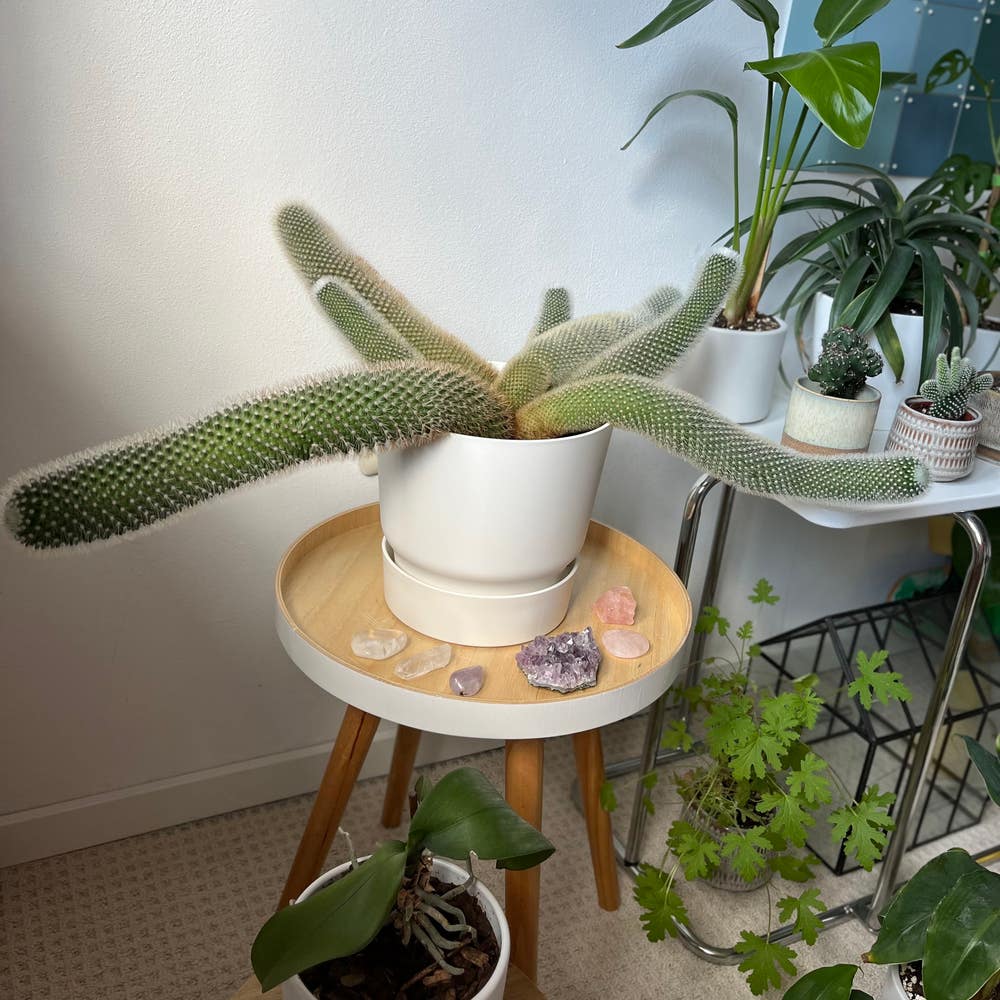
🌞 Year-Round Light Requirements For My Lace Hedgehog Cactus
Echinocereus reichenbachii
By the Greg Editorial Team
Jun 08, 2024•5 min read
This article was created with the help of AI so we can cover more plants for you. May contain errors. See one? Report it here.
Master year-round blooms 🌵 with the ultimate light guide for your Lace Hedgehog Cactus!
- 🌵 Outdoor balance: Morning light, afternoon shade for Lace Hedgehog Cactus.
- 💡 Indoor light tip: South-facing windows or grow lights in darker months.
- 🌸 For cactus blooms: Adjust light quality and quantity, include dark periods.
Soaking Up the Sun: Outdoor Light Done Right
🌵 Best Spots for Your Cactus Outdoors
Location is key for your Lace Hedgehog Cactus's sunbathing routine. It's a full sun aficionado, thriving in spots that mimic its native, sun-drenched habitats. Aim for a place where it can revel in the morning light but catch some afternoon shade—a cactus siesta, if you will. As seasons shift, so should your cactus; winter sun is weaker, so let it soak up those rays a bit longer.
🌞 Seasonal considerations for light exposure
Your cactus doesn't have a calendar, but it does have an internal clock attuned to the sun's seasonal dance. Summer demands a bit of shade to prevent a sunburnt tantrum, while in winter, it's all about maximizing light exposure. Think of it as a seasonal shuffle—always keep an eye on the angle of the sun and adjust your cactus's position accordingly.
☀️ Protecting Your Cactus from Too Much Sun
Signs of light overexposure are like a cactus cry for help: yellowing, bleaching, or even a sunburnt look. If your cactus could talk, it'd probably ask for sunglasses. Instead, give it the next best thing: a protective screen or a strategically placed shade during the sun's peak hours. It's like applying sunscreen to your green friend.
🌴 Tips for shading and sun protection during peak hours
When the sun hits its daily zenith, your cactus could use a break. A light shade cloth can be the perfect parasol, or consider a plant umbrella if you're feeling fancy. And remember, gradual exposure is the golden rule when first moving your cactus outdoors—think of it as a cactus boot camp, toughening up for the sunny days ahead.

Bringing the Sunshine In: Indoor Light Mastery
🌞 Mimicking Natural Habitat Light Indoors
Positioning your Lace Hedgehog Cactus indoors requires strategy. South-facing windows are your best bet, offering maximum light exposure. Remember, light intensity drops dramatically with distance, so keep your cactus close to the window, like a cat chasing sunbeams.
🏠 The Role of Windows and Light Direction
Windows aren't just glass barriers; they're your cactus's lifeline to the sun. East or west-facing windows can work if south-facing isn't an option, but you'll need to be more vigilant about light quality. No window can replicate the sun's full spectrum, so you'll need to compensate for what's missing.
💡 To Grow Light or Not to Grow Light
When your cactus starts throwing shade instead of growing, it's time for grow lights. Darker months can leave your cactus longing for more photons. Use grow lights to supplement, mirroring the natural day cycle as closely as possible.
🌟 Choosing the Right Grow Light
LEDs are the sleek, energy-saving choice, while fluorescents are the wallet-friendly classic. Whichever you pick, aim for a brightness of 5,000+ foot-candles. This will keep your cactus from turning into a prickly, light-starved hermit.

Let There Be Blooms: Light and Flowering
🌸 Understanding Light's Role in Cactus Flowering
Bright light is the maestro conducting the blooming symphony for your Lace Hedgehog Cactus. It's a simple equation: more light equals a higher chance of witnessing those vibrant blooms. But it's not just about quantity; the quality of light matters too. Your cactus is a bit of a diva, craving long, uninterrupted daylight to kickstart its flowering process.
Adjusting light exposure is like tweaking the dials on a vintage radio to get the perfect reception. 12-14 hours of light followed by a period of darkness can coax those shy flowers out. Think of it as setting the stage for an exclusive floral performance.
🌼 Adjusting Light for Flower Encouragement
If your cactus is stubbornly bloomless, it might be time to play with light like a DJ at a club. Mimic the natural habitat where these cacti thrive by providing a touch of coolness during the winter months. This slight chill paired with the right light can be the nudge your cactus needs to burst into bloom.
Remember, your cactus isn't just sitting there; it's silently judging the light conditions. Rotate it regularly to prevent a lopsided growth and to promote an even, full bloom. It's not trying to get a tan; it's striving for balance. Keep it consistent, and you might just be rewarded with a floral fiesta.

Grow Lights: A Bright Idea for Indoor Cacti
💡 Deciding If Your Cactus Needs a Grow Light Boost
Lackluster growth or a cactus impersonating a Stretch Armstrong toy is a cry for more light. If your Lace Hedgehog Cactus has started to look more like a sad, elongated cucumber than a spiky ball of charm, it's time for a grow light intervention.
To introduce grow lights without causing a plant panic, start with short sessions. Gradually increase exposure to mimic the gentle rise and fall of the sun's rays, and avoid the equivalent of a solar face slap to your photosynthesizing friend.
💡 Setting Up Your Grow Light System
Setting up grow lights is less about high-tech wizardry and more about common sense. Step one: choose a light. LED is the energy-efficient marathon runner, while fluorescent is the budget-friendly sprinter.
Step two: position your light. Think of a grow light as a sun-on-a-string, dangling it close enough to kiss your cactus with light (about 12-18 inches away), but not so close it starts a cactus barbecue.
For maintenance, keep it clean and dust-free. A dirty bulb is about as useful as a chocolate teapot. Check the system regularly to ensure it's not hotter than your last summer fling, and replace bulbs as needed to keep the light bright and your cactus tight.
⚠️ Safety First
This content is for general information and may contain errors, omissions, or outdated details. It is not medical, veterinary advice, or an endorsement of therapeutic claims.
Always consult a qualified healthcare professional before using any plant as food, medicine, or supplement.
Never eat any plant (or feed one to pets) without confirming its identity with at least two trusted sources.
If you suspect poisoning, call Poison Control (800) 222-1222, the Pet Poison Helpline (800) 213-6680, or your local emergency service immediately.
Spotted an error? Please report it here.
Ensure your Lace Hedgehog Cactus gets the perfect sun-to-shade ratio all year 🌞➡️🌗 with Greg's tailored positioning tips, making every season a blooming success.