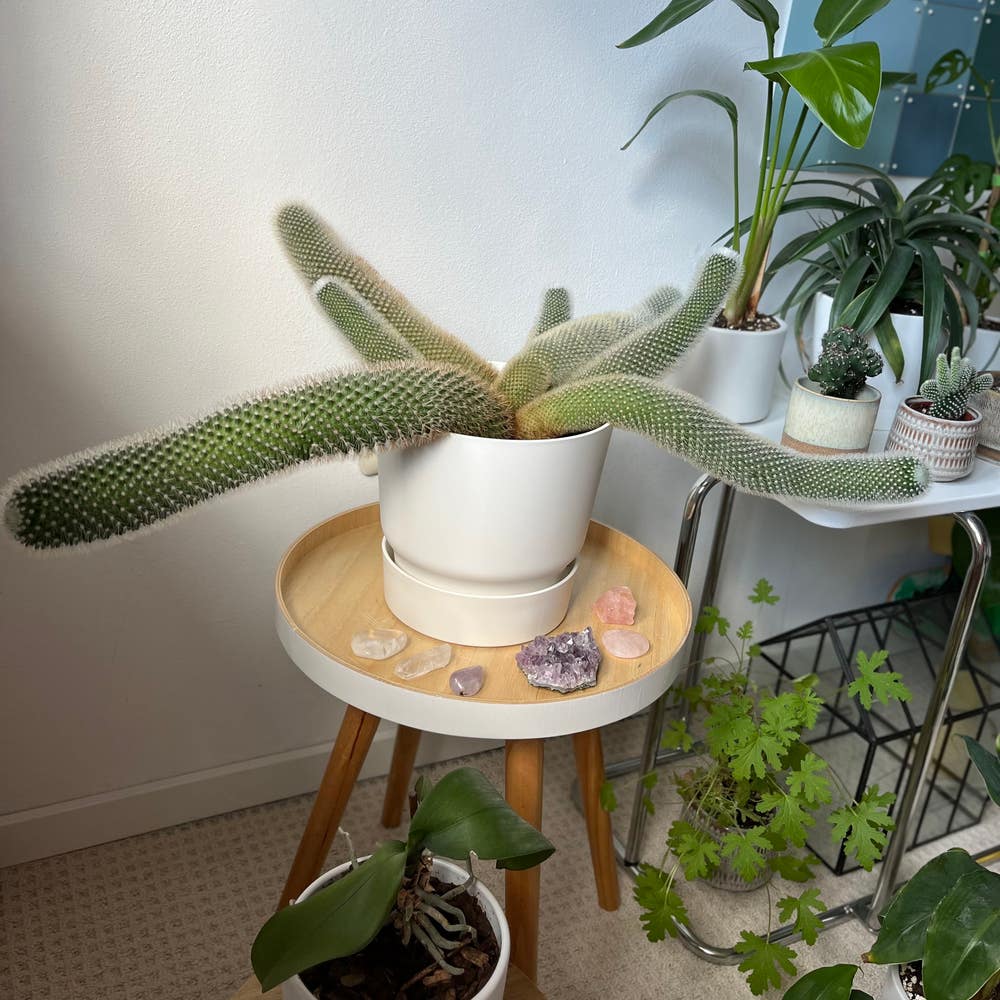
Why Are My Lace Hedgehog Cactus Leaves Curling?
Echinocereus reichenbachii
By the Greg Editorial Team
Jun 08, 2024•4 min read
This article was created with the help of AI so we can cover more plants for you. May contain errors. See one? Report it here.
Unravel the mystery of curling cactus leaves and revive your spiky friend's charm! 🌵✨
- 🌵 Curling leaves signal cactus distress, often with discoloration or texture changes.
- 💧 Over/underwatering and temperature swings are common culprits.
- 🌞💦 Stable environment and indirect light help prevent curling.
Spotting the Signs: When Your Cactus is Unhappy
🌵 Identifying Leaf Curling
Curling leaves in a Lace Hedgehog Cactus can look like a miniature embrace, with edges turning inward. Discoloration or a papery texture often accompanies this change.
🚨 Other Warning Signs to Watch For
Beyond curling, keep an eye out for wilting, spots, or a loss of firmness—these are your cactus crying out for help.
🕵️ Quick Self-Check
To gauge the severity, check if the soil is bone-dry or soggy. Inspect the roots for rot, and scan for pests that might be causing trouble.

The Usual Suspects: Common Causes of Leaf Curling
💦 Too Much Love: Overwatering Woes
Yellow leaves are the classic snitches of overhydration in Lace Hedgehog Cactus. If the leaves feel soft and limp, it's a red flag that you've been too generous with the watering can. Overwatering suffocates roots, leaving them as unhappy as a fish on land. Let the soil dry out before the next watering session.
🏜️ Thirsty Spikes: The Underwatering Problem
Crispy leaves? Your cactus might be thirstier than a marathon runner at the finish line. Underwatering causes the plant to conserve water, leading to leaf curling. Ensure the soil's moisture is like a wrung-out sponge—moist but not wet—before reaching for the watering can again.
🌡️ Feeling the Heat: Temperature and Sunburn Stress
Temperature swings hit your cactus harder than a plot twist in a mystery novel. Curling leaves can be a cry for help from a plant that's too hot or too cold. And just like a beachgoer without sunscreen, your cactus can get sunburned, leading to curled leaves. Keep it in a stable environment to avoid these dramas.

Nurse Your Cactus Back to Health: Fixing Leaf Curling
💧 Watering Wisdom
Perfecting your watering routine is crucial. Overwatering turns your cactus into an unwilling swimmer, while underwatering leaves it gasping for moisture. Check the top inch of soil; if it's dry, it's time to water. If it's damp, give it a break. Use a moisture meter for precision, and consider a drip irrigation system to avoid wetting the leaves—fungal diseases love a damp playground.
🛠 Tools and Techniques for Accurate Watering
A long-spouted watering can or a drip system can be your best allies in the quest for the perfect drink. They allow you to water the soil directly, avoiding moisture on the leaves. If you're unsure about when to water, a moisture meter is like a secret decoder ring for your cactus's thirst level.
🏡 Creating a Cozy Cactus Haven
Adjusting temperatures to avoid thermal shock is like finding the right blanket for a chilly night. Keep your cactus away from the icy draft of air conditioning and the scorching breath of heaters. Aim for a steady, warm environment—room temperature is your goal.
🌵 The Right Amount of Light for Your Spiky Friend
Your cactus craves bright, indirect light, not a sunbathing competition. Position it where the light is like a gentle hug, not a tight squeeze. If the sun is too intense, use a sheer curtain to soften the blow. Remember, a sunburned cactus is a sad cactus.

Keep It Curvy, Not Curling: Prevention Tips
💧 The Perfect Potting Mix
Well-draining soil is non-negotiable for Lace Hedgehog Cactus. Imagine your potting mix as a bespoke suit, tailored to allow just enough moisture while providing ample aeration. Avoid garden-variety soil; it's a recipe for disaster. Instead, opt for a cactus-specific blend or concoct your own with equal parts perlite, coarse sand, and potting soil. Ensure your pot complements the mix with adequate drainage holes.
🔄 Consistency is Key
Stability is the cactus's best friend. Avoid drastic changes in watering, light, and temperature. These plants aren't fans of surprises. Implement a routine that includes regular watering—when the soil is dry to the touch—and consistent light exposure. If you're a fan of change, channel that energy into something less sensitive, like your wardrobe.
🌞 Sunlight Without the Burn
Your cactus craves sunlight but despises sunburn. Find that sweet spot where it basks in bright, indirect light. Direct summer rays can be harsh—think of it as the plant equivalent of a midday desert. If you notice your cactus starting to tan (and not in a good way), it's time to filter the light or relocate to a less intense spot. Remember, a little shade won't hurt; it's like sunscreen for your spiky friend.
⚠️ Safety First
This content is for general information and may contain errors, omissions, or outdated details. It is not medical, veterinary advice, or an endorsement of therapeutic claims.
Always consult a qualified healthcare professional before using any plant as food, medicine, or supplement.
Never eat any plant (or feed one to pets) without confirming its identity with at least two trusted sources.
If you suspect poisoning, call Poison Control (800) 222-1222, the Pet Poison Helpline (800) 213-6680, or your local emergency service immediately.
Spotted an error? Please report it here.
Ensure your Lace Hedgehog Cactus never curls up in distress by using Greg to monitor its happiness 🌵 with custom care reminders and environmental tips!