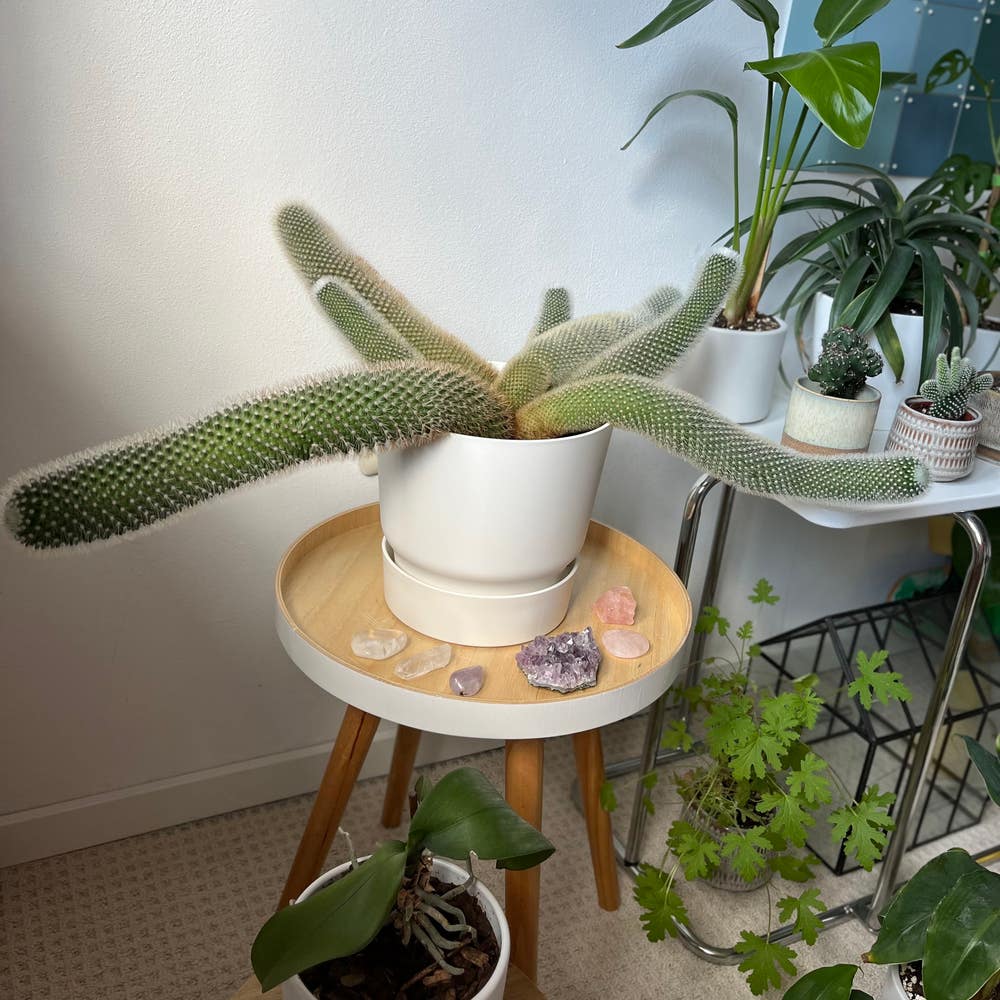
🌵 Why Are My Lace Hedgehog Cactus Leaves Turning Yellow?
Echinocereus reichenbachii
By the Greg Editorial Team
Jun 08, 2024•3 min read
This article was created with the help of AI so we can cover more plants for you. May contain errors. See one? Report it here.
Unearth the secret to a thriving Lace Hedgehog Cactus 🌵 and banish yellow leaves with these targeted care strategies!
- Right light, less yellow: Find the sunlight sweet spot for your cactus.
- 💧 Water wisely: Overwatering and underwatering both lead to yellow leaves.
- 🌵 Soil and care matter: Use well-draining soil and adjust care routinely.
Spotting the Yellow Flags
🌞 When the Light Isn't Right
Cacti are sun worshippers, but even they have limits. Too much light scorches; too little, and they stretch like a cat after a nap—neither is a good look. Yellowing can signal your Lace Hedgehog Cactus is begging for a sunbeam or hiding from a solar beatdown.
🚰 Too Much Love: The Perils of Overwatering
Soggy soil is a no-go. Overwatering turns your cactus's leaves yellow, as if it's waving a white flag of surrender. Aim for a watering sweet spot where the soil's as dry as a stand-up comedian's wit before you give it another drink.
🏜️ Thirsty Thorns: When Underwatering Strikes
On the flip side, a cactus that's more raisin than robust is a cry for H2O. Underwatering symptoms include wrinkled skin and soil dry enough to make a desert jealous. Quench your cactus's thirst, but don't turn it into a swimming enthusiast.
🍽️ Soil SOS: The Foundation of Health
Your cactus despises wet feet. Poor drainage is like a horror movie for roots—root rot is the villain. Mix a soil cocktail that's one part grit, one part drainage, and all parts love for your spiky friend.

Turning Over a New Leaf: Remedial Action
🌞 Let There Be (The Right Amount of) Light!
Shifting shades: Your Lace Hedgehog Cactus needs its own sweet spot of sunshine. If it's looking more sallow than a sun-deprived hipster, it's time to move it to a brighter locale. But remember, like a pale-skinned beachgoer, it can't handle full midday sun without a bit of acclimation.
Helping your cactus adjust: Start with a few hours of indirect light and gradually up the ante. This way, your cactus won't throw a tantrum in the form of leaf burn.
💧 Watering Woes: Finding Balance
Dialing back the drink: If your cactus's soil feels more like a swamp than a desert, cut back on the watering. Stick your finger in the soil; if it's dry an inch down, it's time for a modest quench—not a flood.
The touch test: Trust your instincts and the feel of the soil. Your cactus craves neglect, so water only when necessary. It's not a needy houseguest; it's a self-sufficient loner.
🌱 Soil to the Rescue: Repotting and Amending
Upgrading your cactus's digs: If your cactus is sitting in soggy soil, consider repotting. Choose a pot with drainage holes and fresh, gritty soil that's as free-draining as a colander.
Soil amendments: Sometimes, your cactus needs a little more than just a new pot. Mix in some perlite or pumice to give those roots the airy home they deserve. It's like giving your cactus a pair of breathable sneakers—comfort and support.

Keeping the Green: Preventive Tips
🌵 Crafting the Perfect Cactus Care Calendar
Routine checks are non-negotiable for a thriving Lace Hedgehog Cactus. Regularly inspect your plant for signs of distress, and adjust care as needed.
Watering and feeding should follow the natural rhythms of the cactus's habitat. This means less frequent but thorough watering, and fertilizing sparingly, especially during the growing season.
🌵 Creating a Cactus-Friendly Climate
Temperature and humidity control sets the stage for a healthy cactus. Aim for a warm environment, around 18°C, and avoid drastic temperature shifts.
Ensure good airflow and give your cactus enough space to avoid pest issues and promote strong growth. Remember, a happy cactus is a breathing cactus.

⚠️ Safety First
This content is for general information and may contain errors, omissions, or outdated details. It is not medical, veterinary advice, or an endorsement of therapeutic claims.
Always consult a qualified healthcare professional before using any plant as food, medicine, or supplement.
Never eat any plant (or feed one to pets) without confirming its identity with at least two trusted sources.
If you suspect poisoning, call Poison Control (800) 222-1222, the Pet Poison Helpline (800) 213-6680, or your local emergency service immediately.
Spotted an error? Please report it here.
Revive your lace hedgehog cactus from yellow to thriving 🌵 with Greg's tailored care reminders, ensuring just the right amount of sun and water.