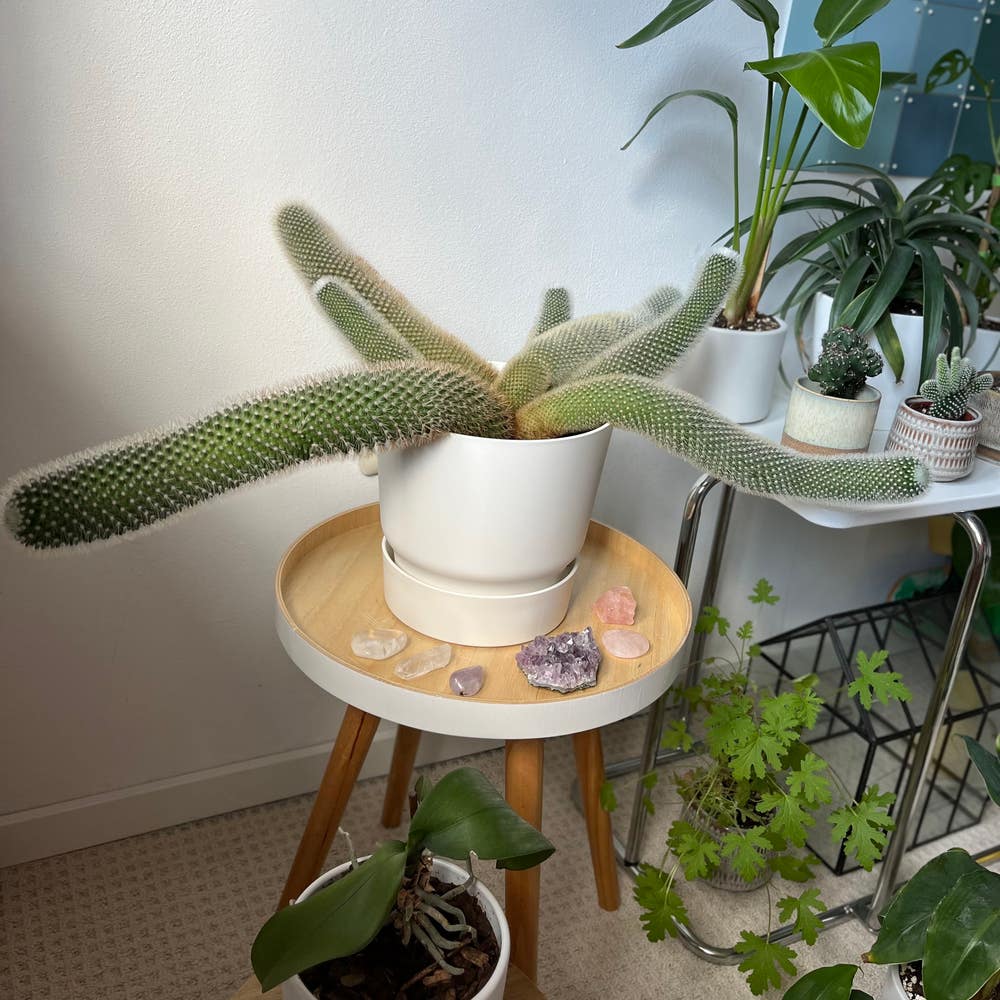
🌵 Why Is My Lace Hedgehog Cactus Dropping Leaves?
Echinocereus reichenbachii
By the Greg Editorial Team
Jun 08, 2024•4 min read
This article was created with the help of AI so we can cover more plants for you. May contain errors. See one? Report it here.
Save your spiky friend 🌵 from leaf loss with these essential Lace Hedgehog Cactus care tips!
- Wrinkled leaves? Underwatering. Yellow and swollen? Overwatering.
- 70°F-90°F day, 60°F-70°F night for ideal Lace Hedgehog Cactus temps.
- Balance light exposure; indirect sunlight is best, avoid harsh rays.
When Thirst Turns to Drought: Underwatering Woes
🚰 Spotting the Signs
If your Lace Hedgehog Cactus has started to resemble a deflated balloon, it's time to perk up those ears. Wrinkled and withered leaves are the cactus's SOS signal for water. A soil check will likely reveal a desert-like dryness, and you might even find leaves that have turned crispy and brown, or worse, have dropped off like flies.
💦 Quenching the Thirst
To rescue your cactus from its parched plight, think of watering as a revival ritual. Submerge the pot in water for a solid 5-10 minutes, ensuring the soil gets a thorough soak. When the top feels moist, like a freshly-dabbed sponge, you've hit the mark. Remember, this cactus can survive a drought better than a camel, but even the hardiest plants have their limits. If you've neglected your spiky friend for a month or more, it's time to rehydrate and make amends.

Drowning in Excess: The Overwatering Crisis
💦 Recognizing Overwatering Damage
Yellow, swollen leaves on your Lace Hedgehog Cactus? They might just burst at a poke, a clear SOS from your green buddy. Overwatering turns leaves translucent, and if unchecked, they go from yellow to brown or black. These symptoms mimic other issues, so always double-check the soil moisture.
🚑 Rescuing from the Flood
Caught your cactus swimming in excess water? Immediate action is crucial. Start by evicting your cactus from its pot. Gently brush off the soggy soil and give the roots a shower in room-temp water. Spot mushy, dark roots? That's the dreaded root rot. If it's not too late, repot in a fast-draining mix and choose a pot that believes in personal space for roots – yes, one with drainage holes. Remember, cactus roots prefer a dry spell over a swampy lifestyle.

Feeling the Heat (and the Chill): Temperature Troubles
🌡️ Too Hot to Handle or Too Cold to Hold
The ideal temperature range for Lace Hedgehog Cactus is a cozy dance between 70°F and 90°F (21°C to 32°C) during daylight hours, and a slight dip to 60°F to 70°F (15°C to 21°C) when night falls. This mimicry of its native desert climes keeps it from throwing a tantrum.
🌡️ Creating a Comfort Zone
To stabilize the environment for your spiky companion, monitor temperatures like a plant detective. Use a thermometer to keep tabs on the climate, and don't let your cactus shiver or sweat. Insulate against cold by moving the cactus away from drafty windows or providing a protective cover during frost warnings. Conversely, when the sun's got its hat on and it's beating down, a sheer curtain can be your cactus's best friend, offering a much-needed respite. Remember, watering needs increase with temperature, so adjust your schedule to quench your cactus's thirst without drowning it.

A Balancing Act: Light Exposure and Leaf Health
🌞 Reading the Leaves for Light Levels
Your Lace Hedgehog Cactus is a light-lover, but it's picky about its sunbathing habits. Yellowing leaves? It might be pleading for more rays. On the flip side, leaves that look like they've been in a toaster indicate a solar overdose. It's all about finding that sweet spot where your cactus feels like it's basking in the desert sun without the risk of a burn.
🌟 Let There Be (the Right Amount of) Light
Adjusting light exposure is like tuning an instrument; you're aiming for harmony. If your cactus is throwing shade with its droopy demeanor, it's time to inch it closer to the light. Scorched leaves? Pull back to a spot with bright, indirect sunlight. Remember, gradual changes are better than a full relocation—no plant enjoys moving day. Keep your cactus in a happy medium to prevent an unwanted leaf drop and maintain its spiky splendor.
The Proactive Cactus Caretaker: Prevention Strategies
🚿 The Watering Sweet Spot
Watering your Lace Hedgehog Cactus isn't rocket science, but it's close. Consistency is your new mantra. Stick to a schedule that mimics desert downpours—infrequent but substantial. During growth spurts, wait for the top inch of soil to dry out before giving it a drink. When it's snoozing in dormancy, ease up even more. Remember, your cactus is more camel than goldfish; it's built to survive droughts, not floods.
🌞 The Right Place to Thrive
Location, location, location—it's not just for real estate. Your Lace Hedgehog Cactus craves bright light, so park it near a sunny window where it can bask without baking. Think of it as a sunbather with SPF; direct morning light is golden, but shield it from harsh afternoon rays. As for temperature, keep it cozy but not hot. If you're comfortable, your spiky friend likely is too. And don't even think about letting it chill—literally. Keep it away from drafts and cold spots that could send it into shock.
⚠️ Safety First
This content is for general information and may contain errors, omissions, or outdated details. It is not medical, veterinary advice, or an endorsement of therapeutic claims.
Always consult a qualified healthcare professional before using any plant as food, medicine, or supplement.
Never eat any plant (or feed one to pets) without confirming its identity with at least two trusted sources.
If you suspect poisoning, call Poison Control (800) 222-1222, the Pet Poison Helpline (800) 213-6680, or your local emergency service immediately.
Spotted an error? Please report it here.
Avoid the leaf-drop lament and ensure your Lace Hedgehog Cactus thrives with Greg's 🌵 custom care schedule, taking the prickly guesswork out of watering and environment control.