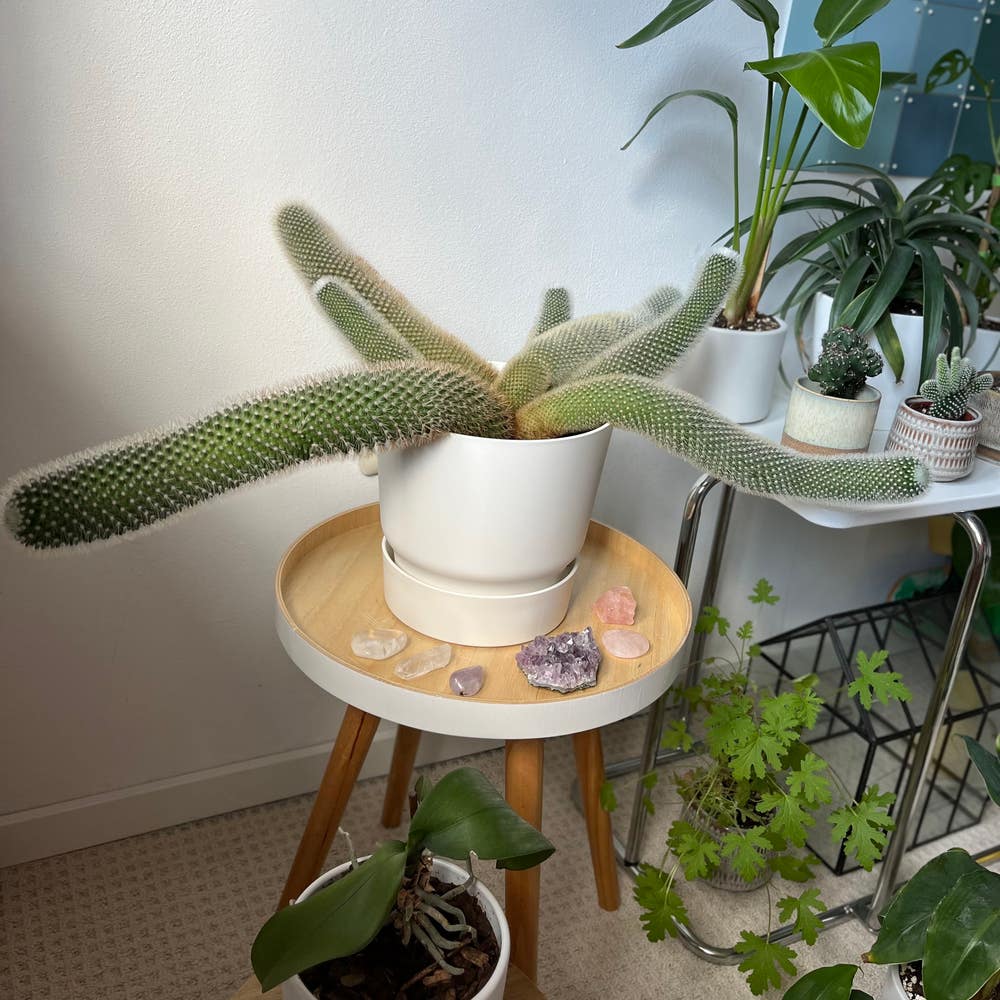
🌵 Why Are My Lace Hedgehog Cactus Leaves Falling Over?
Echinocereus reichenbachii
By the Greg Editorial Team
Jun 08, 2024•4 min read
This article was created with the help of AI so we can cover more plants for you. May contain errors. See one? Report it here.
Solve the droop mystery of your Lace Hedgehog Cactus and keep it standing tall! 🌵🔍
- Signs of distress: Limp, discolored leaves indicate your cactus needs help.
- Water wisely: Over/underwatering and poor drainage can topple cactus leaves.
- Balance environment: Adjust light, temperature, and check roots for health.
Spotting the Signs: Is Your Cactus Feeling Down?
🌵 Recognizing Leaf Droop in Lace Hedgehog Cactus
Your Lace Hedgehog Cactus might be signaling an SOS if you notice its leaves are more than just casually leaning—they're in distress. Visual cues like leaves that are limp, discolored, or showing signs of weakness are your cactus crying out for help. It's not just being dramatic; these are genuine pleas for attention.
🚩 When to Worry: Normal Growth vs. Warning Signs
A slight lean might just be your cactus's way of reaching for the sun, but if you spot leaves that feel like a ripe tomato rather than a firm tennis ball, it's time to worry. Consistent growth is good; it means your cactus is happy. But if you're seeing yellowing or browning, or if the growth seems weak and elongated, these are red flags. Your cactus isn't just trying out a new look; it's showing you that something's off.

The Usual Suspects: What's Toppling Your Cactus
💧 Too Much Love: The Perils of Overwatering
Yellowing leaves, a sign of overwatering, can turn your cactus from a desert warrior to a wilted wallflower. If the soil's as wet as a rainforest floor, you've overdone the hydration. Overwatering can lead to root rot, which compromises the cactus's ability to stand tall and proud.
🏜️ Thirsty Spikes: How Underwatering Leads to Limp Leaves
Conversely, leaves that crisp up like bacon in a pan might be crying out for water. Underwatering can cause your cactus to shrivel, its leaves drooping in a desperate plea for a drink. Check the soil: if it's drier than a stand-up comedian's humor, it's time to quench that thirst.
🚰 Stuck in the Mud: Poor Drainage and Its Consequences
A cactus sitting in stagnant water is a cactus in crisis. Poor drainage can mimic the effects of overwatering, leaving your plant's roots gasping for air. Make sure your pot isn't holding water like a dam; roots need to breathe, too.
🌞 Feeling Stressed: Environmental Factors Affecting Your Cactus
Lastly, keep an eye out for environmental stressors. A cactus might start to droop if it's colder than a penguin's picnic or hotter than a barbecue in July. Sudden temperature shifts can send your cactus into shock, so maintain a stable environment to keep it standing tall.

Bounce Back: Reviving Your Droopy Cactus
💧 Fine-Tuning Watering Techniques
Your cactus's watering needs are as unique as a thumbprint. Check the soil before watering; it should be dry to the touch. Remember, overwatering is the fast track to Soggy Plant Syndrome. Dial back the H2O in winter, when your cactus is just chilling.
🌵 Creating the Ideal Cactus Habitat
Light and temperature are your cactus's best pals. Strike a balance—too much sun and your cactus gets a sunburn, too little and it's left craving vitamin D. Keep the environment as stable as possible; sudden changes are a recipe for droop.
🌱 Root Rescue: Checking for and Fixing Root Health
Root health is the foundation of cactus happiness. Gently remove your cactus from its pot to check for rot or damage. If the roots look like a horror movie, trim the mushy bits, let them dry, and repot in fresh, well-draining soil. It's like a spa day for your cactus's feet.

Prevention: Keeping Your Cactus Perky
💧 Water Wisdom: Mastering the Art of Hydration
Hydration is a balancing act. Your Lace Hedgehog Cactus craves a drink schedule that mimics the desert's infrequent downpours. Water deeply when the soil is bone-dry, then let it be until the next dry spell. Seasonal changes dictate the rhythm; less is more during the cool winter months.
🏺 The Perfect Pot: Ensuring Good Drainage and Aeration
Choose wisely; the pot is your cactus's castle. A snug fit promotes root health, but ensure room for growth. Drainage holes are a must – they're the difference between a thriving cactus and a waterlogged one. Opt for a gritty, well-draining soil mix that won't hold onto moisture like a grudge.
🌵 Acclimation: Helping Your Cactus Adjust to Change
Cacti aren't fans of sudden change. When introducing your cactus to a new spot, do it gradually. Acclimate it to different light levels or temperatures to avoid shock. This slow-and-steady approach will keep your cactus perky, not droopy.
⚠️ Safety First
This content is for general information and may contain errors, omissions, or outdated details. It is not medical, veterinary advice, or an endorsement of therapeutic claims.
Always consult a qualified healthcare professional before using any plant as food, medicine, or supplement.
Never eat any plant (or feed one to pets) without confirming its identity with at least two trusted sources.
If you suspect poisoning, call Poison Control (800) 222-1222, the Pet Poison Helpline (800) 213-6680, or your local emergency service immediately.
Spotted an error? Please report it here.
Ensure your Lace Hedgehog Cactus stands tall and healthy by interpreting its needs with the article's tips and Greg's 🌵 custom watering reminders tailored to your plant's environment.