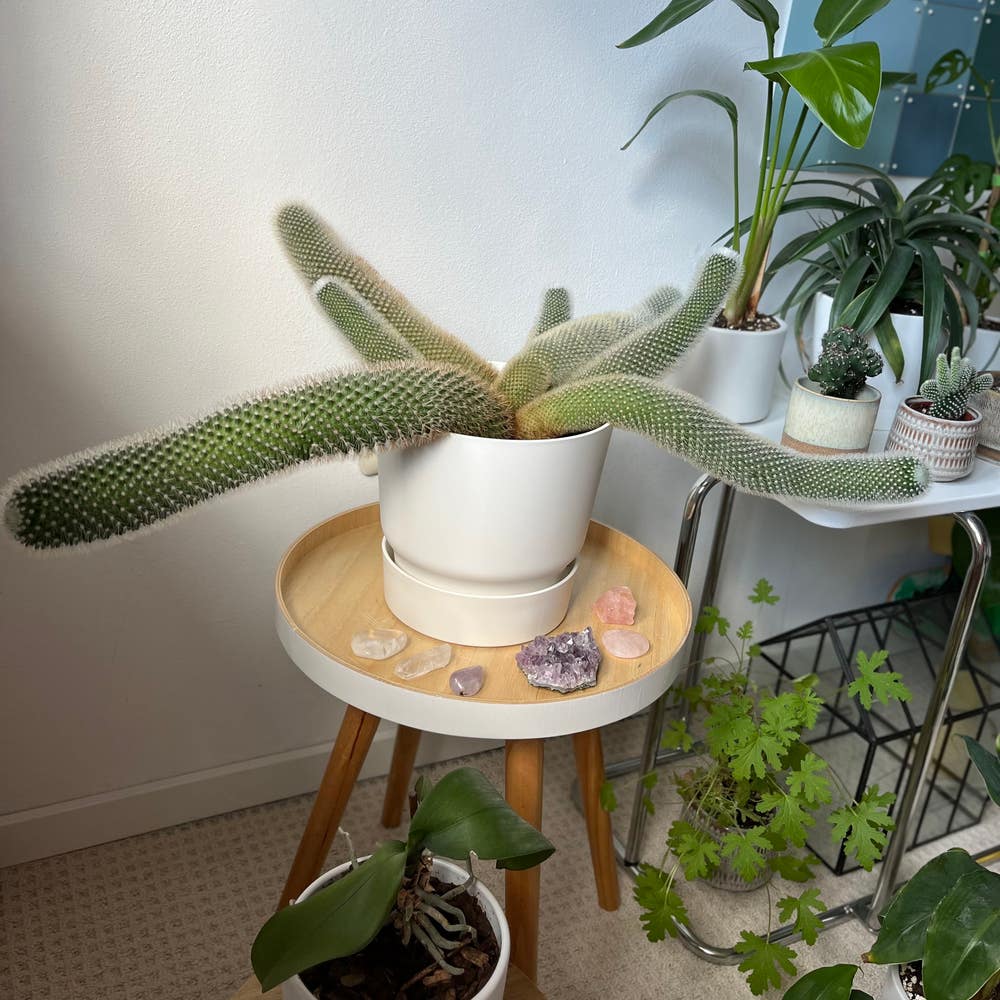
🐛 What To Do About Bugs on My Lace Hedgehog Cactus?
Echinocereus reichenbachii
By the Greg Editorial Team
Jun 08, 2024•8 min read
This article was created with the help of AI so we can cover more plants for you. May contain errors. See one? Report it here.
Defend your cherished cactus 🌵 from bug invasions with expert pest-fighting tactics!
- Spot pests early to prevent damage to Lace Hedgehog Cactus.
- Use water, alcohol, or oils for eco-friendly pest control.
- Prevent infestations with good hygiene and beneficial insects.
Identifying and Treating Spider Mites
👀 Spot the Critters
Spider mites are sneaky pests with a taste for your Lace Hedgehog Cactus. They're tiny, but the damage they cause is not. Look for pale speckles on leaves or fine webs, especially on the undersides. A magnifying glass or the white paper trick can help confirm their presence—tap a leaf over paper and watch for moving specks.
⚔️ Declare War on Mites
Once you've spotted them, it's time for action. Blast them with water to knock them off their feet. For a more targeted approach, insecticidal soaps or neem oil can be effective, but remember, these mites are tough. They might shrug off your first attempt, so repeat treatments are key.
🛡️ Preventative Strikes
Prevention is your best defense. Keep your cactus healthy and hydrated to avoid infestations. Introducing predatory insects like lady beetles can help keep the population in check. And remember, always inspect new plants before they join your collection to prevent unwanted hitchhikers.
☢️ When to Go Nuclear
In severe cases, you might need to resort to chemical pesticides. But let's be real, that's like burning down the house to kill a spider. Use them as a last resort and rotate types to prevent mite resistance. And always think of your safety and the environment before going down this route.

Combating Scale Insects
🚫 Signs of Scale Infestation
Clusters of tiny, shell-like bumps on your Lace Hedgehog Cactus are a dead giveaway: you've got scale insects. These pests are sneaky, locking themselves in place to feed on your plant's sap. If you spot brown bumps or yellowing leaves, it's time to take action.
🛠 Methods for Removal
Physical removal is your first line of defense. Don a pair of gloves and get to work with a soft brush, toothpick, or even your fingernail to scrape off the offenders. For a more targeted approach, dip a cotton swab in rubbing alcohol and apply directly to the scales to dissolve their waxy armor.
💣 Chemical Warfare
When the going gets tough, the tough get chemical. Insecticidal soaps and horticultural oils can be effective, but use them with caution. Patch-test first, because cacti can be sensitive souls. And remember, these treatments are the nuclear option—best saved for when all else fails.
🛡 Preventative Tips
Isolation is key. New plants should be quarantined for at least two weeks to prevent any stowaway scale from crashing your cactus party. Regular inspections are non-negotiable; catch those scale insects before they settle in. Keep your cactus in a well-ventilated spot with plenty of light to discourage future infestations. And if you're introducing ladybugs into your plant's ecosystem, you're not just adding charm—you're recruiting an army of scale-eating machines.

Managing Fungus Gnats and Fruit Flies
🕵️ Identifying the Culprits
Fungus gnats are the uninvited guests of the insect world, lurking in overwatered plant soil and flaunting their dark, mosquito-like appearance. They're the ones you find staggering on your table, too lazy to fly away. Fruit flies, with their signature red eyes, are the more agile acrobats, darting away at the slightest movement. Mistaking them for their doppelgangers, the drain flies, could lead you down the wrong extermination path. Remember, drain flies love your plumbing, not your plants.
🐜 Remedies for Fungus Gnats
To tackle these tiny terrors, start with reducing watering—they can't stand dry living conditions. If you spot them playing dead near your greenery, it's time for action. Yellow sticky traps are the silent assassins here, luring adults to a sticky end. For the wriggling larvae, a sprinkle of horticultural sand over the soil acts like a desert storm they can't survive. And if things get dire, a dose of Spinosad in your watering can will send them to insect heaven.
🍎 Fruit Fly Frustrations
These little buggers are suckers for the sweet life. An apple cider vinegar trap—a jar of vinegar covered with plastic wrap poked with holes—turns their sweet tooth into their downfall. They check in but they don't check out. Keep your kitchen free of old fruit and veggie scraps, unless you're looking to host a fruit fly house party.
🚫 Prevention is Key
To keep these pests from RSVPing to your plant party, start with fresh soil when repotting. Keep an eye on the moisture level—overwatering is practically sending them an invite. And if you suspect they're crashing the party from outdoors, inspect around your home for damp, shady spots where they might be setting up camp.
Remember, it's not just about the adult flyers; it's a multi-stage battle. Treat the eggs and larvae in the soil, and you'll cut the problem off at the root—literally.

Eradicating Mealybugs
🕵️ Recognizing Mealybug Infestations
Mealybugs are sneaky critters that can wreak havoc on your Lace Hedgehog Cactus. They're the uninvited guests that throw a party at the expense of your plant's health. Look out for the telltale signs: a cottony substance on the stems and leaves, or the bugs themselves, which resemble tiny, slow-moving cotton balls.
🛡️ Successful Treatment Options
Rubbing alcohol is your first line of defense. Dip a cotton swab in it and go on a seek-and-destroy mission. For a more hands-off approach, beneficial insects like ladybugs can be your tiny army against the mealybug menace. If you're up for it, insecticidal soaps and horticultural oils can also be effective, but remember to follow the instructions like your plant's life depends on it—because it does.
💡 Preventative Practices
Prevention is better than cure, and it's no different with mealybugs. Keep a vigilant eye on your cactus. Regular inspections are non-negotiable. If you're bringing new plants home, quarantine them first; you don't want them introducing mealybugs to your existing plant family. And let's not forget about good hygiene—keeping the area clean and free of plant debris can deter these pests.
Remember, when it comes to mealybugs, it's a game of persistence. Stay sharp, act quickly, and your Lace Hedgehog Cactus will thank you.
Dealing with Aphids and Thrips
👾 Spotting the Invaders
Aphids and thrips are like the uninvited guests at your cactus party. To spot aphids, look for clusters of tiny, pear-shaped critters living it up on the undersides of leaves. They're the ones sipping on plant sap and leaving a sticky residue called honeydew. Thrips, on the other hand, are the stealthy ones. They're slender, and they love to pierce and suck the life out of your cactus, leaving behind silvery trails and black specks of waste.
💥 The Counterattack
When you've confirmed the pest party, it's time to crash it. Start with a blast of water to knock off the freeloaders. If they're stubborn, bring out the insecticidal soap or neem oil—these are like bouncers for your cactus club. Apply thoroughly, because these pests can hide in the smallest nooks. For thrips, consider using spinosad, a natural substance that's like setting off a pest control grenade in the middle of their rave.
🛡️ Prevention: Your Best Defense
Preventing aphids and thrips is about being proactive. Quarantine new plants like they're suspected of carrying the plant version of the flu. Regularly shower your cactus to keep it dust-free and unappealing to thrips. And remember, these pests love dry conditions, so maintaining higher humidity can be a deterrent. Lastly, keep an eye out for natural predators like ladybugs and lacewings—they're the allies you need in this ongoing battle.
Integrated Pest Management and Damage Prevention
Integrated Pest Management, or IPM, is like the Swiss Army knife of pest control for your Lace Hedgehog Cactus. It's a multi-tool approach that combines cultural, biological, and chemical tactics to keep those pesky invaders at bay without going overboard on the toxins.
🌵 Cultural Controls
First up, cultural controls. These are all about setting the stage to make life tough for pests. Think of it as throwing a party and not inviting them. Rotate your cacti's location if possible, keep them clean, and avoid overwatering. A dry, uncluttered environment is about as welcoming to bugs as a porcupine in a balloon factory.
🐜 Biological Warfare
Next, we unleash some biological warfare by recruiting an army of beneficial organisms. Ladybugs and lacewings are not just pretty faces; they're ravenous predators of aphids and mites. Introduce these allies to your cactus, or create a habitat that's irresistible to them. It's like having your own garden bodyguards.
☠️ Chemical Conundrums
Finally, chemical controls should be your last resort. When you do have to go nuclear, choose the least toxic options available. Insecticidal soaps and horticultural oils can be effective without leaving a Chernobyl-style fallout. Remember, it's about balance – you're not trying to turn your cactus into a chemical dump.
The Damage Done
Understanding the potential damage pests can cause is crucial. Left unchecked, they can turn your cactus into a shadow of its former self, more holey than holy. Regular monitoring is key – catch the problem early, and you'll save yourself a world of hurt.
Prevention: The Best Medicine
Prevention is better than cure. Keep your cactus happy and healthy, and it'll be less of a target for pests. A stressed plant is like a flashing neon sign for bugs, inviting them to feast. So, give your cactus the good life: proper light, the right amount of water, and the occasional pep talk.
Remember, IPM is not just a strategy; it's a philosophy. It's about working with nature, not against it. So, get to know your cactus and its creepy-crawly companions. With a bit of knowledge and a lot of vigilance, you can keep your Lace Hedgehog Cactus looking sharp – in every sense of the word.
⚠️ Safety First
This content is for general information and may contain errors, omissions, or outdated details. It is not medical, veterinary advice, or an endorsement of therapeutic claims.
Always consult a qualified healthcare professional before using any plant as food, medicine, or supplement.
Never eat any plant (or feed one to pets) without confirming its identity with at least two trusted sources.
If you suspect poisoning, call Poison Control (800) 222-1222, the Pet Poison Helpline (800) 213-6680, or your local emergency service immediately.
Spotted an error? Please report it here.
Combat cactus critters with confidence by using Greg's spot-on 🎯 plant care alerts to prevent pests and keep your Lace Hedge Cactus in peak health!