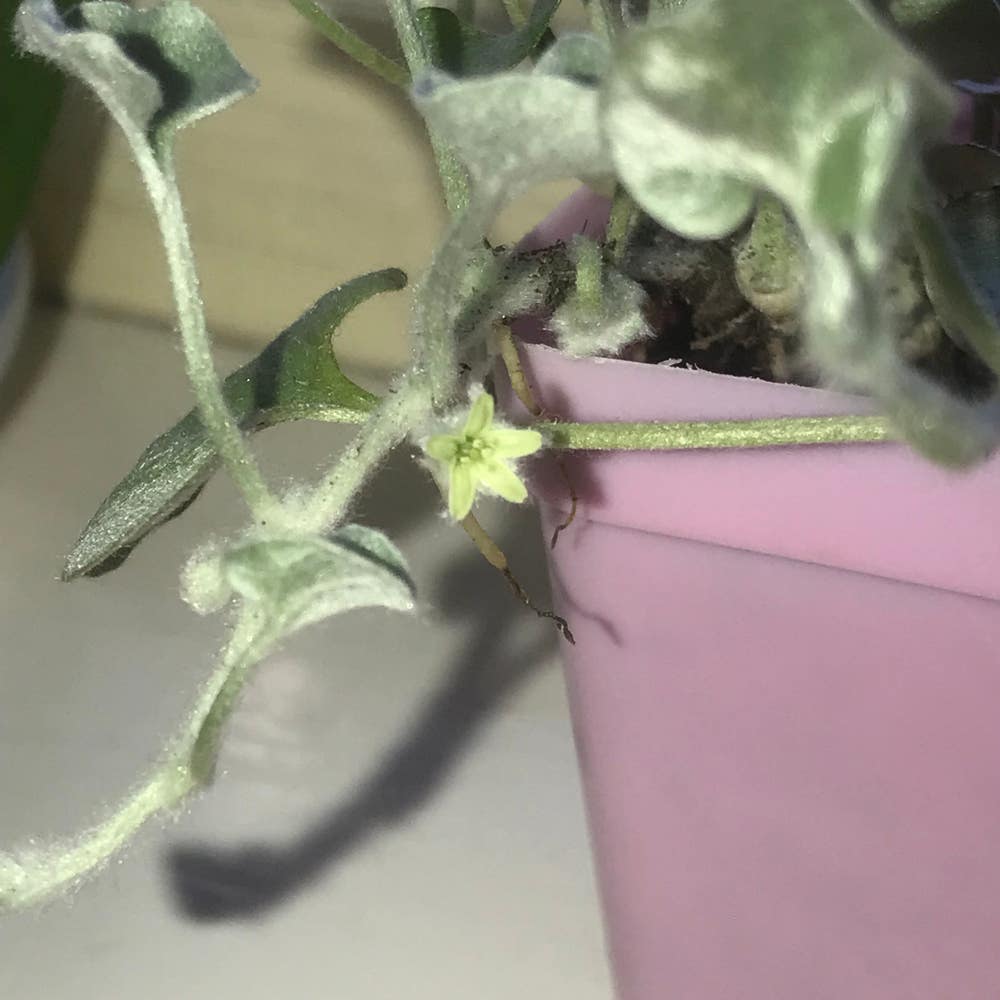
Why Are My Dichondra repens Leaves Curling?
Dichondra repens
By the Greg Editorial Team
Feb 28, 2024•5 min read
This article was created with the help of AI so we can cover more plants for you. May contain errors. See one? Report it here.
Solve your Dichondra's leaf-curl riddle 🍃 and revive its vibrant flatness with our pro tips!
- 🌞🌱 Balance light and water to prevent Dichondra leaves from curling.
- 🌧️💧 Ensure well-draining soil and even moisture for healthy leaves.
- 🐜🔍 Regularly check for pests and diseases, and prune affected areas.
Spotting the Culprits Behind the Curl
🌿 Environmental Stressors
Dichondra repens leaves curling? Mother Nature might be the instigator. Direct sunlight can scorch, while too little light weakens the plant.
🛡️ Shielding from the Elements
Protect your Dichondra with shade cloth or strategic placement. A balance of light and protection keeps leaves happy and flat.
💧 Water Woes
Curling leaves could be a cry for help—either too much or too little H2O. Overwatering leads to downward curls; underwatering causes an upward plea.
🚰 The Watering Sweet Spot
Aim for moist soil that's not waterlogged. Use a moisture meter or the finger test—dry top inch means it's time to water.
🌱 Soil Secrets Unearthed
Your soil could be the silent stressor. Poor drainage or nutrient deficiencies manifest as leaf curl in your Dichondra.
🌱 Soil Adjustments
For happy leaves, ensure a well-draining soil mix and consider a soil test. Adjust based on results to prevent those curls.
Nipping Pests and Diseases in the Bud
🐛 The Usual Suspects
Pests and diseases can turn your Dichondra repens from lush to lackluster. Flea beetles and cutworms are the ringleaders, munching away and causing leaf curl. They're not invincible, though. A healthy Dichondra can often rebound without chemical warfare.
Look for the black spots and mushy leaves that signal disease. These are the plant's cry for help. It's your cue to adjust care routines, focusing on watering, light, and air circulation to fortify your plant's defenses.
🦸♂️ Fight Back Strategies
When pests throw a party on your Dichondra, it's time to crash it. Natural remedies and beneficial insects are your undercover agents. They'll take down the bad guys without the fallout of harsh chemicals.
Pruning is your strategic strike against disease. Remove affected areas immediately to prevent the spread. It's like cutting off the supply lines to an invading army.
Sterile potting mix and clean pots are your preventative measures. Think of them as choosing a safe neighborhood for your plant's roots. And remember, cleanliness is your ally—sanitize your tools and avoid overhead watering to keep bacterial bullies at bay.
Regular checks are non-negotiable. Be the vigilant guardian of your Dichondra, and you'll spot the early signs of trouble. With pests, look for sticky residue or fine webbing. For diseases, keep an eye out for discolored spots or blights. Catching these early is half the battle.
Curl Correction: Reviving Your Dichondra
🌞 Environmental Equilibrium
Dichondra repens thrives when its environment is just right. Too much sun can fry the leaves, while too little leaves them yearning for more. Strike a balance with bright, indirect light. If your plant's acting like a drama queen, consider its placement. It might need a spot with less direct sunlight or a sheer curtain as a buffer.
💧 Watering Wisdom
Your Dichondra's thirst is real but don't quench it with a flood. Consistency is key. Let the top inch of soil dry out before you water again. If the leaves are curling, your watering schedule might be as erratic as a cat in a yarn shop. Time to get on a routine that keeps the soil evenly moist but not soggy.
🌱 Soil Solutions
Good drainage is your soil's best friend, and by extension, your Dichondra's BFF. If your pot's holding water like a camel, you've got a problem. Ensure your container has drainage holes and consider a soil mix that's well-aerated. If you've been neglecting the soil like last year's fashion, it's time to refresh it. A little soil enrichment can go a long way in flattening those curls.
Keeping the Curls at Bay
🕵️ Vigilance and Care
Regular check-ups are the backbone of Dichondra repens care. Like a surprise audit, they reveal what's beneath the surface.
Consistency is the secret ingredient to a curl-free Dichondra. It's not about helicopter parenting your plant; it's about knowing its normal so you can spot the abnormal.
🛠️ Quick fixes vs. long-term love
Quick fixes are tempting, but your Dichondra craves a long-term relationship. It's not about slapping a band-aid on a problem; it's about nurturing a resilient plant.
Balance is key. While you might want to shower your Dichondra with all the love, sometimes less is more. Overbearing care can be just as damaging as neglect.
Regular grooming keeps your plant looking sharp and feeling good. Think of it as a spa day for your Dichondra; a little trim here and there can work wonders.
Rotate your plant's position periodically for even growth. Just like us, your Dichondra appreciates a change of scenery now and then.
Stay alert to the changing seasons. Your plant's needs will shift as the weather does, so adjust your care accordingly. It's like updating your wardrobe for the season, but for your plant.
Keep a log of your plant's health and care routine. It's the equivalent of a medical record for your Dichondra, and it's invaluable when troubleshooting issues.
Remember, the goal is to prevent the curls before they start. With regular care and attention, your Dichondra repens will stay as flat and lush as a well-manicured lawn.
⚠️ Safety First
This content is for general information and may contain errors, omissions, or outdated details. It is not medical, veterinary advice, or an endorsement of therapeutic claims.
Always consult a qualified healthcare professional before using any plant as food, medicine, or supplement.
Never eat any plant (or feed one to pets) without confirming its identity with at least two trusted sources.
If you suspect poisoning, call Poison Control (800) 222-1222, the Pet Poison Helpline (800) 213-6680, or your local emergency service immediately.
Spotted an error? Please report it here.
Keep your Dichondra repens' leaves perfectly unfurled 🌿 by letting Greg monitor and adjust your plant's care routine for a thriving green companion.