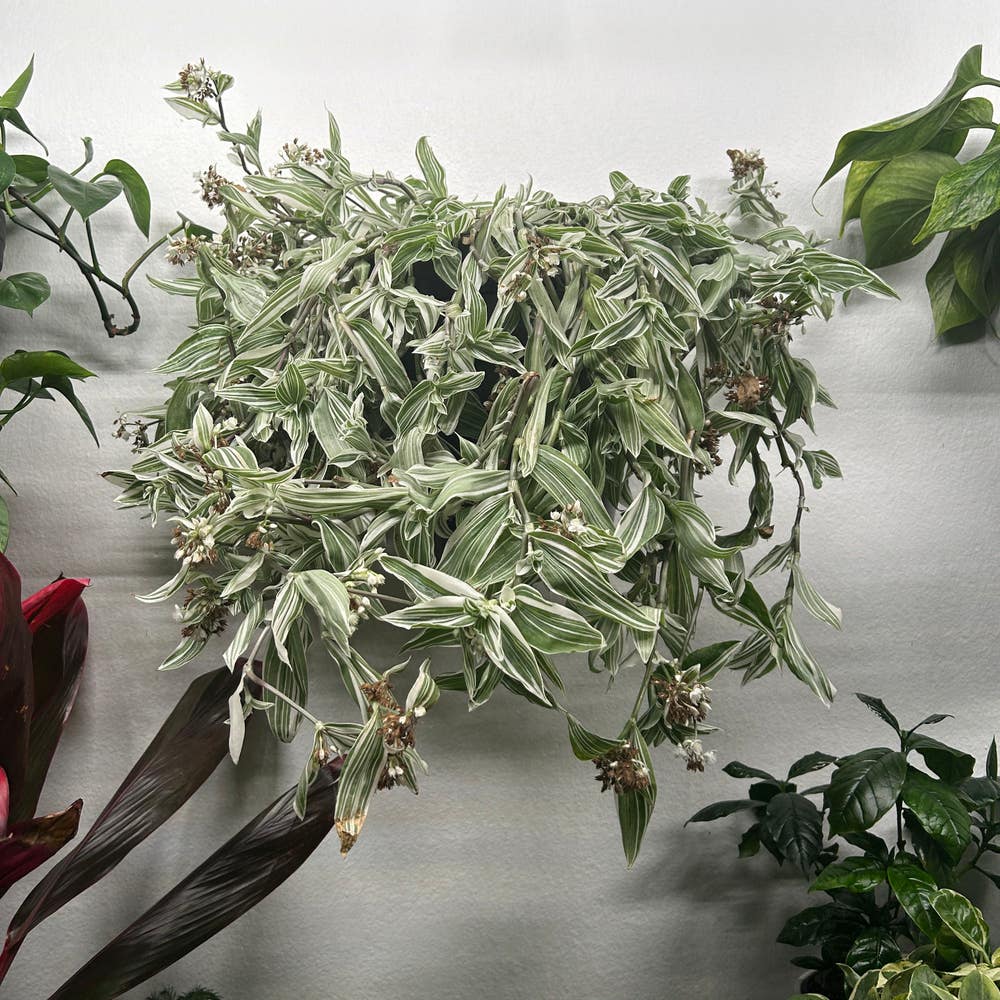
Variegated Inch Plant: A Common Weed
Tradescantia fluminensis 'Albovittata'
By the Greg Editorial Team
Sep 30, 2024•6 min read
This article was created with the help of AI so we can cover more plants for you. May contain errors. See one? Report it here.
- 🌱 Variegated Inch Plant is invasive, disrupting local ecosystems and native biodiversity.
- 🏞️ Identify it by variegated leaves and trailing growth; it forms dense mats.
- 🛠️ Control methods include manual removal and selective herbicides; early detection is crucial.
Plant Classification
Definition of Weeds and Invasive Species 🌱
Weeds are unwanted plants that invade cultivated areas, competing fiercely with crops for resources. Invasive species, on the other hand, are non-native plants that spread aggressively, often disrupting local ecosystems and causing ecological harm.
Criteria for Classification as a Weed or Invasive 📋
To be classified as a weed or invasive, a plant typically exhibits rapid spread, allowing it to colonize new areas quickly. Additionally, its competitive nature enables it to outcompete native plants for sunlight, nutrients, and space, leading to significant ecological impacts.
Variegated Inch Plant's Classification 🌿
The Variegated Inch Plant is classified as an invasive species due to its aggressive growth and remarkable adaptability. You can often find it thriving in disturbed areas, gardens, and along roadsides, where it can easily establish itself and spread.
This classification highlights the importance of understanding plant behaviors in our environments. By recognizing invasive species like the Variegated Inch Plant, we can take steps to manage their spread and protect our native ecosystems.
Identification
Key Identifying Features 🌿
The Variegated Inch Plant is easily recognized by its striking variegated leaves. These leaves showcase a beautiful blend of green, purple, and silver hues, making it a visually appealing yet invasive species.
Its growth habit is characterized by spreading, trailing stems that can root at nodes. Typically, this plant reaches a height of 6-12 inches, allowing it to form dense mats across the ground.
Comparison with Look-Alike Plants 🔍
When identifying the Variegated Inch Plant, it's essential to distinguish it from similar species, particularly other Tradescantia varieties.
Key differences include variations in leaf shape, color, and growth patterns. For instance, while some look-alikes may have similar colors, their leaf shapes can vary significantly, helping you identify the Variegated Inch Plant more accurately.
Understanding these features can aid in effective management and control of this invasive species.
Growth Habits and Spread
Typical Growth Patterns 🌱
The Variegated Inch Plant is notorious for its rapid growth rate. It can quickly cover large areas, forming dense mats that smother native vegetation.
Reproductive Strategies and Methods of Spread 🌿
This plant primarily spreads through vegetative reproduction. It roots easily at nodes, allowing it to expand swiftly, although its seed production is limited, it can still contribute to local dispersal.
Adaptability to Various Environments 🌍
Thriving in warm, humid conditions, the Variegated Inch Plant is well-suited to environments typical of Central America and Mexico. Its resilience to different soil types and light conditions makes it particularly challenging to control.
Understanding these growth habits and spread mechanisms is crucial for effective management strategies. With this knowledge, we can better address the ecological impacts of this invasive species.
Ecological Impact
🌱 Effects on Native Plant Communities
The Variegated Inch Plant aggressively outcompetes native plants for essential resources like sunlight, nutrients, and space. This competition can significantly alter the composition of local flora, leading to a decline in biodiversity.
🦉 Impact on Wildlife and Biodiversity
By displacing native species, the Variegated Inch Plant disrupts habitats that local wildlife rely on for food and shelter. This disruption can have cascading effects, potentially upsetting food webs and ecological interactions within the ecosystem.
Understanding these impacts is crucial for effective management and control of this invasive species. By recognizing the ecological consequences, we can better appreciate the importance of preserving native plant communities and the wildlife that depends on them.
Control and Management
Manual Removal Techniques and Best Practices 🌱
Manual removal is a straightforward yet effective method for controlling Variegated Inch Plant.
- Hand-pulling: Ensure you remove the entire root system to prevent regrowth.
- Timing: The best time to pull is before flowering, which limits seed production.
- Disposal: Properly dispose of the removed plants to prevent re-establishment.
Chemical Control Options and Safety Considerations ⚗️
Chemical control can be effective when manual methods fall short.
- Herbicides: Use selective herbicides that specifically target Variegated Inch Plant while minimizing harm to desirable plants.
- Application timing: Early spring or late fall is ideal for maximum effectiveness.
- Safety precautions: Always wear protective gear and follow label instructions to ensure safe application.
Biological Control Methods and Their Effectiveness 🦠
Biological control offers a more natural approach to managing this invasive species.
- Consider introducing natural predators or competitors, if available in your area.
- Ongoing research is crucial to understanding the effectiveness and ecological implications of these methods.
Preventive Measures to Limit Spread 🚫
Preventing the spread of Variegated Inch Plant is essential for maintaining healthy ecosystems.
- Regularly monitor your gardens and disturbed areas for new growth.
- Promptly remove any new infestations to prevent establishment and further spread.
Importance of Early Detection and Rapid Response 🚨
Early detection is key to effective management.
- Develop strategies for identifying new growth early, such as regular checks in vulnerable areas.
- Community awareness and involvement can significantly enhance management efforts, making it a collective responsibility.
By employing these control and management strategies, you can effectively mitigate the impact of Variegated Inch Plant in your area. This proactive approach not only protects local ecosystems but also fosters a sense of community stewardship.
Legal Status
Overview of Laws and Regulations 🌐
Understanding the legal landscape surrounding invasive species like the Variegated Inch Plant is crucial. Many local and state regulations exist that govern the cultivation and sale of such plants, aiming to curb their spread.
These regulations often include guidelines for reporting and managing infestations. Being aware of these laws can help you take proactive steps in your community.
Requirements for Removal or Control ⚖️
Landowners have specific legal obligations when it comes to managing invasive species. This includes actively controlling the spread of the Variegated Inch Plant on their property.
Resources are available to assist with compliance, including local extension services and environmental organizations. Utilizing these resources can make a significant difference in managing invasive plant populations effectively.
In summary, staying informed about legal requirements and available resources is essential for effective management. This knowledge empowers individuals and communities to combat the spread of invasive species.
As we move forward, let’s explore the potential benefits or uses of the Variegated Inch Plant, despite its invasive nature.
Potential Benefits or Uses
🏺 Historical Uses
The Variegated Inch Plant has a rich history of traditional uses. It has been utilized in herbal medicine and admired for its ornamental qualities in various cultures.
🌱 Current Beneficial Uses, If Any
Today, its applications are limited. Some people use it in landscaping or as ground cover in non-native settings, but these uses are often overshadowed by its invasive nature.
⚠️ Emphasis on Negative Impacts Outweighing Benefits
While there are potential benefits, they pale in comparison to the ecological and economic drawbacks. The aggressive growth of the Variegated Inch Plant disrupts local ecosystems, making its management a priority over any ornamental appeal.
Understanding these nuances is crucial for anyone considering this plant for their garden. The focus should remain on controlling its spread to protect native flora and fauna.
⚠️ Safety First
This content is for general information and may contain errors, omissions, or outdated details. It is not medical, veterinary advice, or an endorsement of therapeutic claims.
Always consult a qualified healthcare professional before using any plant as food, medicine, or supplement.
Never eat any plant (or feed one to pets) without confirming its identity with at least two trusted sources.
If you suspect poisoning, call Poison Control (800) 222-1222, the Pet Poison Helpline (800) 213-6680, or your local emergency service immediately.
Spotted an error? Please report it here.
Protect our ecosystems by identifying and managing the invasive Variegated Inch Plant with Greg's plant recognition feature, ensuring a healthier garden 🌿 for native species!