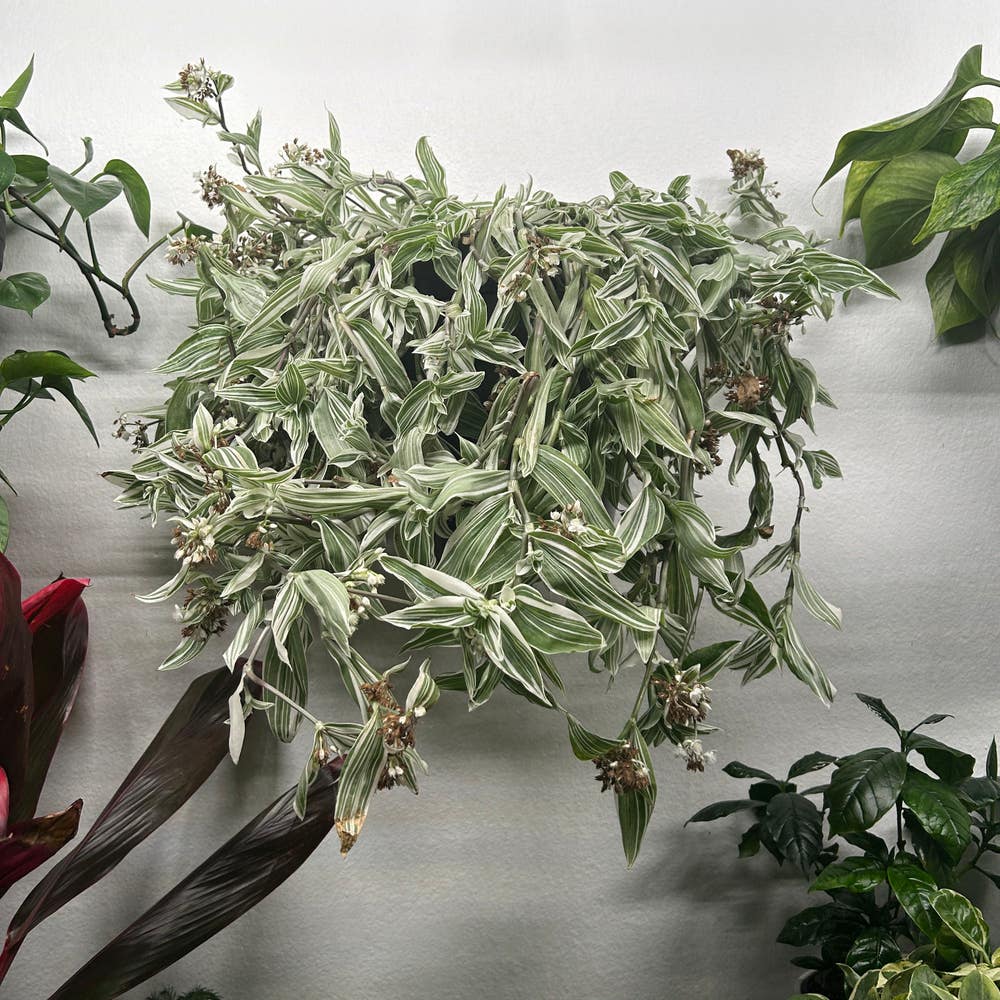
Brown Spots On Tradescantia Albiflora 'Albovittata' Leaves
Tradescantia fluminensis 'Albovittata'
By the Greg Editorial Team
Jun 18, 2024•5 min read
This article was created with the help of AI so we can cover more plants for you. May contain errors. See one? Report it here.
- Over/underwatering, pests, fungi cause brown spots; balance water and inspect leaves.
- Regular inspections catch early signs, preventing damage and disease spread.
- Maintain moisture, not soggy soil, and ensure good air circulation for plant health.
Spotting the Trouble: Diagnosing Brown Spots
🍂 What Do Brown Spots Look Like?
Brown spots on Tradescantia albiflora 'Albovittata' leaves can be a real mood killer. They vary in size and color, from light tan to a dark brown, and can look either dry or soggy. These unsightly blemishes often start small and grow, or they hit you with large patches that are hard to overlook.
🕵️ The Usual Suspects: Pinpointing the Cause
Determining the cause of brown spots is like playing plant detective. Overwatering might leave the spots looking wet, while underwatering tends to make them crispy. A fungal issue could give spots a yellow ring, and pests might leave sticky residue or webbing. Flip those leaves; sometimes the clues are hiding on the underside.
Keep an eye on the pattern—are the spots scattered or clustered? Also, note the shape—irregular or circular? These details are key to cracking the case. Remember, not all brown spots are a sign of doom; some might just be the plant showing its age or reacting to a sunburn.
Environmental stress, like too much sun or a drought, can also lead to brown spots. It's the plant's way of saying, "I've had enough!" Adjusting care to avoid these extremes is crucial for plant health.
Regular inspections are non-negotiable. Catching brown spots early can mean the difference between a quick fix and a total plant meltdown. If you spot trouble, isolate your plant to prevent an outbreak, and adjust your care routine. Monitoring after making changes is essential; it's not just about the fix, but also about the follow-up.

Diving into the Causes: What's Bugging Your Plant?
💧 Too Much Love: The Overwatering Connection
Overwatering is a common culprit behind those unsightly brown spots on your Tradescantia albiflora 'Albovittata'. Excess moisture can lead to root rot, which in turn manifests as brown patches on the leaves. Signs of overwatering include leaves that are limp and discolored, often with a mushy feel.
🏜️ Thirsty Roots: Could It Be Underwatering?
Conversely, underwatering can leave your plant looking wilted and parched. If the leaves of your Tradescantia albiflora 'Albovittata' are crispy to the touch, and the soil is dry and dusty, it's time to quench its thirst. Underwatering stresses the plant, leading to brown tips and edges on the foliage.
🐜 Unwanted Guests: Fungal and Pest Problems
Fungal infections and pests can also cause brown spots. Fungal issues often arise in overly moist conditions, so keeping leaves dry during watering is key. Pest damage, on the other hand, may appear as irregular spots or holes in the leaves. Regular inspections can help you spot and address these issues before they escalate.

Fixing the Spots: Tailored Treatments for Your Tradescantia
💧 Balancing the Watering Act
Watering your Tradescantia albiflora 'Albovittata' is like playing Goldilocks - not too much, not too little, but just right. Overwatering is a common misstep that invites brown spots to the party. Keep the soil moist but not soggy, and let the top layer dry out before going in with your watering can again. Remember, wet leaves are a no-go; they're basically a welcome mat for fungi. Aim for the base, and do it in the morning to let the sun work its drying magic.
🍄 Fungus Among Us: Choosing and Using Fungicides
When fungi crash your plant's vibe, it's time to break out the fungicides. Start with something gentle, like a baking soda and soap mix, and if that doesn't cut it, escalate to a copper-based fungicide. Read those labels like they hold the secrets of the universe, because, in a way, they do. Apply as directed, and always with the safety gear the label recommends. It's like a mini science experiment in your living room.
🐜 Evicting Pests: Integrated Pest Management
Pests are the uninvited guests that never know when to leave. If you spot spider mites or other freeloaders, get your hands on some insecticidal soap or neem oil. Spray thoroughly, especially under those leaves, and repeat every few days until your plant is no longer a bug buffet. For a more hands-on approach, give your plant a shower to wash off the pests. And if you're feeling extra, sticky traps can help you keep tabs on any new arrivals.

Keeping Spots at Bay: Prevention Strategies
💧 Water Wisdom: Nailing the Perfect Schedule
Consistency is the cornerstone of a healthy Tradescantia albiflora 'Albovittata'. Craft a watering schedule that's as reliable as your morning alarm. The goal is to keep the soil moist but not soggy. Use the finger test: if the top inch of soil is dry, it's time to water. Think of it as quenching your plant's thirst, not throwing it a pool party.
💨 Climate Control: Air Circulation and Humidity
Your Tradescantia isn't asking for a tropical rainforest; it just wants to breathe. Air circulation is crucial. Avoid the dead air of a neglected corner. A fan can provide a gentle breeze, but beware of drafts, which are as welcome as a skunk at a garden party. Humidity should be just right—not too muggy, not too arid. A pebble tray or occasional misting can help, but don't overdo it, or you're inviting trouble.
🌿 Regular Plant Check-ups
Make plant inspections a part of your routine, like checking your phone in the morning. Be on the lookout for early signs of distress, such as discoloration or spotting. Regular grooming—like a haircut for your plant—removes dead leaves and keeps it looking sharp. Remember, catching issues early is like catching the bus before it leaves the station—it saves you from running later.
⚠️ Safety First
This content is for general information and may contain errors, omissions, or outdated details. It is not medical, veterinary advice, or an endorsement of therapeutic claims.
Always consult a qualified healthcare professional before using any plant as food, medicine, or supplement.
Never eat any plant (or feed one to pets) without confirming its identity with at least two trusted sources.
If you suspect poisoning, call Poison Control (800) 222-1222, the Pet Poison Helpline (800) 213-6680, or your local emergency service immediately.
Spotted an error? Please report it here.
Keep your Tradescantia spot-free 🍃 with Greg's custom watering plans and real-time support from our plant-loving community.