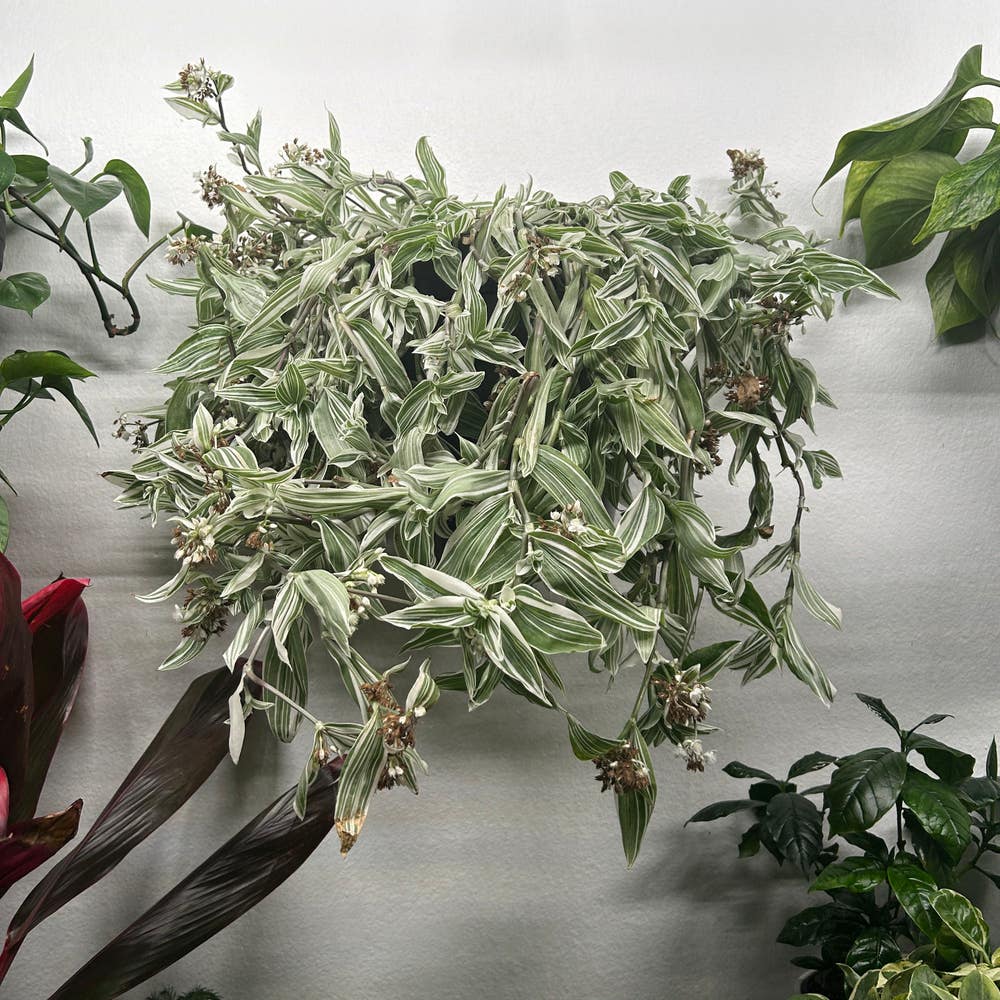
Common Tradescantia albiflora 'Albovittata' Problems
Tradescantia fluminensis 'Albovittata'
By the Greg Editorial Team
Jun 18, 2024•4 min read
This article was created with the help of AI so we can cover more plants for you. May contain errors. See one? Report it here.
- Wilting and yellowing leaves signal your Tradescantia needs care.
- Over-watering and under-watering both cause distinct distress symptoms.
- Regular health checks prevent pests and diseases, ensuring plant happiness.
Spotting Trouble in Paradise
🚩 Visual Distress Signals
Wilting, yellowing, or dropping leaves are your Tradescantia's way of waving a white flag. When leaves fade, discolor, or turn crispy, it's a clear sign they're not getting what they need. Brown patches or mushy stems? That's the plant equivalent of a cry for help.
🐜 Unwelcome Guests
If you spot tiny webs or sticky leaves, brace yourself for pests like spider mites and aphids. These critters are the uninvited guests that never RSVP. Keep a vigilant eye for these freeloaders; early detection means a better chance of evicting them before they settle in for good.

Water Woes: Too Much or Too Little
💧 Over-watering Blues
Yellowing leaves and mushy stems signal your Tradescantia is too wet. If your plant smells like a forgotten gym locker, it's time to intervene.
- Check the soil: If it's soggy, hold off on the water.
- Assess the roots: Slimy or blackened roots need a trim.
- Dry out: Move to a breezy area to help soil moisture evaporate.
- Adjust watering: Water less frequently and ensure good drainage.
🏜️ The Thirsty Plant
Droopy leaves and a dry touch mean your Tradescantia is parched. Crispy leaves are a cry for hydration.
- Water deeply: Soak until water runs free, then let it drain.
- Consistency: Establish a routine, adjusting for season changes.
- Monitor soil: If the top inch is bone-dry, it's time to water.
- Avoid extremes: Don't flood; aim for moist, not drenched soil.

Light and Temperature Tango
🌞 Sunburn and Shade
Leaves that look like they've been through a desert ordeal are crying out for relief from too much sun. Tradescantia albiflora 'Albovittata' thrives in bright, indirect light, but direct sunlight can lead to leaf scorching. Rotate your plant regularly to ensure even exposure and prevent one side from getting all the heat.
To protect your plant from harsh rays, consider a sheer curtain as a sunscreen. This will diffuse the light, allowing your Tradescantia to bask without the risk of turning into a crispy critter. Remember, the goal is a vibrant, not vapid, plant life.
❄️ Feeling the Chill
When your Tradescantia starts sporting browning leaves, it's not just throwing a fashion statement; it's likely too cold. Growth slowdown is another sign that your plant is not feeling the warmth it needs. Keep your Tradescantia away from drafty windows and ensure the room temperature is consistently comfortable.
If you notice a growth slowdown during the cooler months, don't just throw a blanket over the problem. Consider moving your plant to a warmer spot or using a grow light to compensate for the lack of natural sunlight. Your Tradescantia's health depends on a stable environment, so avoid temperature fluctuations like you'd avoid a cold shower.

Battling the Invisible Enemies
🍄 Mold and Fungus Fiascos
Fungal issues are like unwanted party crashers in your Tradescantia albiflora 'Albovittata's life. White or dark spots on leaves and a musty smell signal it's time to intervene.
🌬 Strategies for Fresh Air and Perfect Humidity
Boost airflow with a fan and aim for moderate humidity. Remove fallen leaves promptly, and consider a well-draining potting mix to prevent mold's return. If mold persists, a fungicide may be necessary—follow the instructions meticulously.
🦠 The Dreaded Root Rot
Root rot is the silent plant assassin, often undetected until it's almost too late. Wilted leaves and a foul smell from the soil are the distress calls.
🛠 Surgery and Soil Change for a Fresh Start
When root rot strikes, it's time for plant surgery. Remove the plant, trim away the mushy roots, and repot in fresh, well-draining soil. Keep water in check to avoid a repeat performance.
Prevention: The Best Medicine
📅 Consistent Care Routine
Establishing a watering and lighting schedule is crucial for the health of your Tradescantia albiflora 'Albovittata'. Water when the top inch of soil is dry, and provide bright, indirect light. Adjust for the seasons; your plant's thirst in the summer is not the same as in the winter chill.
Monitoring and adjusting to your plant's needs will prevent the onset of common issues. Keep an eye out for early distress signals like browning tips and tweak your care routine accordingly. Remember, plants are like pets; they thrive on regular attention.
👩⚕️ Regular Health Checks
Inspecting leaves, stems, and soil should be as routine as your morning coffee. Look for signs of pests, disease, or just general malaise. Early detection is like catching a cold before it turns into pneumonia.
Early intervention can mean the difference between a quick fix and a plant obituary. Don't wait for your Tradescantia to send an SOS; proactive care is the key to a flourishing plant. Keep those pruners sanitized and your eyes peeled.
⚠️ Safety First
This content is for general information and may contain errors, omissions, or outdated details. It is not medical, veterinary advice, or an endorsement of therapeutic claims.
Always consult a qualified healthcare professional before using any plant as food, medicine, or supplement.
Never eat any plant (or feed one to pets) without confirming its identity with at least two trusted sources.
If you suspect poisoning, call Poison Control (800) 222-1222, the Pet Poison Helpline (800) 213-6680, or your local emergency service immediately.
Spotted an error? Please report it here.
Keep your Tradescantia thriving 🌟 with Greg's personalized care reminders, ensuring you catch and address any distress signals early on.