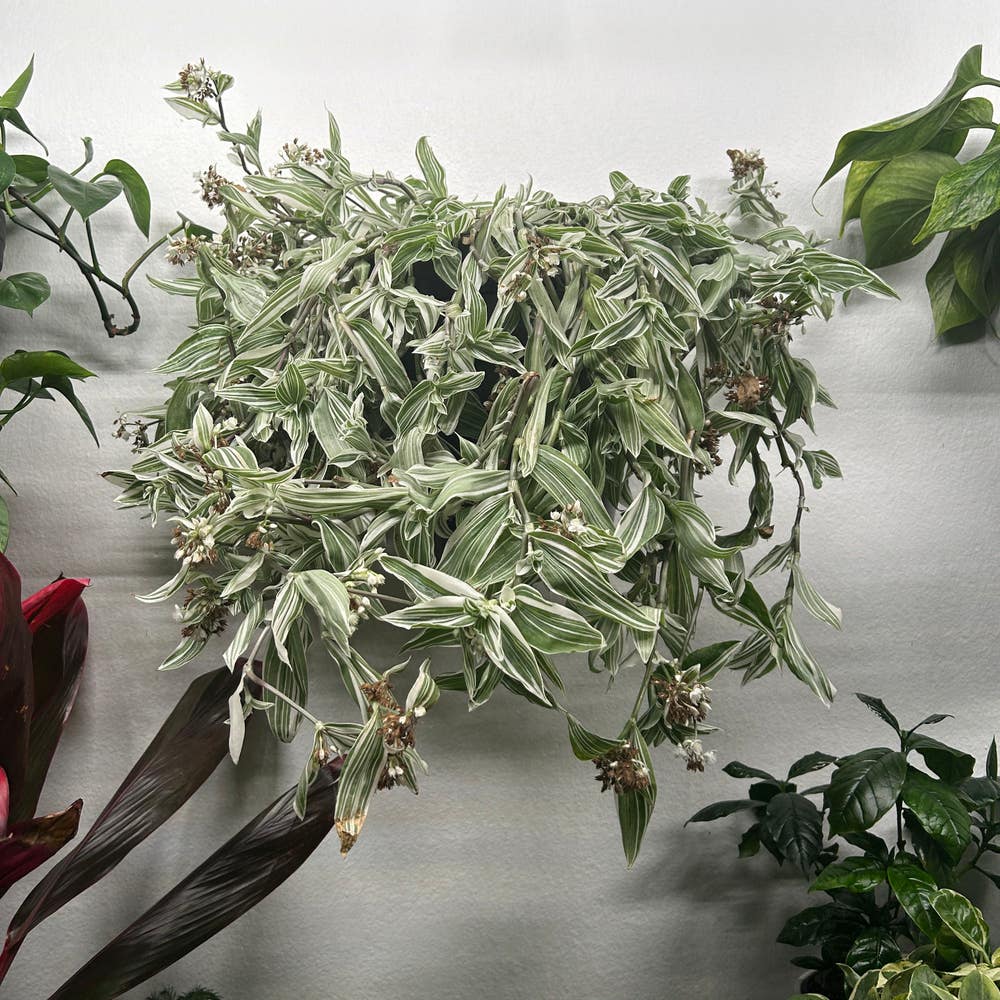
Tradescantia albiflora 'Albovittata' - Fertilizing 101
Tradescantia fluminensis 'Albovittata'
By the Greg Editorial Team
Jun 18, 2024•5 min read
This article was created with the help of AI so we can cover more plants for you. May contain errors. See one? Report it here.
- NPK ratios matter: 10-10-10 or 20-20-20 ideal for 'Albovittata'.
- Seasonal fertilizing: More in summer, less in winter.
- Over-fertilization signs: Yellow/brown leaves, crusty soil. Flush and prune if needed.
Picking the Right Fertilizer
💡 Understanding NPK Ratios
NPK ratios are the backbone of fertilizer composition, dictating the balance of nutrients your Tradescantia albiflora 'Albovittata' will receive. Nitrogen (N) is crucial for foliage growth, phosphorus (P) for roots and flowers, and potassium (K) for overall plant health. For variegated plants like the 'Albovittata', a balanced NPK ratio such as 10-10-10 or 20-20-20, diluted to half strength, is often recommended to maintain vibrant leaf patterns without overpowering the plant.
🌱 Organic vs. Synthetic Options
When it comes to organic versus synthetic fertilizers, it's a debate of pace and preference. Organic fertilizers are the marathon runners, releasing nutrients slowly and improving soil health over time. Synthetics are sprinters, offering a quick nutrient hit but with a risk of burns if overused. Choose organic to play the long game or synthetic for immediate results, but either way, moderation is key to avoid over-fertilization.
🌿 Top Fertilizer Picks
Market favorites like Jack’s Classic and DynaGro have been praised for their effectiveness on houseplants. Jack's Classic, particularly the Blossom Booster with a 10-30-20 ratio, is great for encouraging blooms, while DynaGro offers a well-rounded nutrient profile that supports overall plant health. Remember, the goal is to find a fertilizer that aligns with your 'Albovittata's' needs and your own gardening style.

Timing is Everything: When to Fertilize
💥 Growth Spurts and Dormancy
Spring heralds a growth spurt for the Tradescantia albiflora 'Albovittata', making it the ideal time to start the fertilization regime. As the plant wakes up from its winter slumber, it's primed to absorb nutrients and kickstart its growth cycle.
During fall and winter, the 'Albovittata' slows down, entering a period of dormancy. This is the time to ease off on fertilizing, allowing the plant to rest without the stress of processing excess nutrients.
🌞 Seasonal Adjustments
In the summer, your Tradescantia is in its element, craving more frequent feedings to support its lush, variegated foliage. This is when you can fertilize every two to four weeks, aligning with the plant's natural rhythm of vigorous growth.
As the chill of winter approaches, it's wise to reduce the feeding frequency. Think of it as putting your plant on a diet; it's not the time for a nutrient feast. Dialing back helps prevent the accumulation of unused minerals, which can be harmful to your plant's health.

The Art of Fertilizing
💡 Soil Fertilization Techniques
Applying fertilizer to your Tradescantia albiflora 'Albovittata' is like hitting the refresh button on its growth—but precision is crucial. For liquid fertilizers, measure accurately using a syringe, then dilute as directed. Apply to moist soil to help the roots absorb the nutrients without getting overwhelmed. Stick to a schedule that aligns with your plant's growth phases, typically every 2-4 weeks during active growth periods.
💦 Foliar Feeding: A Quick How-To
Foliar feeding is your secret weapon for a quick nutrient boost. Use a water-soluble fertilizer, dilute it properly, and spray a fine mist onto the leaves. Early morning or evening is prime time for this tactic to avoid leaf burn. Remember, this is a supplement, not a replacement for soil fertilization.
🚫 Avoiding Over-Fertilization
Keep an eye out for a crust of fertilizer on the soil surface, or leaves turning yellow or brown—these are the red flags of over-fertilization. If your 'Albovittata' starts looking more like a plant in distress than a vibrant green buddy, it's time to act. Flush the soil with water to dilute the excess fertilizer, and consider replacing the top layer of soil if the situation is dire. Going forward, use a lighter hand with the fertilizer, and always test the soil before your next application.

Troubleshooting: Dealing with Over-Fertilization
🚨 Recognizing the Red Flags
Your Tradescantia albiflora 'Albovittata' might be screaming for help, and over-fertilization could be the culprit. Stunted growth or a complete growth halt is your first clue. If you spot a white, crusty layer on the soil's surface or around the pot's edges, that's salt buildup from too much fertilizer. Yellowing leaves, particularly at the lower levels, and a general look of dissatisfaction from your plant are other signs to watch for. Roots that appear brown or blackened are a serious red flag, indicating potential chemical burns from excess nutrients.
🛠️ The Recovery Plan
Caught your 'Albovittata' with a nutrient hangover? Stop fertilizing immediately. Remove any visible fertilizer from the soil surface to give your plant a break. Next, flush the soil with water to wash away excess nutrients—think of it as a detox for your plant. Repeat this every few days, keeping an eye out for signs of recovery. If the soil seems particularly salty, consider replacing the top layer or repotting in extreme cases. Prune away any damaged foliage to help your plant focus on healing. And remember, patience is key—your plant will need time to bounce back. Once it does, reintroduce fertilization cautiously and with a more measured approach.
⚠️ Safety First
This content is for general information and may contain errors, omissions, or outdated details. It is not medical, veterinary advice, or an endorsement of therapeutic claims.
Always consult a qualified healthcare professional before using any plant as food, medicine, or supplement.
Never eat any plant (or feed one to pets) without confirming its identity with at least two trusted sources.
If you suspect poisoning, call Poison Control (800) 222-1222, the Pet Poison Helpline (800) 213-6680, or your local emergency service immediately.
Spotted an error? Please report it here.
Nurture your Tradescantia's variegation 🌿 with Greg's custom fertilizing schedule, ensuring your 'Albovittata' stays as vibrant as your green thumb ambitions.