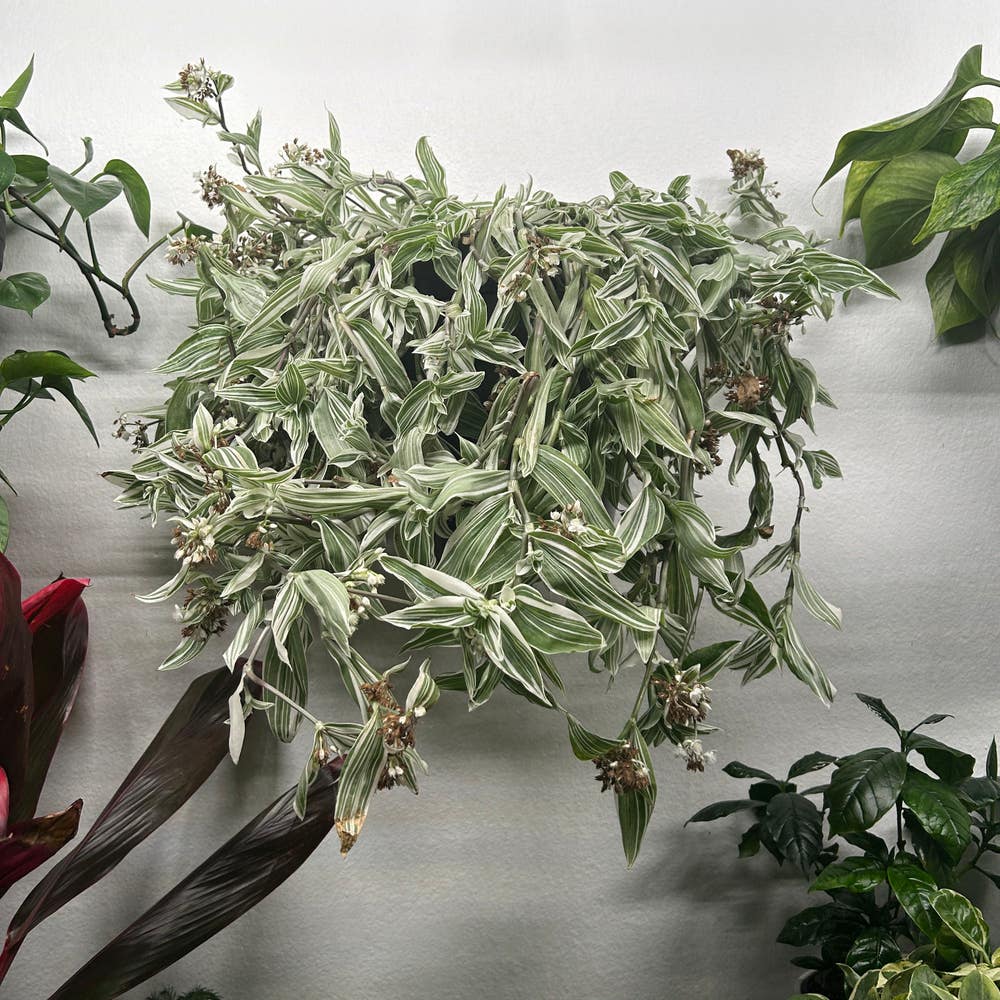
Tradescantia Albiflora 'albovittata' Leaves Curling
Tradescantia fluminensis 'Albovittata'
By the Greg Editorial Team
Feb 01, 2024•4 min read
This article was created with the help of AI so we can cover more plants for you. May contain errors. See one? Report it here.
- 🌀 Spirals and bends in leaves signal your 'Albovittata' is in distress.
- 💧 Watering balance is key to prevent leaf curl—neither soggy nor crispy.
- 🌡️ Maintain ideal temperature and light for healthy, flat leaves.
Spotting Trouble: Identifying Leaf Curl in Your 'Albovittata'
🍃 Visual Clues
Sharp bends or spirals in your Tradescantia albiflora 'Albovittata' leaves are a cry for help. Look beyond a gentle wave; distress signals are in the extreme contortions. Discoloration or texture changes—like a shift from vibrant green to a sickly yellow—are additional red flags.
🌱 Root Check-Up
Don't ignore the world beneath the soil. If your 'Albovittata' is sending SOS signals above, it's time to investigate the roots. Healthy roots are firm and white, while brown and mushy ones spell trouble. Root rot could be the silent assassin behind those curling leaves.

The Usual Suspects: Common Causes of Leaf Curling
🚰 Thirsty or Drowning?
Finding the watering sweet spot for your Tradescantia albiflora 'Albovittata' is like tuning a guitar – too tight or too loose, and the music's off.
💧 Watering Woes
Overwatering turns your plant into a soggy mess, with leaves curling as a distress signal. Underwatering? The leaves will crisp up, begging for a drink. Check the soil before you water – it should be moist, not a swamp or a dust bowl.
🍽️ Feeding Frenzy
Your 'Albovittata' needs a balanced diet, but it's not about piling on the nutrients. Over-fertilization can cause as much leaf curl as neglect.
💡 Nutrient Balance
Stick to a regular feeding schedule with a balanced fertilizer. Only feed during the growing season, and don't let your plant get junk-food junkie levels of nutrients.
🌞 Climate Control
Temperature and light are the stage managers for your 'Albovittata', setting the scene for thriving or diving.
🌡️ Temperature and Light
Keep your plant away from drafts and direct heat sources. Aim for a stable microclimate – no extremes, just a comfortable, consistent environment. Too much direct sunlight? Leaves curl up like they're sunbathing too hard. Not enough light? They'll stretch out, searching for those elusive rays.

First Aid for Curly Leaves
💧 Watering Woes: Setting It Straight
When your Tradescantia albiflora 'Albovittata' leaves start to resemble curly fries, it's time for an intervention. Watering should be your first checkpoint. Overwatering can drown the roots, while underwatering leaves them parched. Use a moisture meter or the trusty finger test—when the top inch of soil is dry, it's time to water. If the soil feels like a wrung-out sponge, you've hit the sweet spot.
🍽️ Nutrient Know-How
Now, let's talk food. Your plant isn't just being picky when it curls up; it might be starving or, conversely, stuffed with nutrients. A balanced, water-soluble fertilizer with an even NPK ratio is like a well-rounded diet for your 'Albovittata'. But remember, moderation is key. Overfeeding leads to nutrient burn, underfeeding to malnourishment. Stick to a regular fertilization schedule, and if you've gone overboard, flush the soil with water to reset the balance.

Keeping Leaves Flat: Prevention Is Key
🌟 Consistency Is Your Best Friend
Creating the ideal home environment for your Tradescantia albiflora 'Albovittata' is like setting up a backstage area for a rockstar – it needs to be just right. Bright, indirect light and stable temperatures are the VIP passes to flat, healthy leaves. Think of light as the main act; without it, your plant's performance falls flat. Temperature swings are the hecklers in the crowd; keep them out by avoiding drafty windows or radiators.
🕵️ Regular Check-Ups
Routine inspections are the soundchecks before the big show. They help you catch the early signs of leaf curl before they become a full-blown plant tantrum. Look for pests, discoloration, or odd textures on the leaves. It's like being a plant detective, and catching the culprits early can save you a headache later. Clean leaves are less likely to attract pests, so wipe them down regularly to prevent your 'Albovittata' from sending out distress signals. Remember, a clean plant is a happy plant, and a happy plant doesn't throw curveballs like leaf curl.
⚠️ Safety First
This content is for general information and may contain errors, omissions, or outdated details. It is not medical, veterinary advice, or an endorsement of therapeutic claims.
Always consult a qualified healthcare professional before using any plant as food, medicine, or supplement.
Never eat any plant (or feed one to pets) without confirming its identity with at least two trusted sources.
If you suspect poisoning, call Poison Control (800) 222-1222, the Pet Poison Helpline (800) 213-6680, or your local emergency service immediately.
Spotted an error? Please report it here.
Prevent leaf curl 🌀 in your 'Albovittata' with Greg's precise watering and light reminders, keeping your plant's environment ideal for flat, healthy leaves.