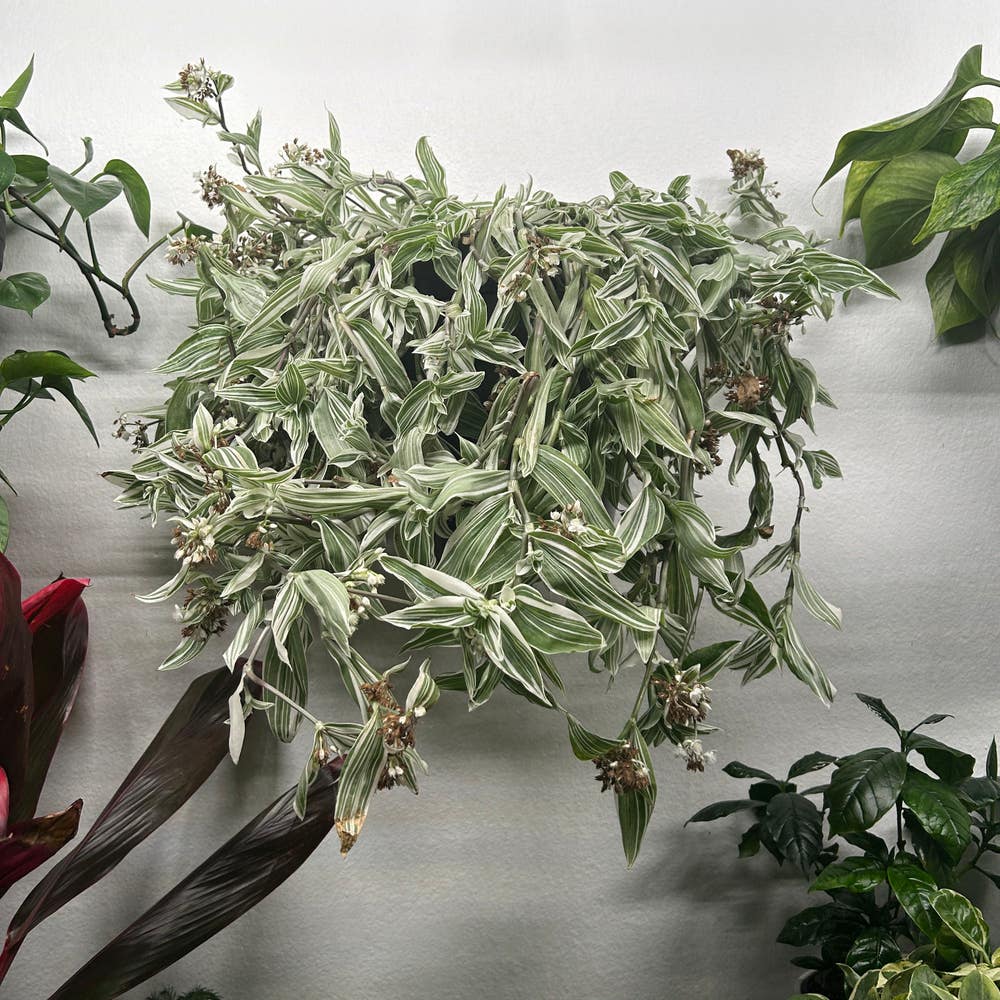
Bugs On Tradescantia Albiflora 'Albovittata'
Tradescantia fluminensis 'Albovittata'
By the Greg Editorial Team
Jun 18, 2024•4 min read
This article was created with the help of AI so we can cover more plants for you. May contain errors. See one? Report it here.
- 🕸️ Spider mites and scale threaten Tradescantia with leaf damage; treat with neem oil or alcohol.
- 🚫 Prevent pests with dry soil surfaces, good air circulation, and regular inspections.
- 🌱 Isolate and treat infested plants promptly using insecticidal soap or horticultural oil.
Meet the Unwanted Guests: Common Pests on Tradescantia albiflora 'Albovittata'
🕷️ Spider Mites: The Sneaky Sap-Suckers
Webbing on your Tradescantia albiflora 'Albovittata' is a red flag for spider mites. These pests are sap-sucking villains causing leaf damage and discoloration. To fight back, insecticidal soap or neem oil are your go-to weapons. Spray thoroughly, especially under leaves, and repeat every few days until you reclaim your plant.
🛡️ Scale: The Sticky Freeloaders
Scale insects are masters of disguise, masquerading as bumps on your plant's stems and leaves. If you spot sticky honeydew or sooty mold, it's time to act. Remove these freeloaders by dabbing them with alcohol or applying horticultural oil. Persistence is key, so keep at it until your plant is scale-free.
🦟 Fungus Gnats and Fruit Flies: The Soil Lurkers
Overwatering your Tradescantia can lead to an invasion of fungus gnats and fruit flies. These pests are a sign to reassess your watering habits. To dry out the problem, let the soil surface dry between waterings and consider using sticky traps or a layer of sand to prevent adults from laying eggs.
🐛 Mealybugs: The Fluffy White Menace
Spotting white fluff on your Tradescantia is a telltale sign of mealybugs. These pests can stunt your plant's growth and cause leaf yellowing. Swipe them off with alcohol-dipped swabs or spray with insecticidal soap. Stay vigilant and repeat treatments to ensure these fluffy white menaces are gone for good.

Other Pests You Might Encounter
🐜 Aphids: The Green Invaders
Clusters of tiny, pear-shaped insects on your Tradescantia albiflora 'Albovittata' are a red flag for aphids. These pests are colorful—ranging from green to black—and love to feast on new growth.
Sticky honeydew residue and distorted leaves are tell-tale signs. To combat aphids, a strong water spray or insecticidal soap can be effective. For stubborn infestations, consider neem oil or a systemic insecticide.
🕵️ Thrips: The Silent Leaf Destroyers
Thrips are microscopic but mighty, leaving behind silvery trails and speckled leaves. If you notice these signs, it's time to take action.
Consistent treatments with neem oil or insecticidal soap sprays are key. Apply weekly to show these pests the door. For severe cases, predatory mites or spinosad may be necessary.
🦟 Whiteflies: The Flocking Pests
A cloud of tiny white insects dispersing when you shake your plant? That's a whitefly infestation. These pests are notorious for their flocking behavior.
To tackle whiteflies, yellow sticky traps can help monitor and reduce their numbers. Insecticidal soap or horticultural oil can also be applied to infested areas. Regular inspections and treatments are crucial to keep these pests at bay.

Tailored Tactics for Tradescantia albiflora 'Albovittata' Pest Control
🛡️ Prevention: The Best Defense
Creating an unwelcoming environment for pests is your first line of defense. Ensure your Tradescantia albiflora 'Albovittata' is less appealing to the critters by following these tips:
- Avoid over-fertilization: It's like ringing the dinner bell for bugs. Stick to a balanced feeding schedule.
- Promote good air circulation: It's not just about the breeze; it's about giving pests fewer places to hide.
- Keep it clean: Fallen leaves are a pest party waiting to happen. Regular tidying up keeps the festivities at bay.
🕵️ Inspection Routines
Vigilance is non-negotiable. Here's how to catch those pests before they settle in:
- Regular check-ups: Treat plant inspection like a dental visit; routine is key.
- Know the signs: Discoloration, sticky residue, or webbing are red flags. Don't ignore them.
🚨 When Pests Strike: A Step-by-Step Action Plan
Initial Response
Isolation is the name of the game. When you spot a pest:
- Quarantine: Immediately separate the affected plant to prevent a full-blown infestation.
Choosing Your Weapons
Each pest requires a specific treatment. Here's what to arm yourself with:
- Natural remedies: Neem oil and insecticidal soap are your go-to options.
- Manual removal: Sometimes, you've just got to get your hands dirty and pick them off.
Follow-through
Persistence pays off. To ensure complete eradication:
- Repeat treatments: One round is rarely enough. Keep at it until you're sure they're gone.
- Monitor recovery: After the pests are history, keep an eye on your plant's bounce-back.

⚠️ Safety First
This content is for general information and may contain errors, omissions, or outdated details. It is not medical, veterinary advice, or an endorsement of therapeutic claims.
Always consult a qualified healthcare professional before using any plant as food, medicine, or supplement.
Never eat any plant (or feed one to pets) without confirming its identity with at least two trusted sources.
If you suspect poisoning, call Poison Control (800) 222-1222, the Pet Poison Helpline (800) 213-6680, or your local emergency service immediately.
Spotted an error? Please report it here.
Protect your Tradescantia albiflora 'Albovittata' from pesky invaders with Greg's custom care alerts 🛡️, ensuring your plant stays healthy and vibrant.