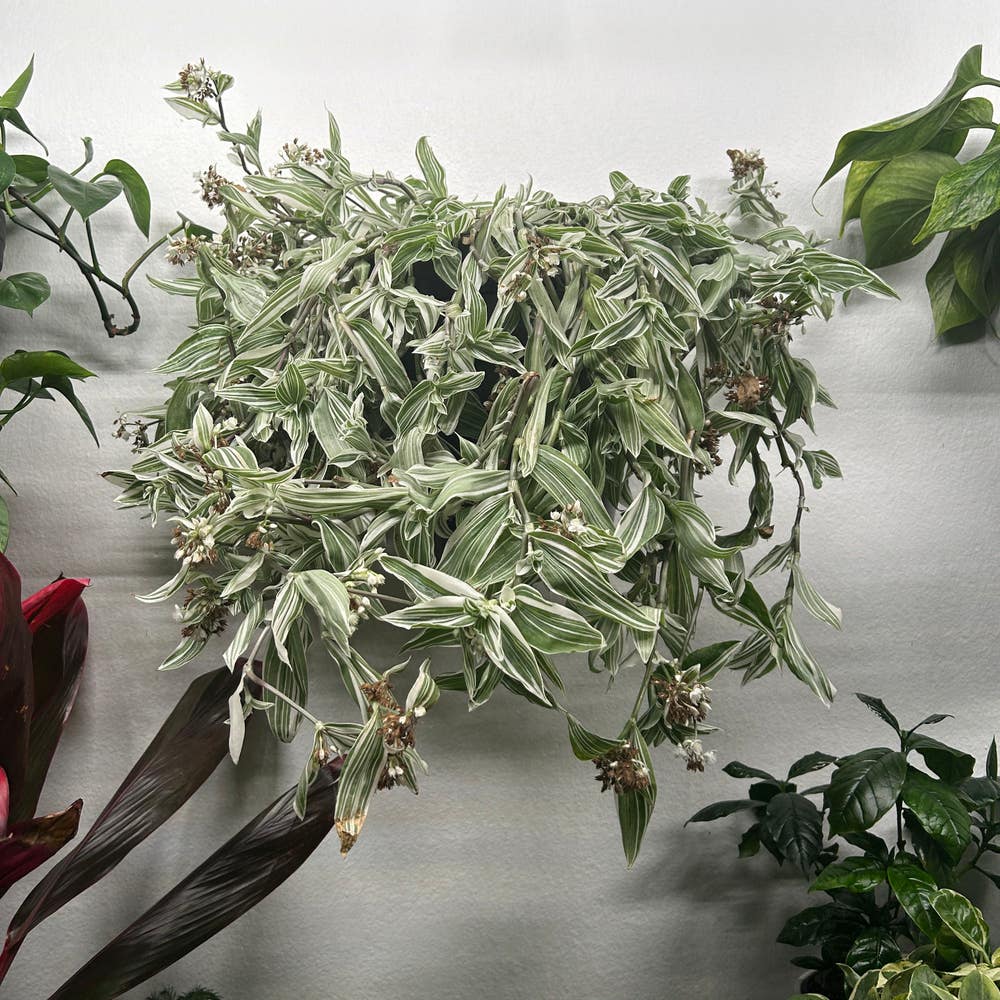
Tradescantia Albiflora 'albovittata' Yellow Leaves
Tradescantia fluminensis 'Albovittata'
By the Greg Editorial Team
Jun 18, 2024•3 min read
This article was created with the help of AI so we can cover more plants for you. May contain errors. See one? Report it here.
- 🌞 Too much or too little light can cause yellow leaves.
- 💧 Watering habits matter: Over or under can lead to yellowing.
- 🌱 Nutrient balance is key; use water-soluble fertilizer every 4-6 weeks.
Spotting Trouble: Identifying Yellow Leaves
🚨 When Yellow Flags Rise
Yellowing leaves on Tradescantia albiflora 'Albovittata' are warning signs. Early detection is key. Check the soil; if it's too dry or soggy, it's time to adjust your care routine.
🌈 Beyond the Yellow Brick Road
Yellow leaves can signal natural aging or a cry for help. If it's the lower, older leaves yellowing slowly, they're likely just retiring. Rapid yellowing, especially in new growth, means your plant is stressed.

The Root of the Problem: Common Causes
⛅️ Light: Too Much Sun or Not Enough?
Tradescantia albiflora 'Albovittata' can be as picky about light as a photographer in a darkroom. Too much sunlight scorches leaves, leaving them as yellow as a lemon. On the flip side, too little light starves the plant of energy, leading to a pale, yellowish tinge. It's all about finding that sweet spot of bright, indirect light where your plant can bask without getting a sunburn.
💧 Thirsty Roots: Watering Woes
Watering habits can turn your Tradescantia into a drama queen with yellow leaves. Overwatering is like throwing a pool party in the pot, leading to root rot and yellow, limp leaves. Underwatering, however, leaves the soil drier than a stand-up comedian's wit, resulting in leaves that are as crispy as autumn foliage. The key is consistent, moderate watering—think of it as a steady diet of hydration.
🍽️ Hungry Plants: Nutritional Needs
Nutrient deficiencies make your plant look like it's been on a fast. Yellow leaves can signal a lack of essential nutrients like nitrogen, potassium, or magnesium. It's like your plant is trying to survive on a diet of air and good intentions. A balanced, water-soluble fertilizer can be the equivalent of a plant power smoothie. But go easy—overfeeding is the botanical equivalent of a sugar rush, which can burn the roots. Feed at half-strength every 4-6 weeks during the growing season, and if you've overdone it, flush the soil with water to dilute the excess.

Turning Over a New Leaf: Solutions and Prevention
💡 Let There Be (The Right) Light
Finding the sweet spot for your Tradescantia albiflora 'Albovittata' means avoiding the extremes. No full sunbathing sessions or hiding in the shadows. Bright, indirect light is your goal. If your plant's leaves are throwing shade by turning yellow, it's time to reassess their spot. Use sheer curtains to diffuse harsh light, or move your plant to a brighter location if it's too dim. Remember, changes in light should be gradual to avoid shocking your delicate Tradescantia.
🚰 Watering Wisdom
Watering is less about sticking to a schedule and more about reading the room—or pot. Your Tradescantia's thirst varies with temperature, humidity, and light. Overwatering is a common misstep, so let the soil dry out a bit between waterings. If you're questioning your watering habits, it's probably time to cut back. Consider terracotta pots; they're like the plant world's moisture-wicking workout gear, helping to prevent soggy soil.
🍽️ Feeding Finesse
Yellow leaves can scream "Feed me!" but don't go overboard with the fertilizer. Think of it as a nutrient cocktail—balanced and not too strong. A half-strength, balanced fertilizer can be the pick-me-up your Tradescantia needs. Apply it during the growing season, and then take a break in the winter. Remember, moderation is key; too much love in the form of fertilizer can be just as bad as neglect.

⚠️ Safety First
This content is for general information and may contain errors, omissions, or outdated details. It is not medical, veterinary advice, or an endorsement of therapeutic claims.
Always consult a qualified healthcare professional before using any plant as food, medicine, or supplement.
Never eat any plant (or feed one to pets) without confirming its identity with at least two trusted sources.
If you suspect poisoning, call Poison Control (800) 222-1222, the Pet Poison Helpline (800) 213-6680, or your local emergency service immediately.
Spotted an error? Please report it here.
Prevent the yellow-leaf blues in your Tradescantia with Greg's proactive care plans 🛡️, ensuring just the right mix of light, water, and nutrients for your thriving green companion.