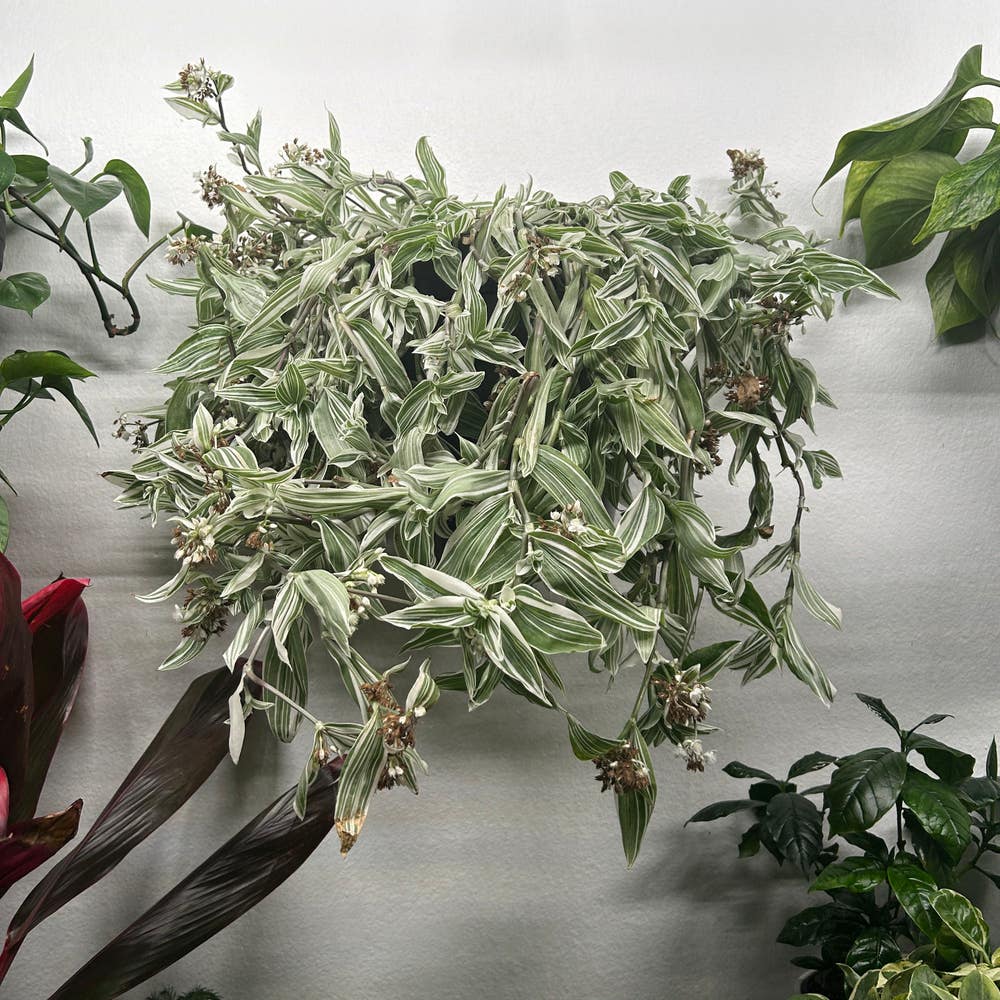
Tradescantia Albiflora 'albovittata' Leaves Drooping
Tradescantia fluminensis 'Albovittata'
By the Greg Editorial Team
Jun 18, 2024•3 min read
This article was created with the help of AI so we can cover more plants for you. May contain errors. See one? Report it here.
- 🌧️ Overwatering? Yellow leaves and stinky soil signal trouble.
- 🌞 Bright, indirect light and 60-85°F keep leaves perky.
- 💧 Consistent watering schedule and well-draining soil are key.
Spotting the Signs of Distress
💧 Overwatering Symptoms
Yellowing lower leaves and stinky soil are the hallmarks of overwatering. If the soil feels like a wet sponge and the roots look like they've taken a dip in a swamp, you've got a case of too much love in the water department.
🏜️ Underwatering Red Flags
On the flip side, crispy leaves and soil pulling away from the pot's edge scream dehydration. A plant with leaves drier than a stand-up comedian's wit needs a drink, stat.
🌞 Light and Temperature Warning Signals
Leaves curling up tighter than a yoga pose could mean your plant's too hot to handle. If the foliage is losing its mojo and turning a sad shade of blah, it's time to reassess the plant's sunbathing habits. Too much heat, and your plant might just throw in the towel.

Fine-Tuning Watering Practices
💧 Assessing Soil Moisture
Dive into the dirt to check your Tradescantia's thirst level. Use the finger test—if the top inch feels like a desert, it's time to water. Alternatively, a soil moisture meter can be your high-tech hydration detective.
🔄 Establishing a Watering Rhythm
Your Tradescantia doesn't need a metronome, but it does crave a consistent watering schedule. Observe the plant's response and adjust accordingly—more water during a heatwave, less when it's cooler. Remember, overwatering is a no-go; it's not a fan of soggy feet.

Light and Temperature Harmony
🌞 Finding the Sweet Spot for Sunlight
Tradescantia albiflora 'Albovittata' is picky about its sunbathing habits. It craves the limelight but wilts under the harsh glare of direct sunlight. Bright, indirect light is the mantra here. Think of placing your plant in a spot where the sun is a gentle morning hug, not a midday wrestling match.
Adjusting Plant Position
Rotate your plant regularly to ensure all sides get their moment in the soft glow. This prevents the dreaded one-sided tan and promotes even growth. If your Tradescantia starts to stretch or lean, it’s silently begging for more light. Time to shuffle things around.
🌡️ Keeping the Temperature Just Right
Temperature swings are like bad mood swings for your plant. 60°F to 85°F is the sweet spot; anything below 55°F and your plant will start to sulk. During heatwaves, think of shade as your plant's personal cooling station.
Avoiding Temperature Extremes
Keep your Tradescantia away from drafty windows and deceptive heaters. Consistency is key—aim for a stable environment where the temperature doesn’t jump around like a cat on a hot tin roof. Remember, a comfy plant is a happy plant.

The Right Soil and Pot for a Happy Plant
🌱 Checking for Soil and Root Health
Roots confined like a genie in a bottle? Time to check if your Tradescantia albiflora 'Albovittata' is root-bound. Gently remove the plant from its pot to inspect. Healthy roots should be firm and white, not mushy or brown. Soil should support life, not suffocate it. If the soil feels more like a wet sponge than a nurturing bed, it's a red flag.
🌿 Repotting for Renewed Vigor
Repotting is not just about giving your plant new digs; it's a revival. Choose a pot that's one size larger than the current one to allow for growth. Drainage holes are non-negotiable – your plant's not on a swim team. When selecting soil, aim for a mix that drains well yet retains moisture, like a well-balanced meal for roots. Store-bought or DIY, the mix should be airy and light, like the soil's taking a deep breath. Remember, a happy Tradescantia is all about the right foundation.
⚠️ Safety First
This content is for general information and may contain errors, omissions, or outdated details. It is not medical, veterinary advice, or an endorsement of therapeutic claims.
Always consult a qualified healthcare professional before using any plant as food, medicine, or supplement.
Never eat any plant (or feed one to pets) without confirming its identity with at least two trusted sources.
If you suspect poisoning, call Poison Control (800) 222-1222, the Pet Poison Helpline (800) 213-6680, or your local emergency service immediately.
Spotted an error? Please report it here.
Ensure your Tradescantia Albiflora 'Albovittata' thrives with the right balance of care, and count on Greg 🌱 for custom reminders that keep droopiness at bay.