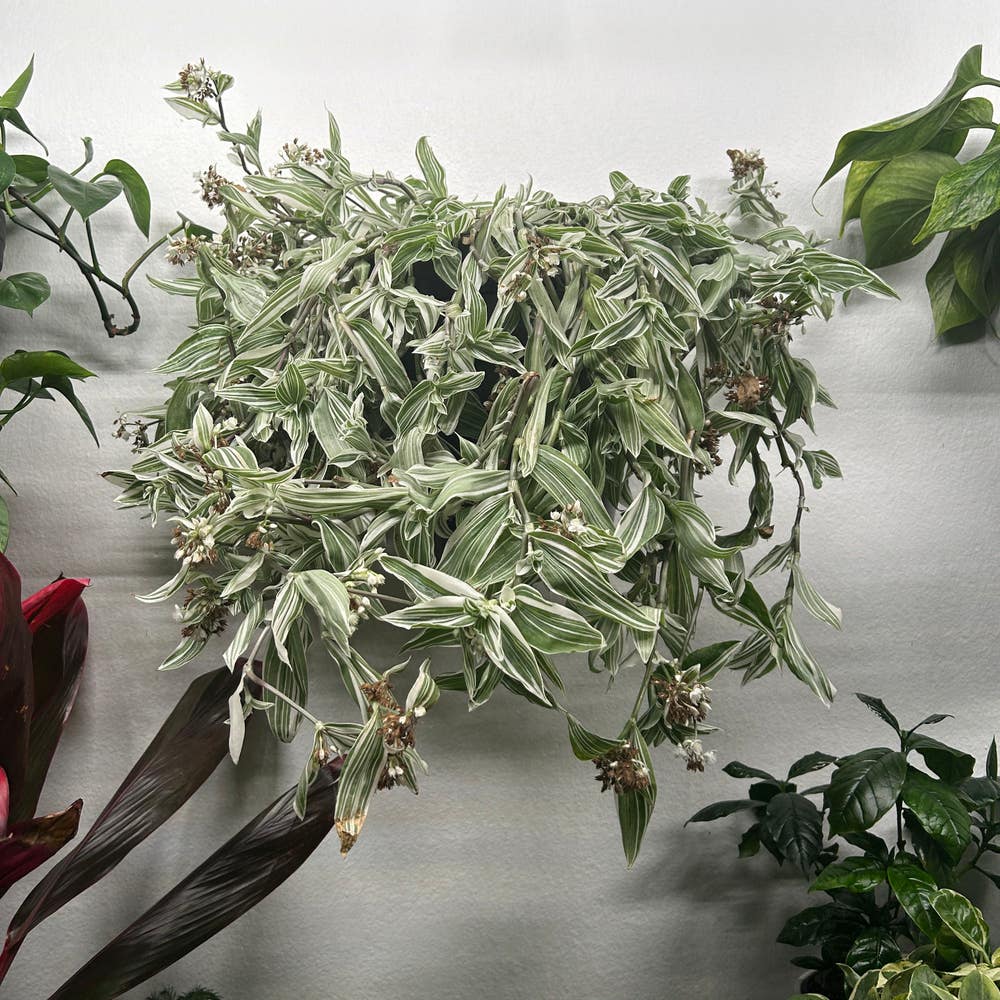
🌸 3 Quick Fixes for Variegated Inch Plant Bloom Problems
Tradescantia fluminensis 'Albovittata'
By the Greg Editorial Team
Sep 30, 2024•5 min read
This article was created with the help of AI so we can cover more plants for you. May contain errors. See one? Report it here.
- 🌞 Bright, indirect sunlight is crucial for variegated inch plant blooming success.
- 🌱 Monitor phosphorus levels; deficiencies can cause pale leaves and poor flowering.
- 🌡️ Maintain stable temperatures and humidity to prevent stress and encourage blooms.
Failure to Bloom
🌞 Causes
Light Conditions
Insufficient light exposure can significantly hinder the bloom cycle of your variegated inch plant. For optimal flowering, it thrives in bright, indirect sunlight.
Nutrient Deficiencies
A lack of essential nutrients, particularly phosphorus, can adversely affect flower development. Watch for signs like pale leaves and stunted growth, which indicate nutrient issues.
Environmental Stress
Temperature fluctuations and humidity levels can stress your plant, leading to a failure to bloom. Aim for warm temperatures between 65°F and 80°F, along with moderate humidity for the best results.
💡 Solutions
Adjusting Light Exposure
- Position your plant near a bright window, but avoid direct sunlight to prevent leaf burn.
- Rotate the plant periodically to ensure even light distribution, promoting balanced growth.
Fertilization Tips
- Use a balanced fertilizer with a higher phosphorus content during the growing season to encourage blooming.
- Fertilize every 4-6 weeks to provide consistent support for flower development.
Stress Reduction Techniques
Maintain stable temperatures and humidity levels to reduce stress on your plant. Avoid sudden environmental changes, as they can disrupt the blooming process.
By addressing these common causes and implementing effective solutions, you can encourage your variegated inch plant to bloom beautifully. Next, let’s explore the issue of premature flower drop and how to prevent it.
Premature Flower Drop
🌧️ Causes
Overwatering
Overwatering is a common culprit behind premature flower drop in variegated inch plants. Excessive moisture can lead to root rot, which manifests as yellowing leaves and mushy roots.
Temperature Fluctuations
Sudden temperature changes can shock your plant, resulting in bud drop. Aim to maintain a stable temperature range of 65°F to 80°F for optimal health.
Pest Infestations
Pests like spider mites and aphids can weaken your plant, causing flowers to fall off. Keep an eye out for signs of infestation, such as webbing or sticky residue on the leaves.
🛠️ Solutions
Watering Guidelines
- Allow the top inch of soil to dry out before watering.
- Ensure proper drainage to prevent waterlogging.
Maintaining Stable Temperatures
Keep your plant away from drafts and heat sources. Using a thermometer can help you monitor indoor temperatures effectively.
Pest Control Methods
Regularly inspect your plant for pests to catch any issues early. If you spot any, treat them with insecticidal soap or neem oil for effective control.
By addressing these common causes and implementing straightforward solutions, you can help your variegated inch plant thrive and enjoy its beautiful blooms. Next, let’s explore how environmental factors can further influence flowering.
Abnormal Flower Development
🌱 Causes
Genetic Factors
Some variegated inch plants may have genetic predispositions that affect flower quality. This can lead to abnormalities such as misshapen or discolored flowers.
Improper Pruning
Incorrect pruning techniques can disrupt the plant's natural growth cycle, negatively impacting blooms. Over-pruning often results in fewer flowers, leaving your plant looking sparse.
Nutrient Imbalance
An excess or deficiency of certain nutrients can cause abnormal flower development. Signs to watch for include distorted flowers or poor color, indicating your plant may need attention.
🛠️ Solutions
Identifying Genetic Issues
Research the specific variety of your inch plant to understand its typical flowering characteristics. If genetic issues persist, consider replacing the plant for better results.
Correct Pruning Methods
- Prune after flowering to encourage new growth.
- Remove dead or damaged stems to promote healthy blooms.
Balanced Fertilization
Use a balanced fertilizer to ensure your plant receives all necessary nutrients. Following a consistent feeding schedule will help maintain optimal nutrient levels for vibrant blooms.
By addressing these factors, you can enhance your plant's flowering potential and enjoy a more vibrant display. Next, let’s explore the environmental factors that can affect flowering.
Environmental Factors Affecting Flowering
🌞 Light Requirements
Importance of Light for Blooming
Light is a crucial factor in the blooming cycle of your variegated inch plant. Without adequate light, you may notice leggy growth and a disappointing number of flowers.
Best Light Conditions
For optimal blooming, place your plant in bright, indirect sunlight. If natural light is scarce, consider using grow lights to supplement.
🍽️ Nutritional Needs
Essential Nutrients for Flowering
Your inch plant thrives on key nutrients like nitrogen, phosphorus, and potassium. Additionally, micronutrients such as magnesium and calcium play vital roles in promoting healthy blooms.
Recommended Fertilizers and Feeding Schedule
To support flowering, use a balanced liquid fertilizer every 4-6 weeks during the growing season. A bloom booster fertilizer can also enhance flower development significantly.
✂️ Pruning Techniques
How Pruning Affects Flowering
Pruning is essential for encouraging new growth, which can lead to more blooms. Timing and technique are critical; improper pruning can hinder your plant's flowering potential.
Best Practices for Pruning to Encourage Blooms
- Use clean, sharp scissors for precise cuts.
- Remove spent flowers to encourage further blooming.
- Prune back leggy growth to promote a bushier appearance.
By addressing these environmental factors, you can significantly improve your inch plant's blooming performance. Next, let’s explore how to tackle common issues like failure to bloom and premature flower drop.
⚠️ Safety First
This content is for general information and may contain errors, omissions, or outdated details. It is not medical, veterinary advice, or an endorsement of therapeutic claims.
Always consult a qualified healthcare professional before using any plant as food, medicine, or supplement.
Never eat any plant (or feed one to pets) without confirming its identity with at least two trusted sources.
If you suspect poisoning, call Poison Control (800) 222-1222, the Pet Poison Helpline (800) 213-6680, or your local emergency service immediately.
Spotted an error? Please report it here.
Boost your variegated inch plant's blooms 🌸 with Greg's customized care tips that ensure optimal light, nutrients, and watering practices for a flourishing display!