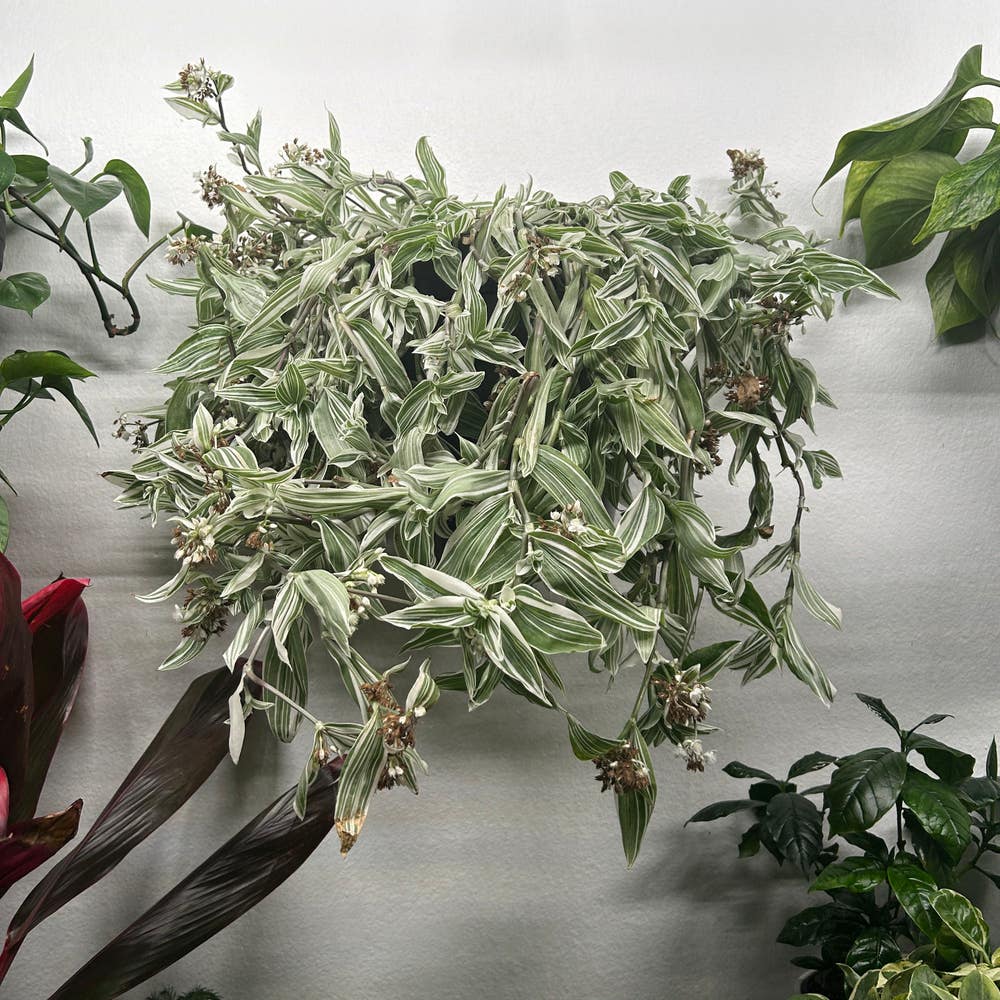
Tradescantia Albiflora 'Albovittata' Leaves Falling Over
Tradescantia fluminensis 'Albovittata'
By the Greg Editorial Team
Jun 18, 2024•3 min read
This article was created with the help of AI so we can cover more plants for you. May contain errors. See one? Report it here.
- Overwatering? Look for yellow leaves, mushy stems, and foul soil odor.
- 🌞 Bright, indirect light prevents leggy, weak stems.
- Repot and prune for root space and perky leaves.
When Water is Too Much of a Good Thing
💧 Spotting Overwatering Symptoms
Yellow leaves and mushy stems are your Tradescantia's cry for help, signaling an overwatering crisis. If the soil feels like a wet sponge, it's time to put the watering can down. A foul odor emanating from the soil is another red flag, indicating that your plant's roots are drowning in excess moisture.
🌊 Balancing Moisture for Mighty Stems
To combat overwatering, let the soil dry out between waterings. Think of it as a plant detox. Check the soil an inch deep; if it's damp, hold off on the H2O. Ensure your pot has drainage holes to prevent water from pooling at the bottom. Adjust your watering habits to the plant's needs, considering factors like light exposure and indoor climate. Remember, consistency is key—water when the soil is dry to the touch, but don't flood your plant with love.

Let There Be Light (But Just the Right Amount)
💡 The Leggy Growth Conundrum
Tradescantia albiflora 'Albovittata' is not a fan of the dark. When light is scarce, stems stretch out, becoming leggy and weak. This is the plant's way of reaching for more light, but it results in a less-than-ideal appearance and structural integrity.
💡 Lighting the Way to Stronger Stems
Bright, indirect sunlight is the key to robust growth. To prevent your Tradescantia from becoming the botanical version of a slouch, place it where it can bask in the sun's glow without getting scorched. Rotate your plant regularly to ensure even light distribution. If natural light is lacking, especially in winter months, consider supplementing with grow lights. They're like a caffeine boost for your plant's photosynthesis, giving it the energy to stand tall and proud. Remember, light is love for plants, but like any strong relationship, it's about finding that sweet spot.

The Tight Squeeze: When Roots Need Room
🌱 Recognizing a Pot-Bound Plant
Roots peeking through drainage holes are screaming for space. If your Tradescantia's roots are circling the pot like a rally track, it's time to upgrade its living situation.
When the soil dries out faster than a gossip in a small town, it's a sign your plant's roots are hogging all the room. A root-bound Tradescantia might also have stunted growth, looking as if it's on a permanent growth strike.
🌿 Repotting for Resilience
Gently remove your plant from its pot; if it's clinging like a terrified cat, it's definitely time. Inspect the roots. If they're denser than a city during rush hour, trim the excess but don't go Edward Scissorhands on them.
Choose a new pot that's one size up—think of it as a roomier apartment, not a mansion. Repot with fresh soil and let your Tradescantia stretch its roots. It's not just a new pot; it's a new lease on life for your plant.

Keeping Your Tradescantia Tidy and Tough
✂️ Pruning for Perkiness
Pruning isn't just a cosmetic fix—it's a vital tune-up for your Tradescantia. By snipping off leggy stems, you're not just sprucing up the joint; you're spurring on a burst of new growth. Pinch the tips and watch as your plant responds with a flourish of fresh, perky leaves. It's like hitting the refresh button on your plant's posture.
🛠️ The Support System Strategy
Sometimes, your Tradescantia needs a little backup to stay upright. Staking is like a secret service detail for your plant—unobtrusive yet essential. Insert stakes gently around the droopy culprits and tie them up with the soft ties of camaraderie. It's a support system that says, "I got you," helping your Tradescantia stand tall and proud.
⚠️ Safety First
This content is for general information and may contain errors, omissions, or outdated details. It is not medical, veterinary advice, or an endorsement of therapeutic claims.
Always consult a qualified healthcare professional before using any plant as food, medicine, or supplement.
Never eat any plant (or feed one to pets) without confirming its identity with at least two trusted sources.
If you suspect poisoning, call Poison Control (800) 222-1222, the Pet Poison Helpline (800) 213-6680, or your local emergency service immediately.
Spotted an error? Please report it here.
Avoid the droop in your Tradescantia with tailored watering plans 🌿 from Greg, ensuring your green friend thrives with just the right amount of TLC.