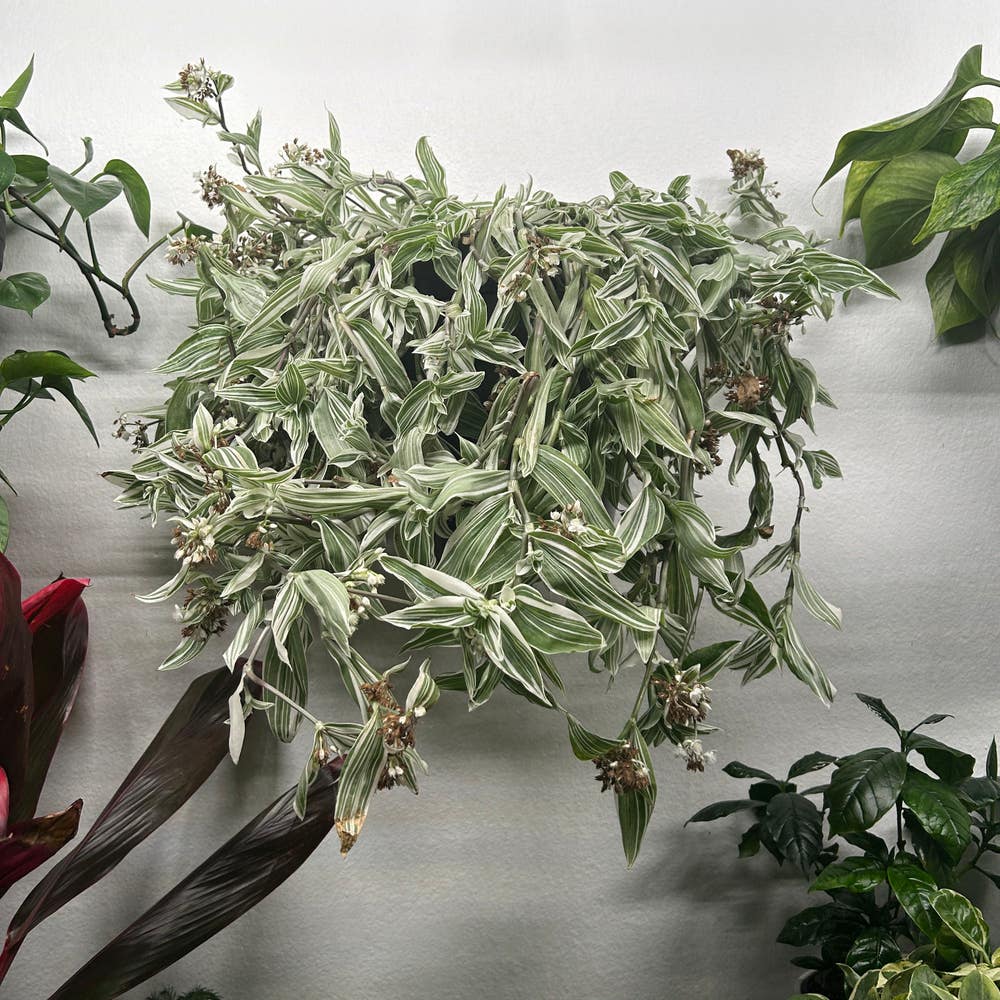
How to Get a Tradescantia albiflora 'Albovittata' to Bloom
Tradescantia fluminensis 'Albovittata'
By the Greg Editorial Team
Jun 18, 2024•4 min read
This article was created with the help of AI so we can cover more plants for you. May contain errors. See one? Report it here.
- 🌞 Bright, indirect sunlight is key for blooming.
- 🌡️ Maintain 65–75°F and 40-60% humidity for flower success.
- ✂️ Prune and fertilize strategically to promote blooms.
Light Up Their Life: Sunlight and Blooming
🌞 The Sweet Spot of Sunlight
Bright, indirect sunlight is the golden ticket for Tradescantia albiflora 'Albovittata' to strut its blooming stuff. Aim for a luminous but not laser-like intensity that mimics the dappled light of its natural habitat. Too much direct sun could turn your plant into crispy foliage, while too little light leaves it in a perpetual state of bloomlessness.
Shifting Shades: Adjusting Light for Optimal Blooming
As the seasons shift, so should your plant's position. In the darker months, scoot it closer to the window to soak up every possible ray. Come summer, you might need to play bouncer, shielding it from the harsh midday sun. It's a bit of a dance, but when your Tradescantia hits its light sweet spot, you'll be rewarded with blooms that'll make you want to throw a parade.

Feeling Hot, Hot, Hot: Temperature and Humidity for Happy Blooms
🌡️ Warmth and Blooms: Finding the Right Temperature
Tradescantia albiflora 'Albovittata' thrives in a temperature range of 65–75°F (18–24°C). This sweet spot encourages the plant to produce its delicate flowers. Avoid fluctuations; consistent temperatures are key to prevent stress that can hinder blooming.
💦 Misty Mornings: Humidity's Role in Flowering
Aim for a humidity level of 40-60% to mimic the plant's natural environment. Use a hygrometer to monitor air moisture. Too dry, and the buds may desiccate; too humid, and you risk fungal diseases. Consider grouping plants to create a shared microclimate or use a humidifier to maintain optimal conditions.

A Little Off the Top: Pruning for Prolific Blooms
🌱 Strategic Snips: Pruning Techniques to Encourage Blooming
Pruning your Tradescantia albiflora 'Albovittata' is like directing traffic: you're telling the plant where to grow. Snip above a leaf node to encourage branching; more branches mean more potential blooms. Aim to remove only dead or damaged growth, as these can drain energy from the plant. Remember, you're not giving a scalp but a haircut—trim no more than 25% of the plant at a time.
🧼 Keeping It Clean: Maintenance During the Blooming Season
Post-pruning, it's all about the TLC. Ensure your Tradescantia has the right light, water, and nutrients to bounce back. Snip off any spent flower spikes, but only if they're brown and crispy. If they're still green, they might just surprise you with a second act. Keep an eye out for pests or diseases, especially after pruning, as good air circulation is crucial for a healthy plant. Remember, a clean plant is a happy plant, and a happy plant is more likely to reward you with those coveted blooms.

Feed for Speed: Fertilizing for Fabulous Flowers
💡 Choosing the Right Fertilizer
Balanced nutrition is key for Tradescantia albiflora 'Albovittata' to bloom. Look for a fertilizer with a higher phosphorus content to promote flowering. A balanced 10-10-10 NPK ratio is a safe bet, ensuring your plant gets equal parts nitrogen, phosphorus, and potassium. Avoid nitrogen-heavy formulas; they're great for foliage but can skimp on the blooms.
🕰 Timing is Everything: When to Fertilize
Fertilize your Tradescantia every two months from spring to early fall (April to October). This aligns with the plant's natural growth cycle, providing nutrients when they're most needed. Skip the winter months; your plant is resting, not feasting. Remember, consistency beats a boom-and-bust approach—steady feedings lead to steady flowering.
Blooming Troubles: Quick Fixes for Flowering Frustrations
🌸 Common Flowering Faux Pas
If your Tradescantia albiflora 'Albovittata' is more foliage than flowers, you're not alone. Inadequate light is often the party pooper here. These plants need their sun-fix to produce blooms. Another buzzkill? Nutrient deficiencies. It's like sending your plant to a potluck with an empty plate—don't expect it to bring flowers to the table.
🌿 Turning Over a New Leaf: Solutions for Non-Flowering
First, play Sherlock with the light situation. Is your plant basking in bright, indirect sunlight or sulking in a shady corner? Adjust its spot or consider grow lights. Next, assess the feeding schedule. A balanced fertilizer can be the pep talk your plant needs. Remember, it's a buffet, not an all-you-can-eat—overfeeding is a no-go.
Pests are the uninvited guests at the bloom party. Keep an eye out for freeloaders like aphids and spider mites. A swipe of soapy water or neem oil can show them the door. And don't forget the environmental vibe—too hot, too cold, or a humidity level that swings more than a pendulum can lead to flower no-shows.
Lastly, ensure your plant isn't root-bound. A cramped pot is like a tight pair of shoes; it's not going to dance. Give it space to grow, and you might just get a floral show. Keep at it, and with a bit of luck and a lot of care, those elusive blooms might just decide to crash the foliage party.
⚠️ Safety First
This content is for general information and may contain errors, omissions, or outdated details. It is not medical, veterinary advice, or an endorsement of therapeutic claims.
Always consult a qualified healthcare professional before using any plant as food, medicine, or supplement.
Never eat any plant (or feed one to pets) without confirming its identity with at least two trusted sources.
If you suspect poisoning, call Poison Control (800) 222-1222, the Pet Poison Helpline (800) 213-6680, or your local emergency service immediately.
Spotted an error? Please report it here.
Ensure your Tradescantia blooms 🌼 by using Greg to track sunlight, humidity, and fertilizing schedules from these expert care tips!