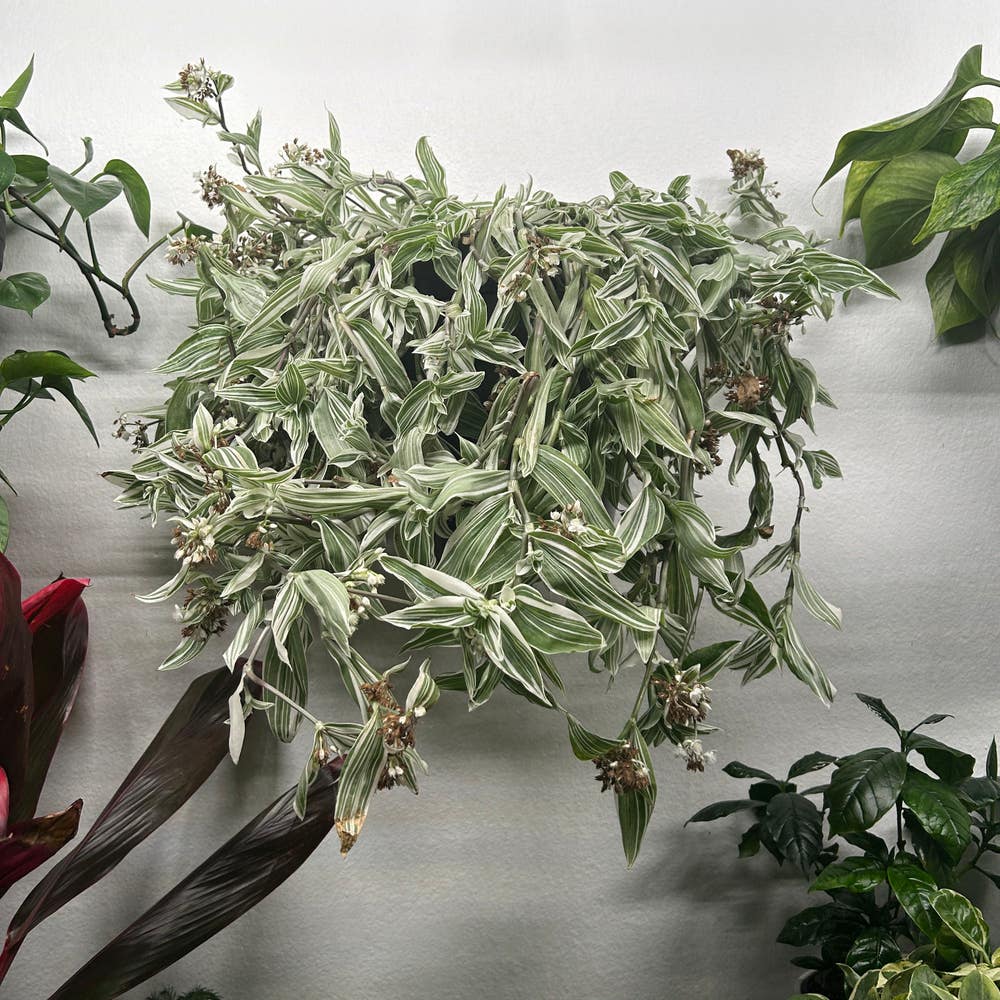
Tradescantia Albiflora 'albovittata' Mushy Leaves
Tradescantia fluminensis 'Albovittata'
By the Greg Editorial Team
Jun 18, 2024•3 min read
This article was created with the help of AI so we can cover more plants for you. May contain errors. See one? Report it here.
- Overwatering leads to mushy leaves, signaling a need for watering schedule adjustments.
- Root rot: dark, squishy roots—combat with proper drainage and soil mix.
- Monitor moisture; choose terracotta pots for plant health and breathability.
When Water Becomes the Enemy
💧 Overwatering Overload
Too much water can turn your Tradescantia albiflora 'Albovittata' into a mushy mess. Leaves may become bloated or yellow, and the soil can smell like a forgotten gym locker. To combat this, let the soil dry out before you even think about watering again.
Adjust your watering schedule based on the plant's needs, not the day of the week. If the soil feels like a wet sponge, it's a no-go for H2O. Remember, it's easier to remedy thirst than to fix a flood.
🚰 Drainage Dilemmas
Choosing the right pot is like picking the perfect pair of shoes; it needs to fit well and handle some drainage. Ensure your pot has holes to avoid creating an accidental swamp for your plant's roots.
Tweak your soil mix to improve water flow. A good blend might include peat, perlite, and pine bark—think of it as a custom suit, tailored to let your plant breathe easy. If the soil's too heavy, it's like wearing a raincoat in a sauna—uncomfortable and unnecessary.

The Underground Culprit: Root Rot
🦠 Spotting the Hidden Foe
Root rot is the silent killer of plants, often going unnoticed until the damage is severe. To spot this treacherous condition, remove your Tradescantia from its pot and inspect the roots. Healthy roots are firm and white, while rotten ones are dark and squishy. A foul smell emanating from the soil is another telltale sign of fungal betrayal.
🏥 From Rotten to Revived
When root rot strikes, it's time for some plant surgery. With sterilized shears, cut away the mushy roots, showing no mercy to the decay. After the amputation, give your plant a fresh start in a new pot with well-draining soil. This is not just a repotting; it's a revival. Moderation in watering is now your mantra to prevent a relapse.

Preemptive Strikes: Preventing Future Flops
🌡️ Monitoring Moisture
Moisture meters are the unsung heroes for plant enthusiasts, providing a clear-cut digital readout of soil wetness. No more second-guessing; just stick the probe in the soil and get an instant moisture level reading. For the tech-savvy or those who love gadgets, this tool is a must-have to prevent overwatering your Tradescantia.
Hygrometers also deserve a shoutout. They help you keep an eye on humidity levels around your plant, ensuring they're just right. Too much humidity can be as harmful as overwatering, so monitoring is key. If you find the air too dry, consider a pebble tray or a humidifier to up the moisture ante.
🏺 The Perfect Potting Practice
Terracotta pots are the breathability kings, allowing soil to dry out more evenly and preventing water from overstaying its welcome. Pair these with a well-draining soil mix, and you've got a winning combo. Add perlite or vermiculite to your soil to increase drainage and aeration, giving roots the space they need to thrive.
Remember, the right pot size matters. Too big, and you risk soggy soil; too small, and you'll be watering your Tradescantia more than you check your phone. Find that Goldilocks zone for your pot size to keep your plant's thirst quenched without drowning it.

⚠️ Safety First
This content is for general information and may contain errors, omissions, or outdated details. It is not medical, veterinary advice, or an endorsement of therapeutic claims.
Always consult a qualified healthcare professional before using any plant as food, medicine, or supplement.
Never eat any plant (or feed one to pets) without confirming its identity with at least two trusted sources.
If you suspect poisoning, call Poison Control (800) 222-1222, the Pet Poison Helpline (800) 213-6680, or your local emergency service immediately.
Spotted an error? Please report it here.
Ensure your Tradescantia stays lush and healthy 💧 by letting Greg tailor your watering plan and guide you to the perfect soil mix for optimal drainage!