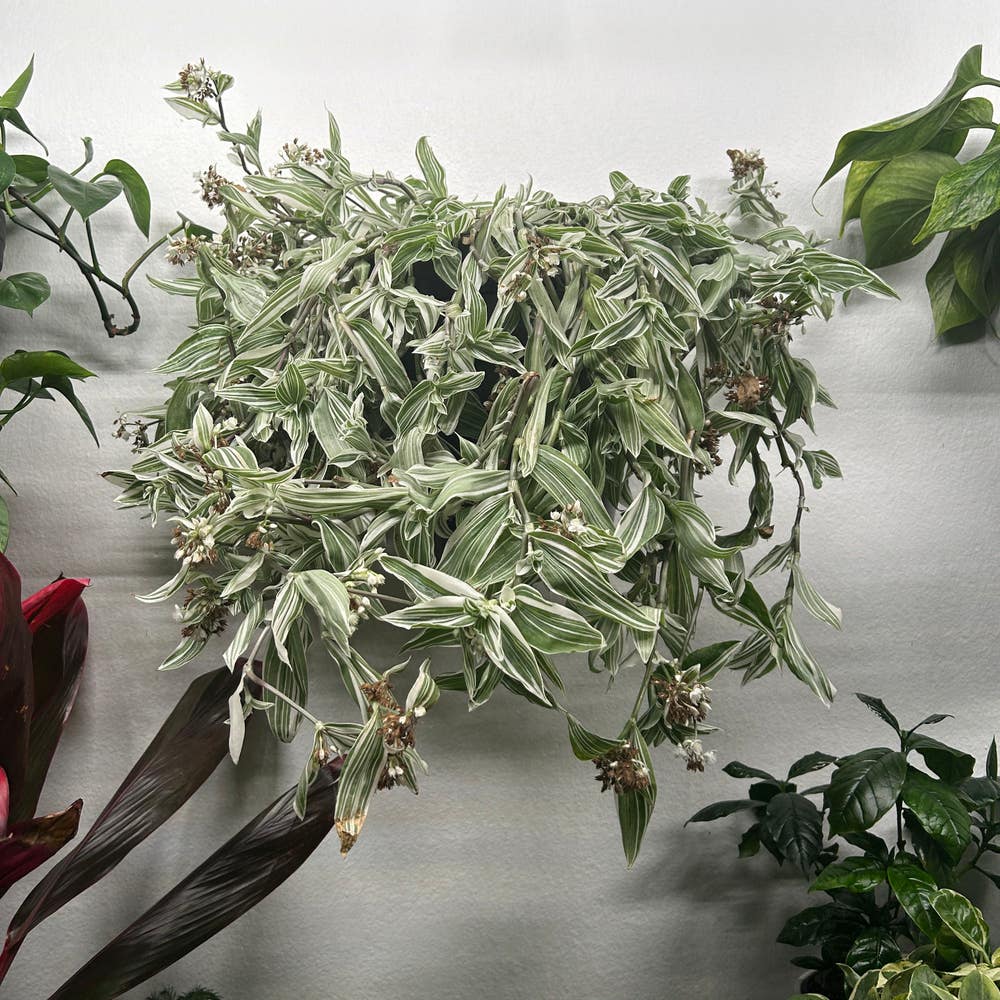
Tradescantia Albiflora 'albovittata' Leaves Dropping
Tradescantia fluminensis 'Albovittata'
By the Greg Editorial Team
Jun 18, 2024•4 min read
This article was created with the help of AI so we can cover more plants for you. May contain errors. See one? Report it here.
- 🍂 Yellow, brown, wilting leaves signal your plant's distress.
- 💧🌡️ Balance water, temperature, and light to prevent leaf drop.
- 🌱 Consistent care and observation keep Tradescantia leaves loyal.
Spot the Signs: Is Your Plant Shedding More Than Usual?
🚩 Visual Clues
Yellowing, browning, and wilting leaves are the plant's way of waving a red flag. These visual cues shouldn't be ignored; they're the first indicators that your Tradescantia albiflora 'Albovittata' is not in its prime.
🖐 Touch and Tell
Leaves that feel limp or brittle are broadcasting distress signals. It's your cue to reassess your watering habits and overall plant care routine.
🌿 Overall Plant Check-Up
A thorough once-over of your plant's general appearance can reveal much about its health. Look for patterns in leaf drop, check for new growth, and be alert to any changes that seem out of the ordinary.

Root of the Problem: Common Culprits Behind Leaf Drop
💧 Thirsty or Drowning?
Underwatering turns your Tradescantia into a parched nomad, shedding leaves as if they're excess baggage. Dry soil is a telltale sign that your plant's thirst needs quenching. Conversely, overwatering is like throwing a pool party for your plant's roots, with all the fun drowned out by the risk of root rot. If the soil feels like a soaked sponge, it's time to dial back on the H2O.
🌡 Feeling the Heat (or Chill)
Temperature swings can send your Tradescantia's leaves into freefall. Too hot, and the leaves might crisp up like bacon in a pan; too cold, and they could drop off faster than icicles in a thaw. Keep the environment stable, avoiding the shock of sudden changes as if you're acclimating a tropical fish to a new aquarium.
☀️ Light: Finding the Sweet Spot
Lighting is a balancing act. Too much sun, and your Tradescantia's leaves might scorch like marshmallows over a campfire. Not enough, and they'll stretch out and fade, longing for a sunbeam. Aim for bright, indirect light, as if you're setting the stage for a soft-lit photo shoot, to keep your plant in the limelight without the burnout.

First Aid for Fallen Leaves
💧 Adjusting Your Watering Ways
Watering your Tradescantia albiflora 'Albovittata' is less about sticking to a schedule and more about observing your plant's soil. Check the top inch of soil for dryness before giving it a drink. If it's damp, hold off on the waterworks. Overwatering is a surefire way to drown your plant's roots and encourage leaf drop. Consider the bottom watering technique to ensure your plant gets just the right amount of moisture without getting soggy.
🏡 Creating a Cozy Environment
Your Tradescantia isn't asking for a spa day, but it wouldn't mind a stable environment. Maintain a room temperature between 65-75°F (18-24°C) and keep those cold drafts and hot blasts at bay. Humidity is your secret weapon here; aim for a level that would make a tropical plant nod in approval. If your air is drier than a stand-up comedian's wit, it's time to invest in a humidifier or set up a pebble tray.
🌞 Let There Be (the Right Amount of) Light
This is where Goldilocks had it right – the light needs to be just right. Bright, indirect light will keep your Tradescantia's leaves vibrant and attached. Too much direct sunlight and you'll have a crispy plant on your hands. Not enough light, and you'll see more flopping than at a soccer match. If your home's lighting is as unpredictable as a plot twist, consider using a grow light to provide consistent illumination.

Keeping Leaves Loyal: Prevention Practices
🔄 Routine to the Rescue
Consistency is your Tradescantia albiflora 'Albovittata's' bestie. Crafting a care schedule isn't just about ticking boxes; it's about ensuring your plant doesn't throw a tantrum. Watering, feeding, pruning—get these on a calendar and stick to it. It's like setting an alarm for plant happiness.
🕵️ Vigilant Plant Parenting
Be the Sherlock Holmes of plant care. Observe every little change—leaf color, growth speed, and even slight droops. These are your plant's cryptic messages. Act fast on these clues; adjust your watering with the seasons, rotate the pot for even sun exposure, and show pests the exit before they crash the leaf party. Remember, proactive care beats reactive despair.
⚠️ Safety First
This content is for general information and may contain errors, omissions, or outdated details. It is not medical, veterinary advice, or an endorsement of therapeutic claims.
Always consult a qualified healthcare professional before using any plant as food, medicine, or supplement.
Never eat any plant (or feed one to pets) without confirming its identity with at least two trusted sources.
If you suspect poisoning, call Poison Control (800) 222-1222, the Pet Poison Helpline (800) 213-6680, or your local emergency service immediately.
Spotted an error? Please report it here.
Prevent your Tradescantia Albiflora 'albovittata' leaves from dropping by letting Greg fine-tune your watering schedule 💧 and ensure a stable, leaf-loving environment.